
Last updated November 14, 2026
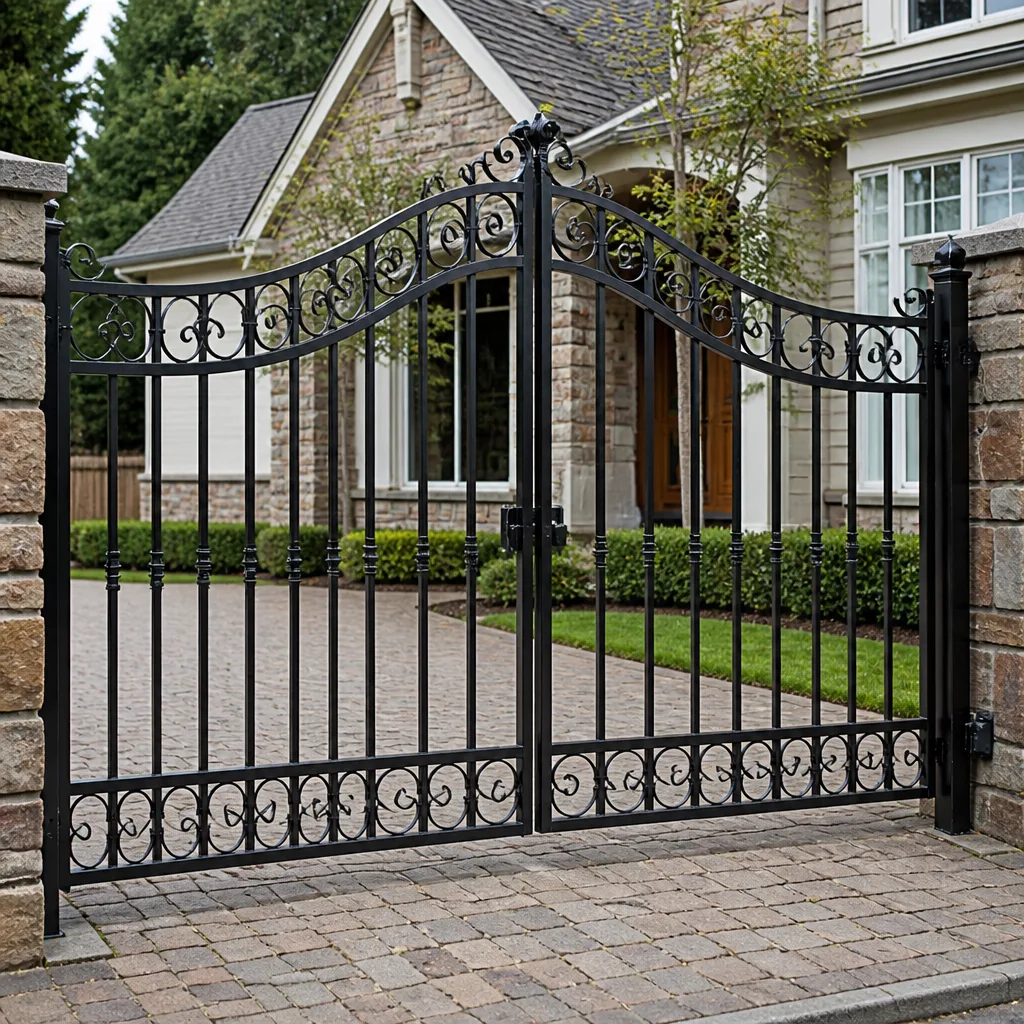 Wrought iron
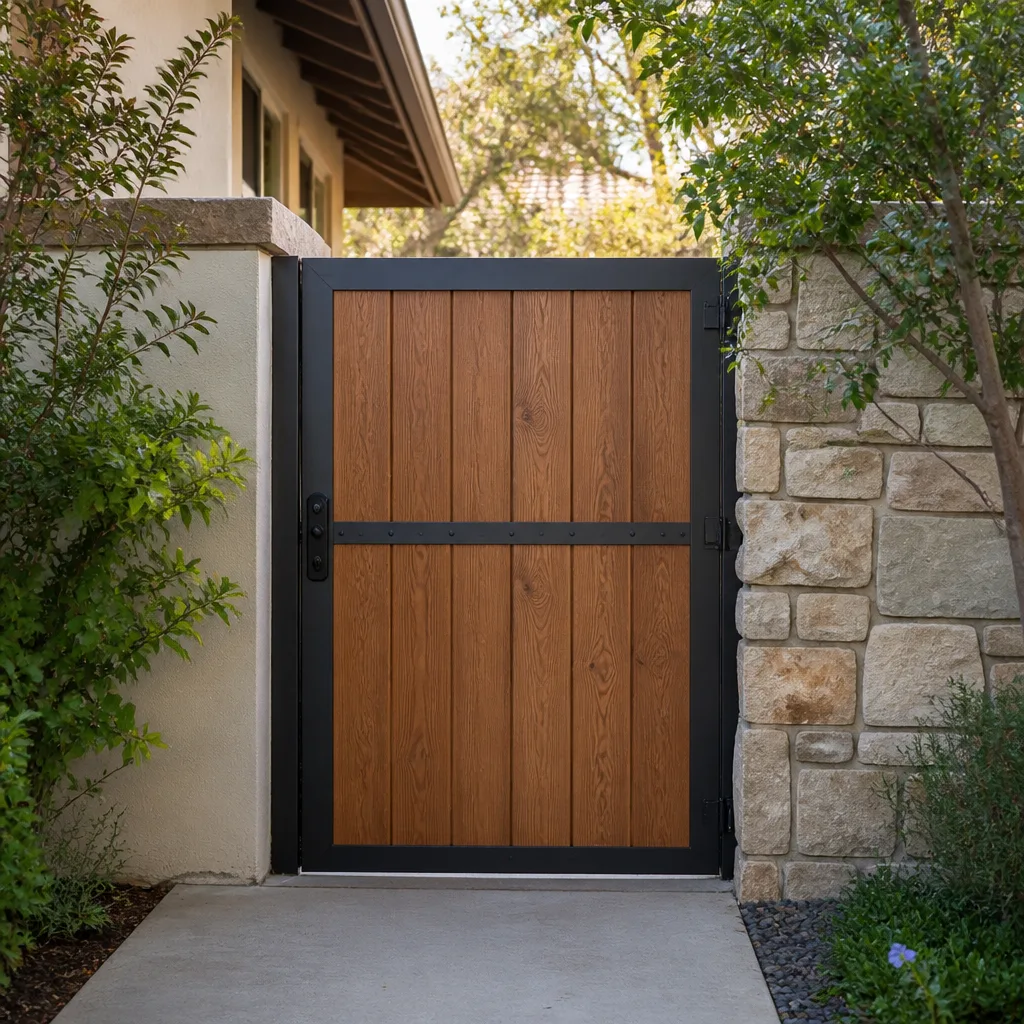 Wood & steel frame
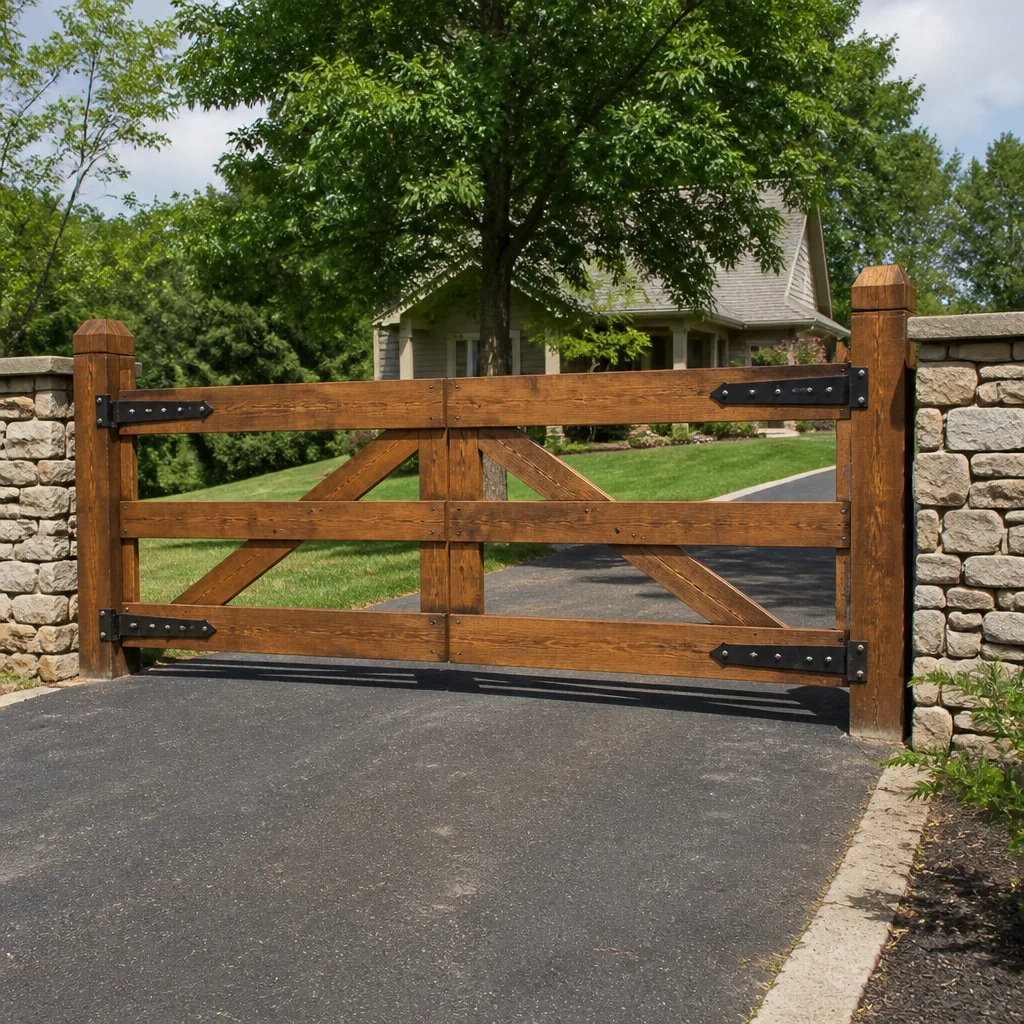 Farm & ranch
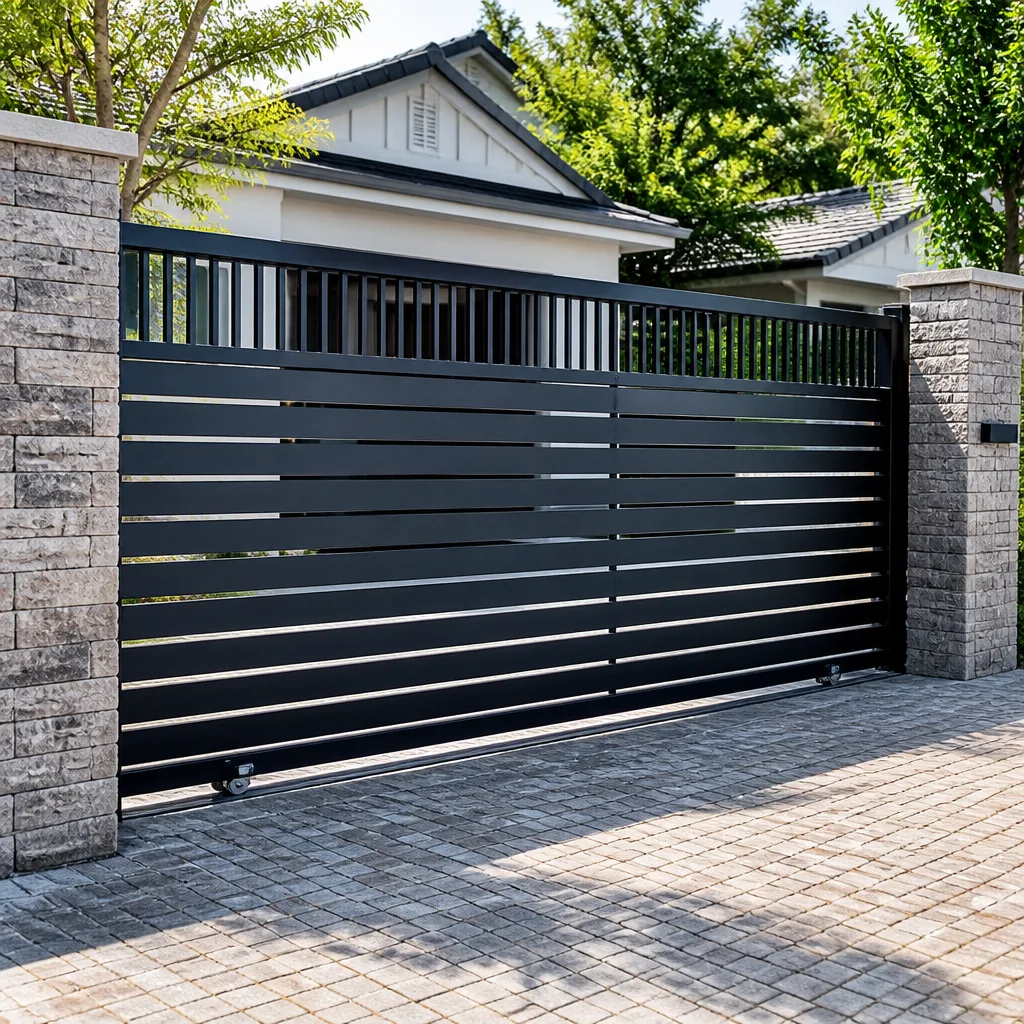 Sliding driveway gates
 LiftMaster operators
Free on-site gate assessment - hinges, posts, and your LiftMaster or Nice gate operator checked before anything is quoted
The assessment is free and the quote is the invoice.
Get your free estimateSeasonal Gate Repair Care for Pittsburgh: Year-Round Homeowner’s Guide
Most gate failures in Pittsburgh don’t start on the day the gate stops working. They start months earlier, when the ground is doing something the gate was never designed to absorb. Here’s the counterintuitive part: the misaligned swing you’re fighting in March was usually created in November, when fall rain soaked the soil and the first hard freeze heaved your post footings a fraction of an inch. Pittsburgh is a city of four genuinely different seasons, and each one loads a different part of your gate. This guide maps each season to its dominant failure mode and shows you what to check before that stress peaks, not after it fails.
Quick Answer
A Pittsburgh gate needs four seasonal checkpoints, not one: a fall pre-freeze tune-up (limits, batteries, weatherstripping), winter ice discipline around tracks and operators, a spring post-heave and plumb inspection before you test the operator, and a summer humidity check on control boards and thermal cutoffs. Doing each check before the season peaks prevents most of the failures we see on Pittsburgh properties. The single most important diagnosis is always the same: is the problem the gate (mechanical) or the operator (electronic)? Read the symptoms by season and you’ll know which one you’re facing.
Styles & brands we work with
- Wrought iron
- Wood & steel frame
- Farm & ranch
- Sliding driveway gates
- LiftMaster operators
Table of Contents
- Fall: The Pre-Freeze Reset That Prevents Most Winter Failures
- Winter: Clearing Ice Safely Without Damaging the Gate or Operator
- Spring: The Post-Heave Inspection Sequence
- Summer: Humidity, Control Boards, and Thermal Cutoffs
- Building a 12-Month Care Calendar Around Pittsburgh’s Climate
- Brand-Specific Seasonal Quirks We Watch For
- Seasonal Care for Commercial and Multi-Family Gates
- Common Mistakes to Avoid
Fall: The Pre-Freeze Reset That Prevents Most Winter Failures
Fall is the highest-value gate maintenance window in Pittsburgh, and it’s also the one most homeowners skip. The work you do in October and early November is what determines whether your gate opens smoothly in January or strands a car in the driveway. Three tasks matter most, and each one addresses a failure that shows up two to three months later.
The first is weatherstripping and moisture control. As the air dries and temperatures swing, seals around operator housings, control-box covers, and hinge points shrink slightly. That means rain and snowmelt find gaps that were tight in August. Inspect gaskets and covers before the first freeze, not after water has already sat on a control board. The second is limit switch adjustment for cold contraction. Metal contracts in cold weather. A gate that stops exactly right at 70°F can stop short or over-travel when the frame is cold, and over-travel is what trips an obstruction sensor and makes the gate reverse. We work on liftmaster and linear systems specifically, and both respond to a limit adjustment that anticipates cold contraction rather than correcting it in January. The third is battery load testing. Cold weather punishes batteries harder than heat does. A backup battery that reads fine on a voltmeter at room temperature can fail to hold enough current for a full cycle at 20°F. Test it under load in the fall and you’ll avoid the mid-winter “gate won’t open during a power blip” call.
- Check: gaskets, control-box covers, and hinge seals for dried or cracked material.
- Adjust: limit switches slightly into the cold-contraction range before temperatures drop.
- Test: backup battery under load, not just voltage at rest.
- Clear: leaf debris and grit from tracks and the operator’s travel path.
Fall is also the time to look at the ground around your posts. If you see soil pulling away or a low spot where water pools, that moisture is what will heave the footing when it freezes. Good drainage going into winter is cheap insurance. For a full diagnostic on a gate that’s already acting up, our gate repair service starts with a brand-specific failure check rather than a guess.
Winter: Clearing Ice Safely Without Damaging the Gate or Operator
Winter in Pittsburgh doesn’t just freeze a gate. It freezes it in whatever position it happened to be in, and it locks ice into every moving point. The goal in winter is to keep the gate moving with the least possible stress on the operator, and the most common mistake we see is a homeowner forcing a frozen gate and damaging a limit switch, a hinge, or the board in the process. Here’s how to clear ice safely without voiding a warranty or damaging a sensor.
- Never force a frozen gate. If the operator is trying to move a gate that’s iced to the ground, stop it. Repeated cycles against ice can fry a control board, and the board is always more expensive than waiting.
- Clear snow off the track and the travel path first. A slide gate will not clear packed snow in the track. A swing gate needs the arc clear. Remove snow before you cycle the gate.
- Use de-icer, not force. Apply de-icing product to the track and the ground where the gate travels. Never use a hammer, a shovel edge, or hot water on the operator housing or sensors. Thermal shock cracks housings and lens covers.
- Keep ice away from the safety sensors. Most reversing sensors are optical. A film of ice or a snowbank in front of the lens reads as an obstruction and the gate will reverse or refuse to close. Clear the sensor faces by hand, gently.
- Test the gate manually before you power it. If you can move it by hand, the mechanical side is clear. If you can’t, don’t ask the operator to do what your hand can’t.
For commercial systems – faac and bft operators in particular see a lot of winter cycling on busy entrances – the ice discipline matters even more because the gate cycles far more often. If your gate fails completely in winter, that’s when you call. We answer 24/7. A call outside dispatch hours is booked into the next opening, Sunday through Friday, 7am to 7pm. Fast dispatch from 7am to 7pm handles the same-day repairs.
Spring: The Post-Heave Inspection Sequence
Spring is the season when winter’s damage reveals itself, and the inspection order matters more than the inspection itself. Most people test the operator first, see the gate binding, and conclude the operator is failing. That’s usually wrong. The freeze-thaw cycle in Pittsburgh heaves and settles the ground under gate posts, and a post that’s shifted a fraction of an inch throws off the whole alignment. Check the post before you blame the operator. Here’s the sequence, in order.
- Inspect the post footings and plumb first. Look at where each post meets the ground. A visible gap, a tilt, or a crack in the concrete pad is the first sign of heave. Check the post itself against a level. If the post is out, nothing downstream will be right.
- Check the gate’s plumb and swing path by hand. With the operator disengaged, move the gate by hand through its full travel. A gate that binds in one spot, or rubs in the middle of its arc, is a mechanical or alignment problem, not an operator problem.
- Check hinges and hardware. Winter cycling loosens hinge bolts and wore hinge pins. Tighten, lubricate, and replace anything that’s clearly worn.
- Only now test the operator. If the gate moves freely by hand and the post is plumb, the operator can be tested fairly. If the operator struggles, it’s because it’s being asked to fight a misaligned gate.
- Look at drainage around the posts. Spring rain plus a heave-prone footing is a recipe for the same problem next winter. Fix the drainage so the ground stays stable.
This is where our technicians’ up to 14 years of experience on gates pays off. A post out of plumb by a quarter inch is easy to miss and easy to misdiagnose as a failed operator. We check plumb first every time, because replacing an operator won’t fix a footing. If your gate is binding and you want a straight answer on what’s actually wrong, the electric gate repair team starts with the mechanical side and works back toward the electronics.
Summer: Humidity, Control Boards, and Thermal Cutoffs
Summer in Pittsburgh brings humidity, and humidity is the quiet enemy of control boards. The electronics inside a gate operator are sealed against weather, but as temperatures climb and drop, the air inside a housing can take on moisture and condense on the board. Over time, that film of moisture causes corrosion on the terminals and traces – the kind of failure that shows up as a gate that behaves unpredictably or refuses to respond. Board corrosion is the leading cause of the summer electronic calls we get.
The other summer issue is heat. Pittsburgh’s July heat indexes push operator housings hot enough that many boards trigger a thermal cutoff and stall until the unit cools. That’s a safety feature, not a fault, but a gate that stops mid-cycle on the hottest afternoons is a real inconvenience. Three things help:
- Keep the operator housing vented and clear. Don’t stack stored items or grow foliage against the housing. Airflow matters.
- Check door seals and gaskets on the control box. A seal that’s dried or cracked lets humid air in and condensation form on the board.
- Watch for the pattern. If a gate only stalls on hot afternoons and recovers when it cools, it’s likely thermal. If it misbehaves regardless of temperature, suspect the board or the loop detector.
Summer is also the season to test every safety device thoroughly, because a gate that’s cycling more often sees more wear on sensors and edges. On systems like ghost controls or mighty mule on residential driveways, the seasonal wear shows up in the safety edge and the battery. If your gate won’t respond, that’s usually the operator, the board, or the loop – we’ll know within the first visit. We repair or replace only after telling you which one actually makes sense for your setup.
Building a 12-Month Care Calendar Around Pittsburgh’s Climate
Generic “check your gate quarterly” advice doesn’t match how a Pittsburgh gate ages. The seasons here impose distinct, predictable stresses, and the calendar should follow them. Here’s the 12-month plan we’d give a homeowner or property manager in Pittsburgh who wants to stay ahead of failures instead of reacting to them.
- September – October: Pre-freeze reset. Weatherstripping, gasket check, limit adjustment for cold contraction, load-test the backup battery, clear tracks and travel path, check drainage around posts.
- November: Last-chance drainage fix before the first hard freeze. Snow and ice prep around the track and sensors.
- December – February: Ice discipline. Don’t force a frozen gate, de-ice the track, clear sensor faces, test manually before powering. Book a same-day repair if the gate stops responding.
- March – April: Post-heave and plumb inspection. Check footings, then alignment, then hinges, then the operator – in that order. Inspect and clear any winter damage.
- May – June: Humidity prep. Check control-box seals, verify housing vents are clear, and test every safety sensor and edge.
- July – August: Watch for thermal cutoff patterns on hot afternoons. Address board corrosion or intermittent behavior early, before it strands the gate.
This calendar isn’t guesswork. It follows the way the ground, the air, and the electronics actually behave across a Pittsburgh year. The bigger principle: the work you do in each season prevents the failure that would otherwise happen in the next one. A gate is a system, and its weakest link shifts with the weather.
Brand-Specific Seasonal Quirks We Watch For
Not every brand fails the same way in the cold and the heat. Because we work on nine gate-operator brands, we diagnose by what a specific brand is likely doing at a given time of year rather than by trial and error. A few patterns are worth knowing about.
On LiftMaster systems, the limit-switch and cold-contraction interaction is the fall adjustment that matters most, and winter ice on the travel path is the usual culprit when a residential gate starts reversing. Linear boards tend to show their age in summer humidity through intermittent behavior – a gate that opens, then won’t close, then works again. FAAC and BFT commercial operators cycle heavily in winter on busy entrances, so ice discipline and regular hinge wear checks carry more weight. On Ghost Controls and Mighty Mule driveways, battery and safety-edge condition is the seasonal tracker.
Here’s what we look for first on a brand-specific call: the age of the board, the condition of the limits, and the load on the battery. Those three explain a surprising share of failures across brands. Knowing the brand’s failure pattern means fewer repeat visits and fewer parts replaced on speculation. If you’re not sure which brand you have, check the label on the operator – and if you’d rather not, we can identify it on the first visit.
Seasonal Care for Commercial and Multi-Family Gates
Commercial and multi-family entrances live a harder life than a residential driveway gate. An apartment complex gate might cycle hundreds of times a day, and a commercial entrance gate takes constant traffic. That means seasonal stress lands louder: spring post-heave on a high-cycle gate can show as repeated opening or closing failure, and winter ice on tracks can trip loop detectors and strand an entrance. Property managers can’t afford the wait-and-see approach.
For commercial systems, the seasonal checklist gets tighter:
- Fall: Verify all safety edges and loop detectors, load-test batteries, adjust limits for contraction, and confirm the access controls (keypads, remotes, and loop systems) are cycling cleanly.
- Winter: Ice and snow plan for the track and travel path, plus sensor clearing. A gate that won’t close is a security gap, not just an annoyance.
- Spring: Plumb and foundational check on every post, with the operator tested last.
- Summer: Board and control-box inspection, plus confirming the thermal cutoff isn’t tripping during peak heat.
If a commercial gate fails, the fix has to be right the first time, because a repeat visit costs a property manager real time. That’s why we diagnose to the board, the loop, or the hinge rather than swapping parts. Gate Repair Pittsburgh handles both residential and commercial gates, so the same specialist who diagnoses your gate also knows the access-control side.
Common Mistakes to Avoid
- Testing the operator before checking the post. If the footing heaved over winter, the operator looks like the villain when it’s actually the victim of a misaligned gate. Check plumb first, every spring.
- Forcing a frozen gate. Cycling a gate that’s iced to the ground can damage a limit switch or a board. Stop, clear the ice, and only then cycle.
- Using hot water or a hammer on the operator. Thermal shock and impact both crack housings and sensor lenses. Use de-icer and gentle clearing.
- Letting the fall go by. Skipping the pre-freeze reset means the cold-contraction and battery issues show up in January, when a repair visit is already urgent.
- Ignoring a backup battery until it dies. A battery that’s fine in summer can fail to hold a load in a Pittsburgh winter. Load-test it in the fall.
- Treating summer stalls as “nothing.” A gate that stalls on hot afternoons is doing what the board is designed to do, but intermittent behavior that isn’t temperature-linked is a warning worth checking.
- Letting a small alignment issue sit. A gate that binds slightly in spring puts extra load on the operator all year, and that’s what shortens the life of the motor and board.
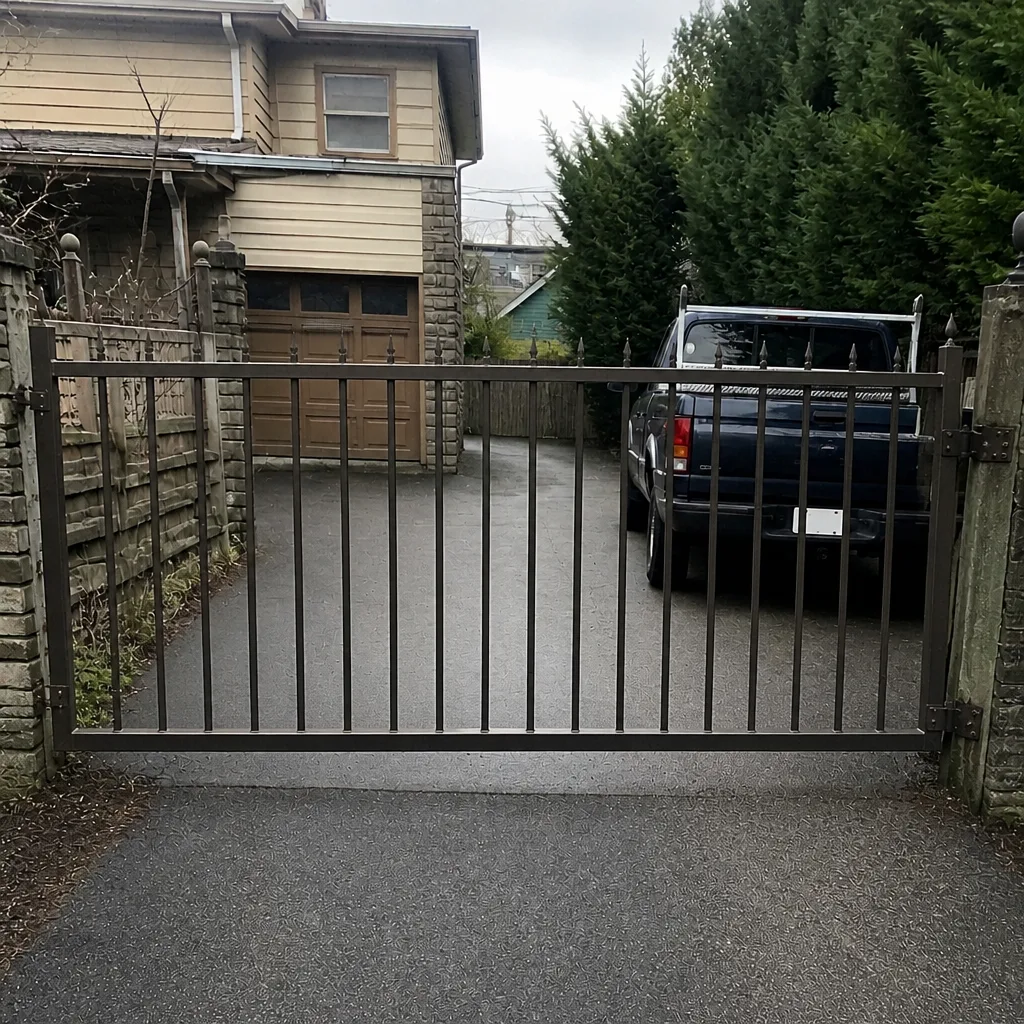
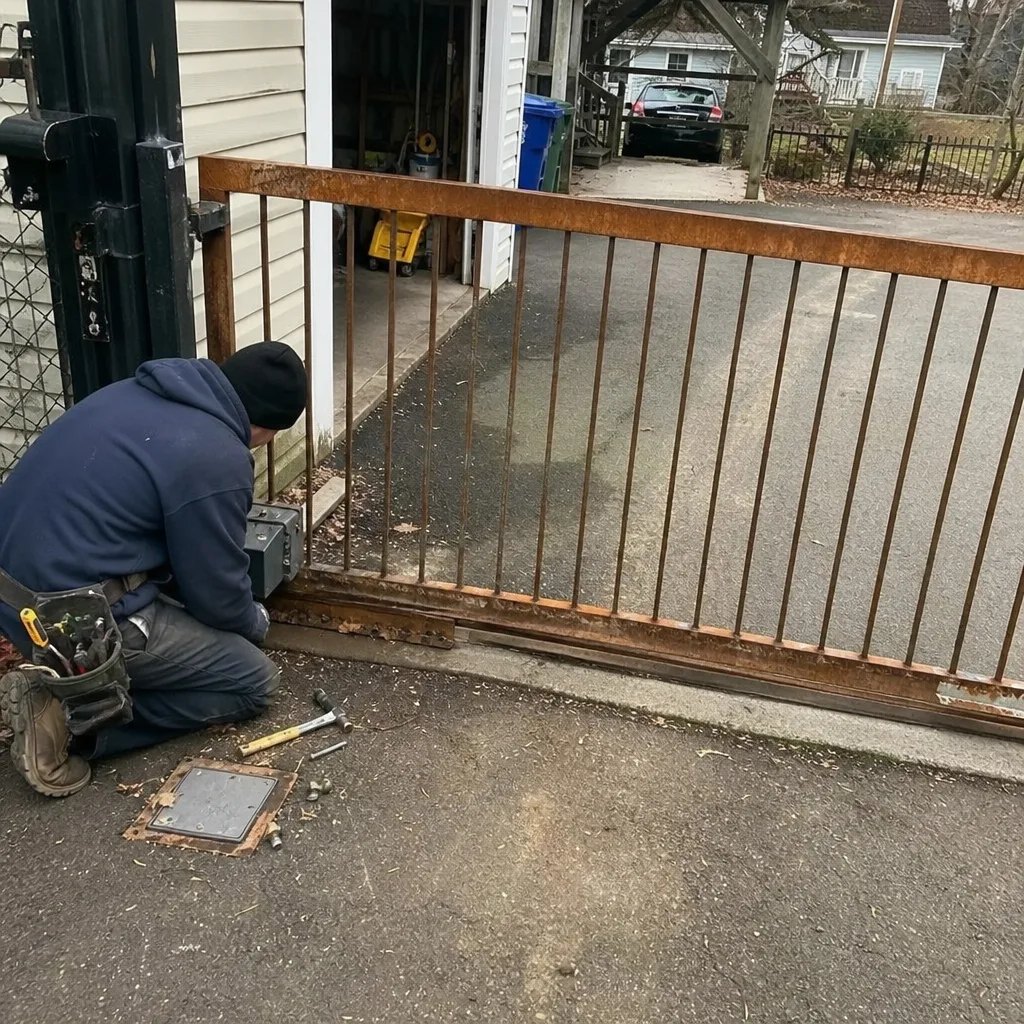
See the difference
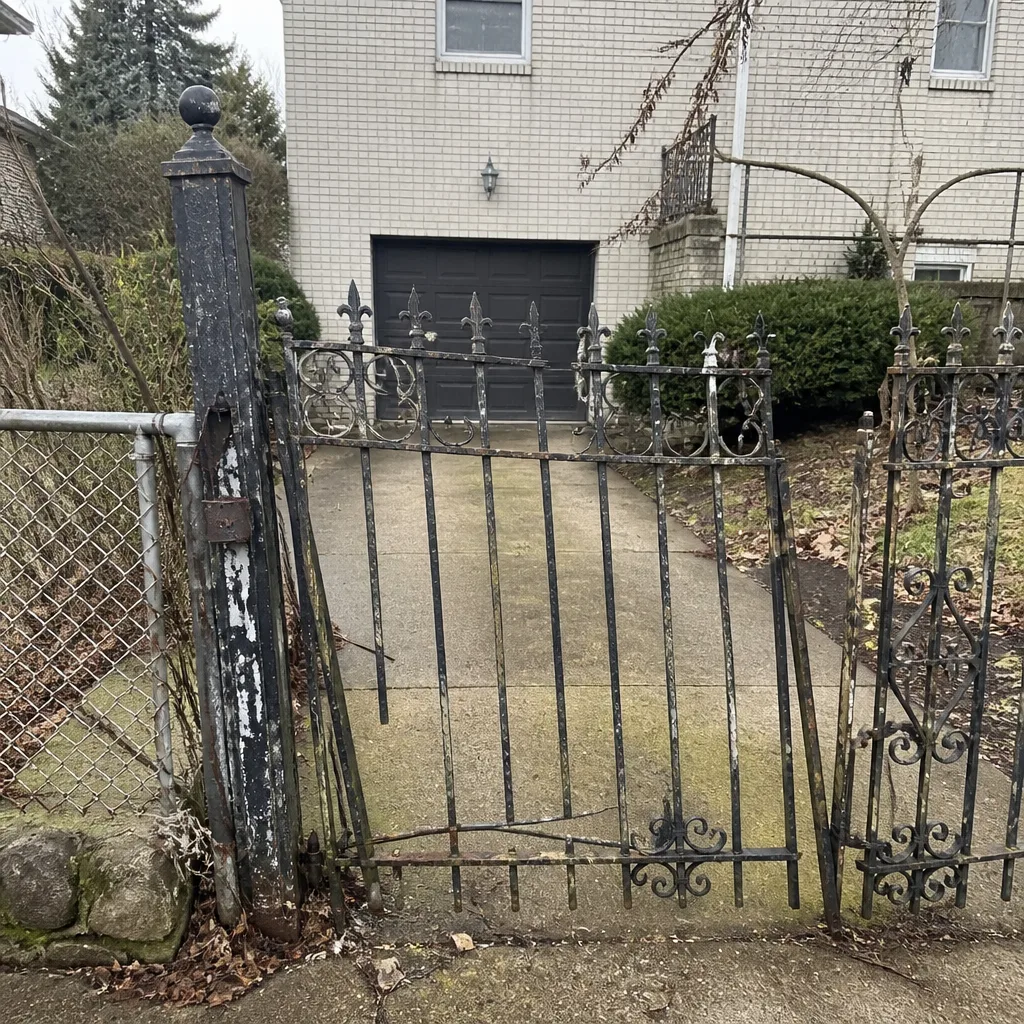 Before
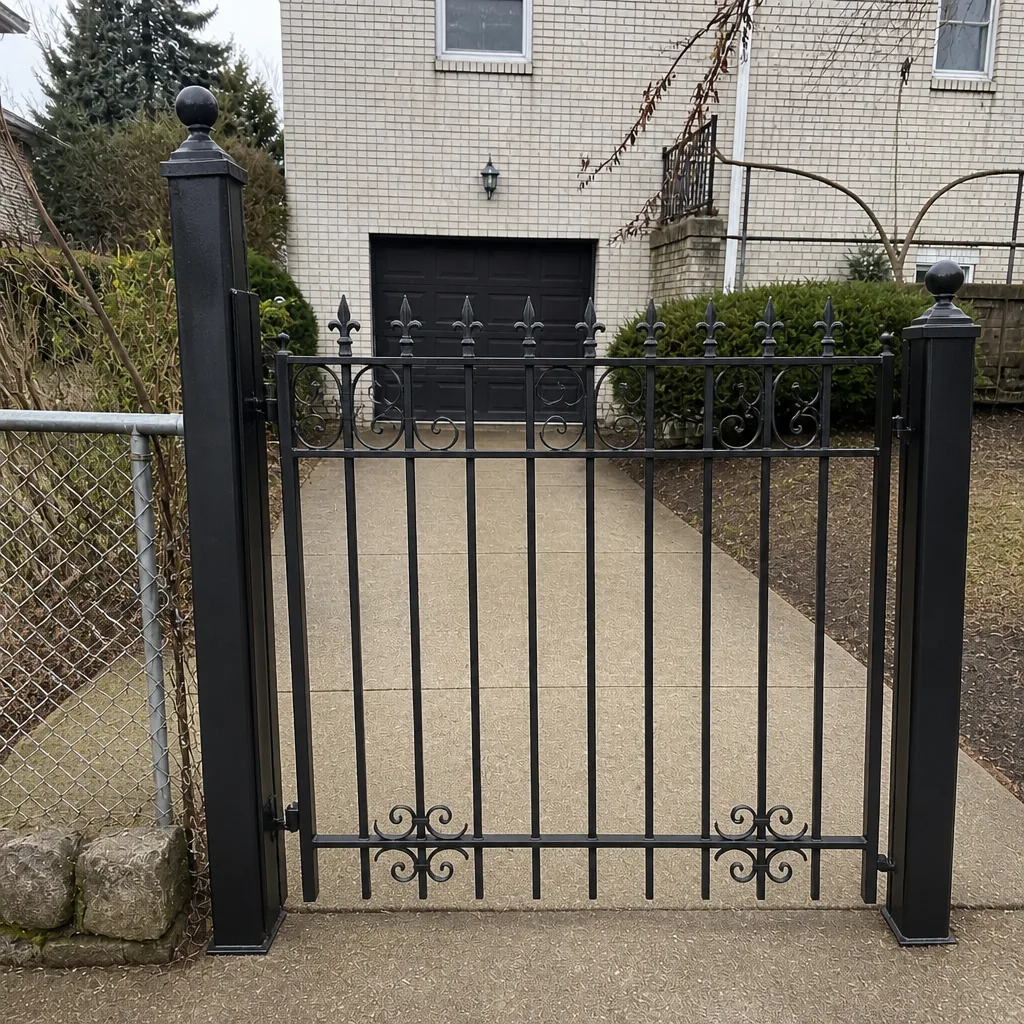 After
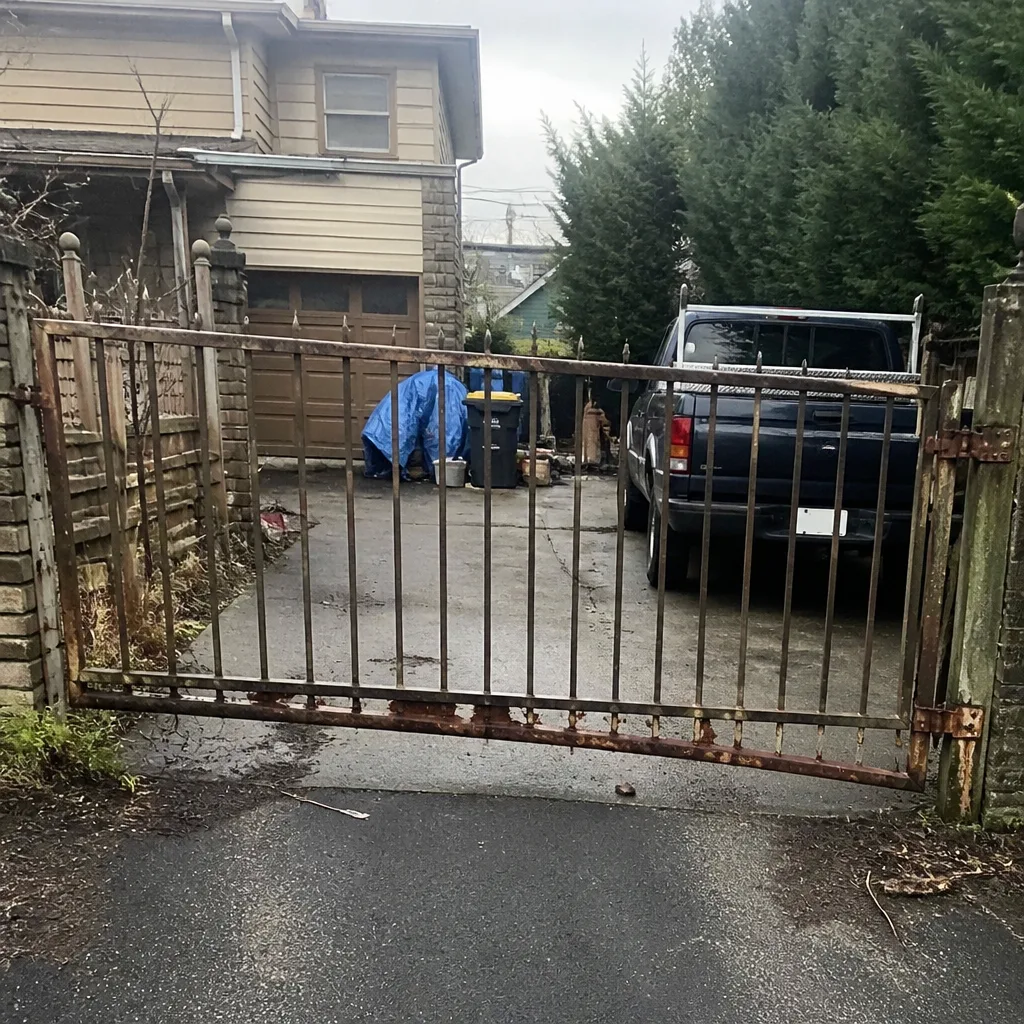 Before
 After
 Before
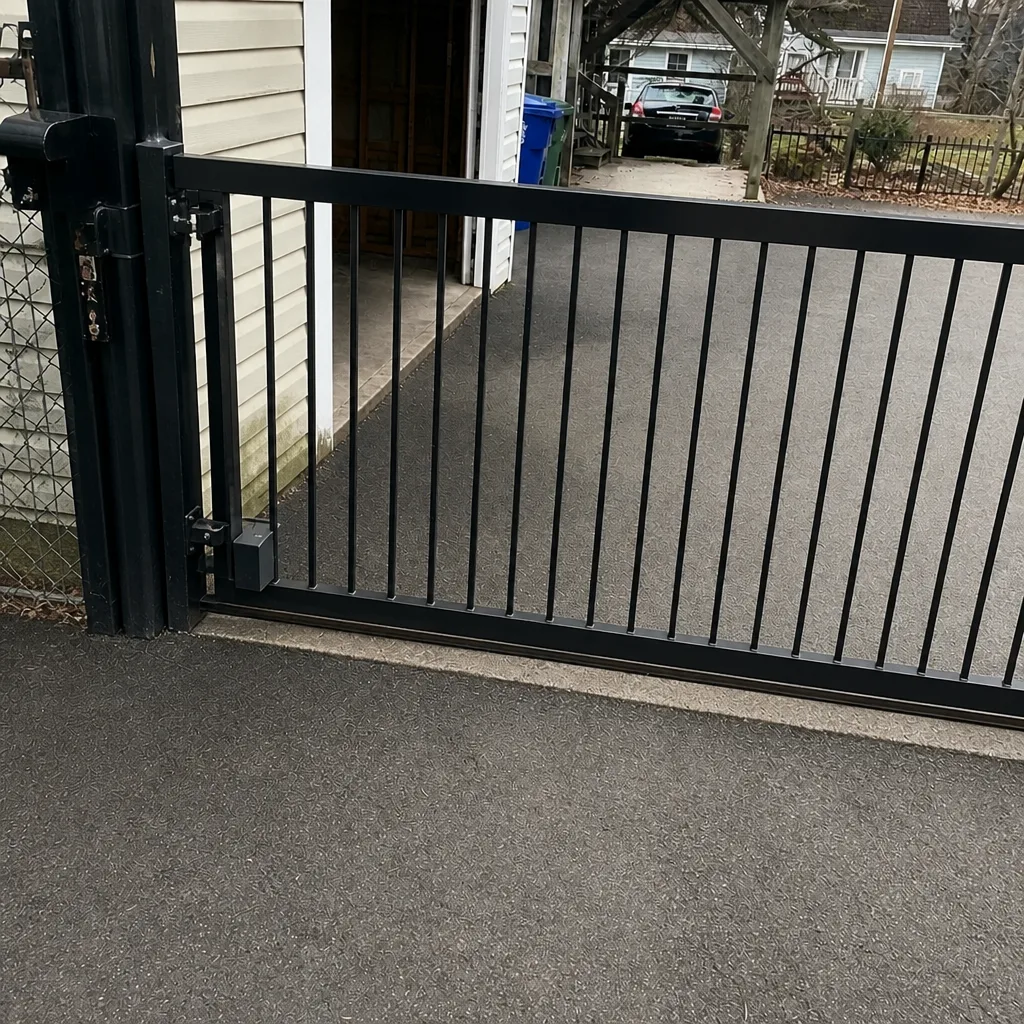 After
When to Call a Professional
Some seasonal care is homeowner work: clearing snow, keeping sensor faces clean, and loading a battery test. But certain issues call for a trained technician, and the safety rules matter. A gate operator is a machine under tension and load, and the electrical side involves live wiring. Don’t open a control box, disconnect an operator, or try to bypass a safety edge yourself. If a gate is binding, a post looks shifted, a board is corroding, or a safety sensor keeps tripping, that’s a professional diagnosis. Call if the gate won’t respond, if it reverses repeatedly, if it’s making a noise it didn’t make last season, or if you’re not sure whether the problem is mechanical or electronic. Gate Repair Pittsburgh offers free estimates in Pittsburgh – call (866) 361-7838. We answer 24/7. Fast dispatch from 7am to 7pm, Sunday through Friday.
Frequently Asked Questions
The fall pre-freeze reset. Adjusting limit switches for cold contraction, checking weatherstripping, and load-testing the backup battery in October and November prevents a large share of the winter failures we see. The winter ice discipline and spring post-heave inspection are important, but the fall reset is what sets them up to go smoothly. Call (866) 361-7838 for a free estimate if you’d rather have it done professionally.
Pittsburgh’s freeze-thaw cycle heaves and settles the soil under gate posts, and a post that shifts a fraction of an inch throws off the whole alignment. That’s why the spring inspection checks post plumb before anything else. A misalignment that shows up in March was usually created by fall moisture and the winter freeze. Call (866) 361-7838 for a free estimate and post check.
Not safely. A shovel edge or hammer can crack the gate and damage sensors, and hot water on a cold housing or lens can cause thermal shock that cracks it. Use de-icing product and gentle, hands-on clearing of ice and snow. Never force a frozen gate. Call (866) 361-7838 if the gate has already stopped responding.
Probably not. Many operator control boards trigger a thermal cutoff when the housing gets too hot, and the gate resumes when it cools. That’s a safety feature, not a fault. But if the gate misbehaves regardless of temperature, suspect the board or the loop detector and have it checked. Call (866) 361-7838 if you want it diagnosed.
Test the gate by hand with the operator disengaged. If the gate moves freely through its full travel, the mechanical side is clear and the operator is the likely issue. If it binds, rubs, or resists, the gate or its alignment is the problem. Check the post plumb first, then the gate by hand, then the operator. Call (866) 361-7838 for a diagnosis if you’re not sure.
Yes. We service both residential and commercial gates, including high-cycle entrances at apartment complexes and commercial properties, and we work on commercial-grade operators like FAAC and BFT as well as residential brands. Call (866) 361-7838 for a free estimate on commercial gate care.
The Bottom Line
A Pittsburgh gate survives four seasons by design, not by luck. The fall pre-freeze reset prevents winter failures, winter ice discipline keeps the operator from doing damage, the spring post-heave inspection catches what the freeze left behind, and summer humidity checks protect the control board. Follow the calendar by season, check the mechanical side before you blame the electronics, and never force a frozen gate. When the gate does fail, the right move is a specialist who knows the brand’s failure patterns and diagnoses the root cause rather than replacing parts. Our technicians have up to 14 years of experience on gates, and we work on nine operator brands, so we’re already familiar with the motor, board, or hinge that likely failed. Call (866) 361-7838 for a free estimate. We answer 24/7. Fast dispatch from 7am to 7pm, Sunday through Friday.
Written by the team at Gate Repair Pittsburgh.