
Last updated November 14, 2026
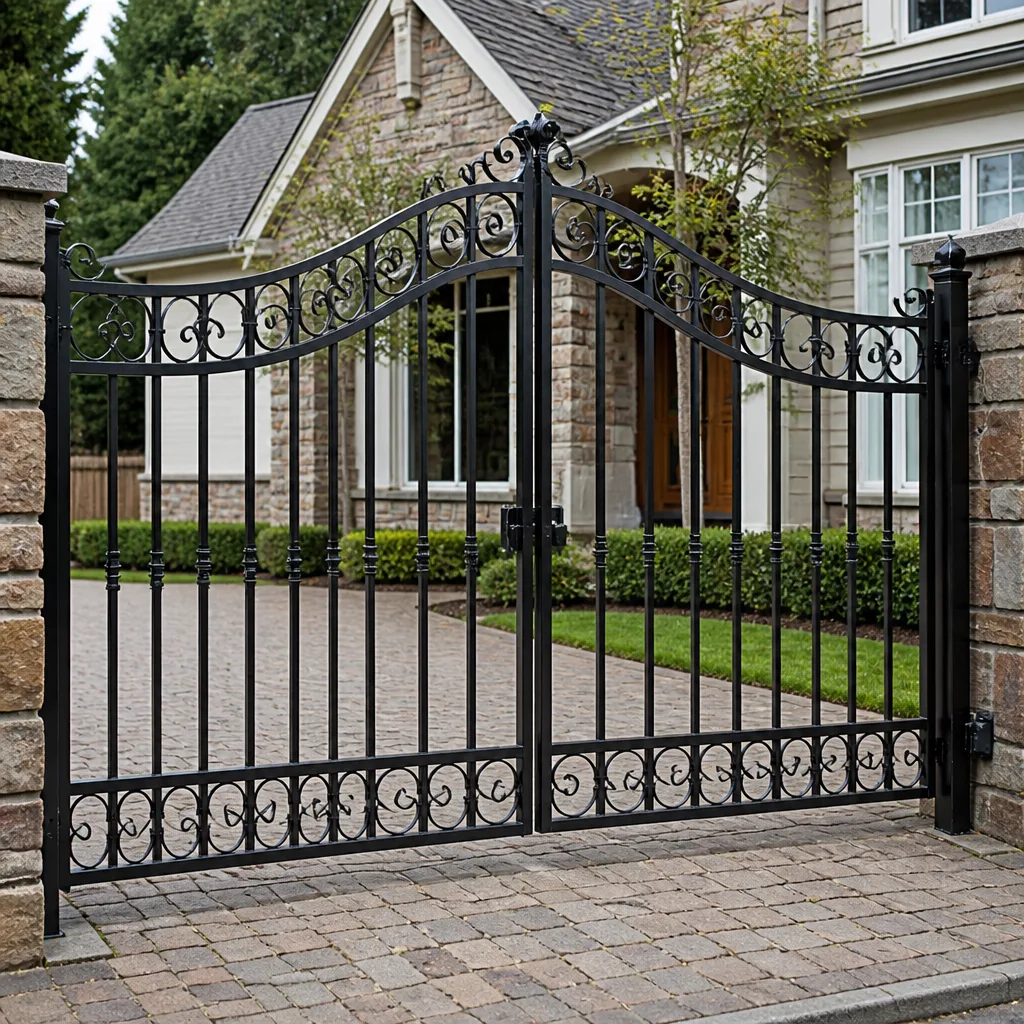 Wrought iron
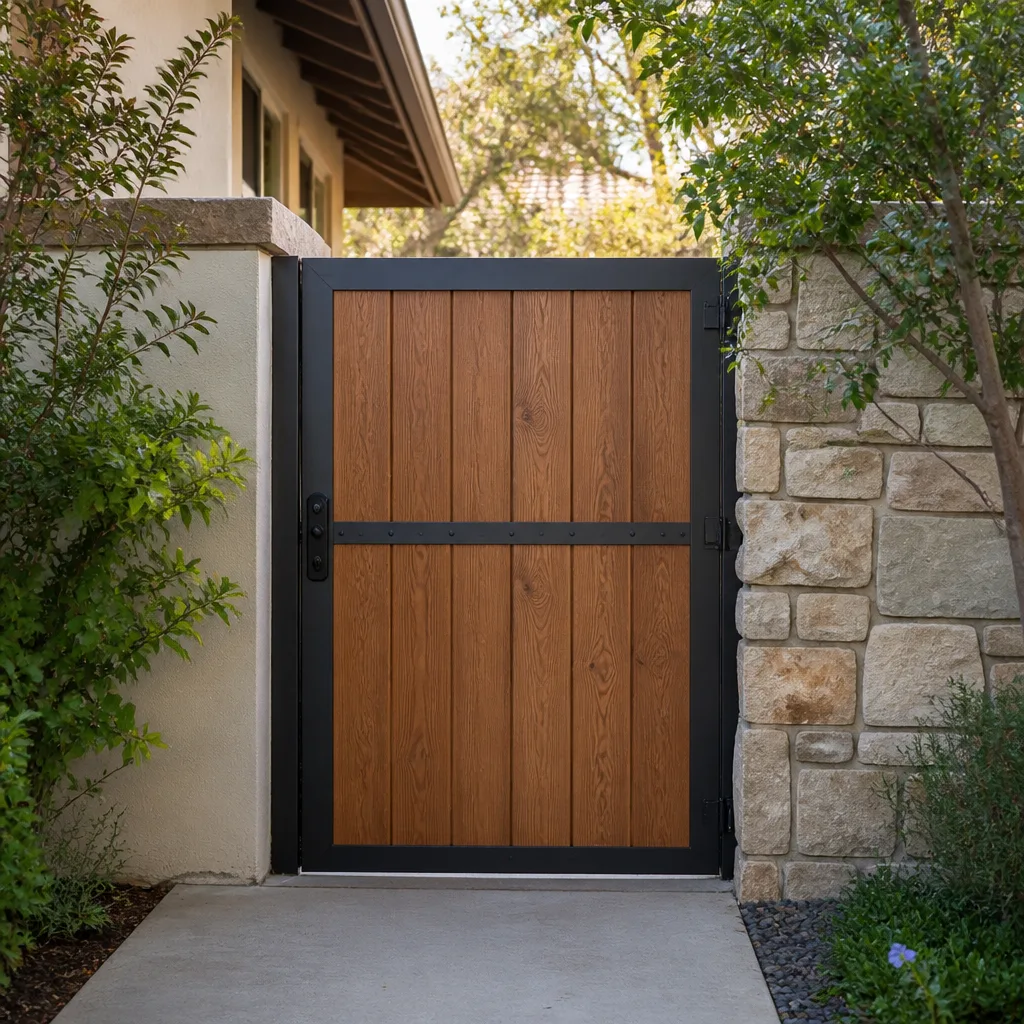 Wood & steel frame
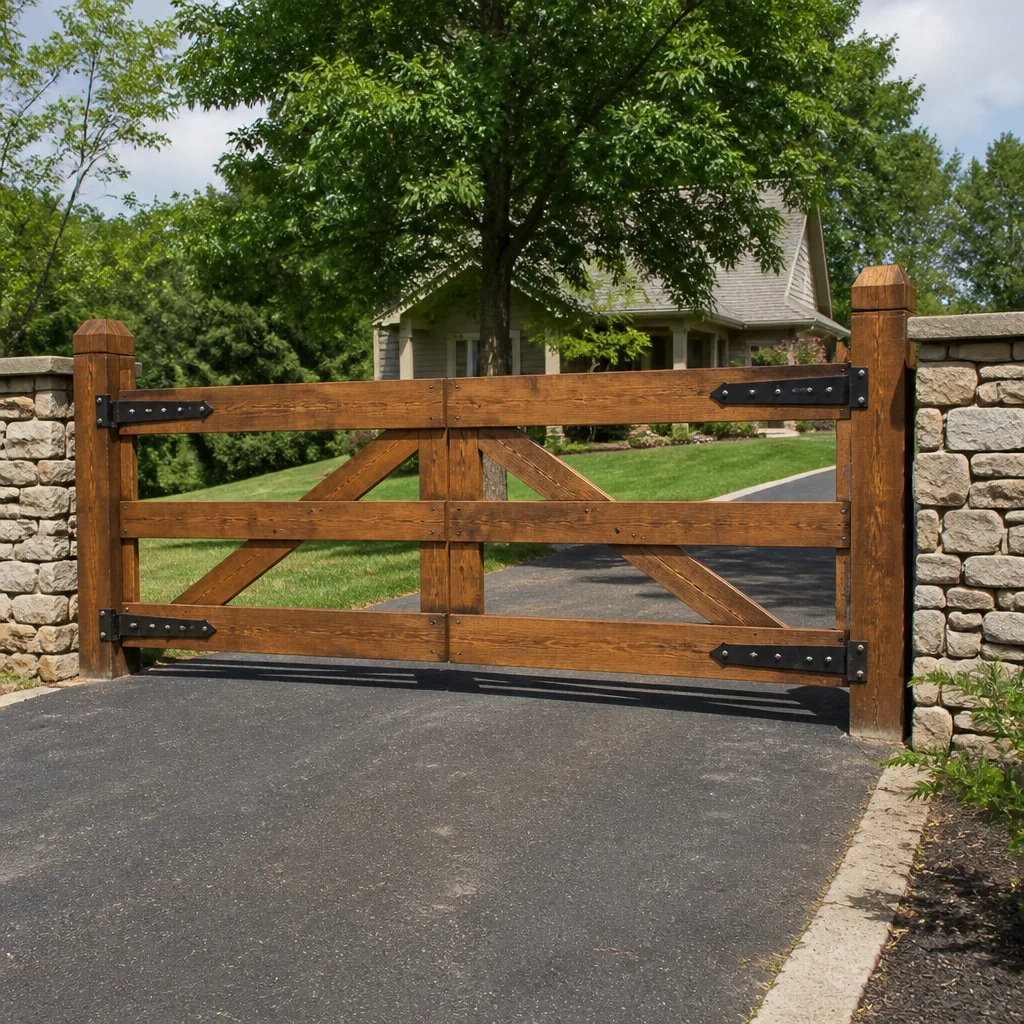 Farm & ranch
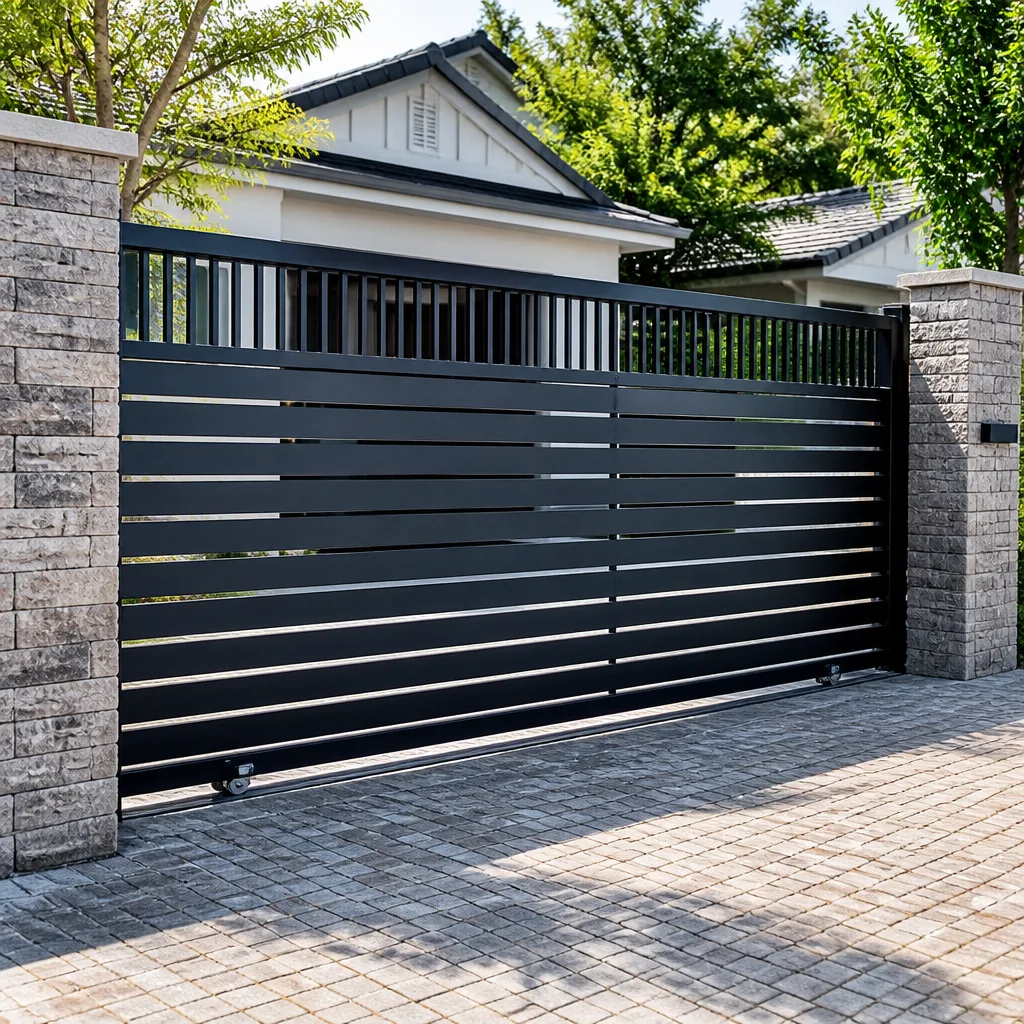 Sliding driveway gates
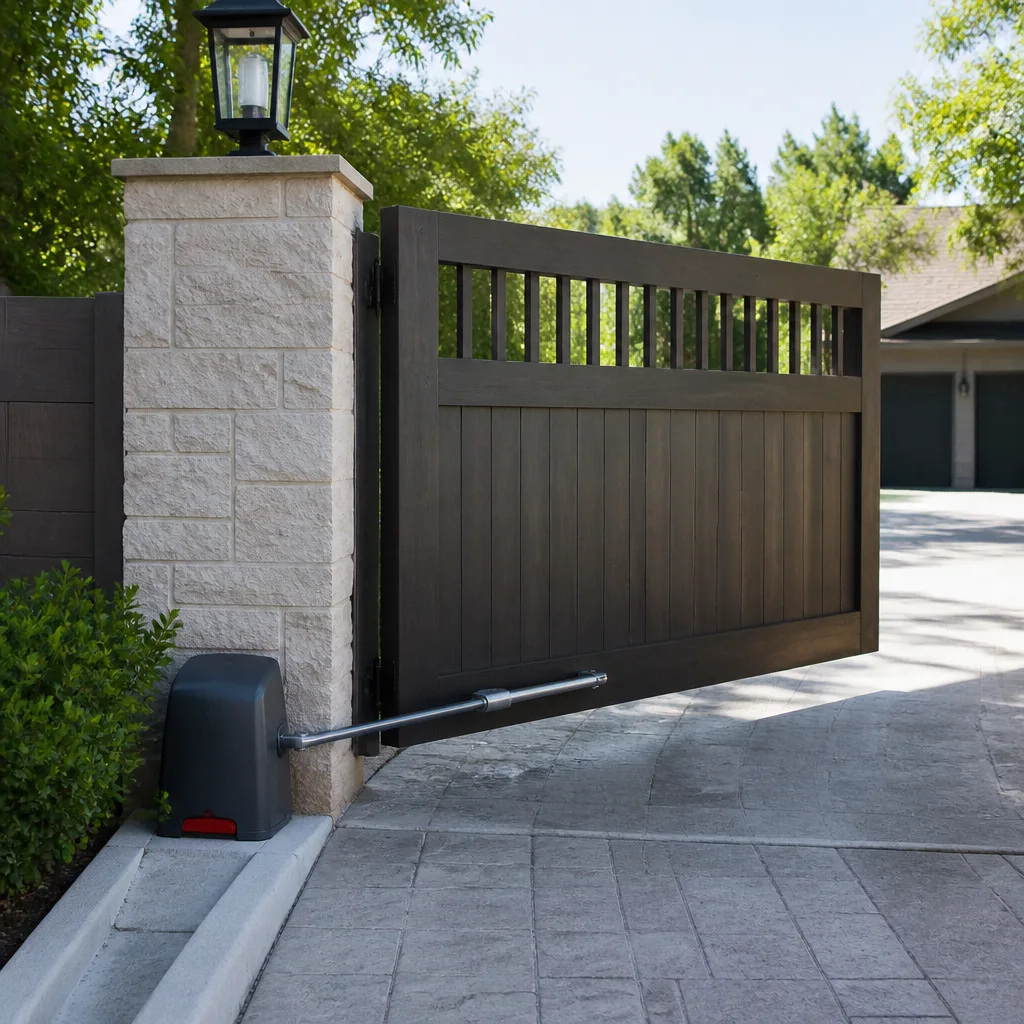 LiftMaster operators
Free on-site gate assessment - hinges, posts, and your LiftMaster or Nice gate operator checked before anything is quoted
The assessment is free and the quote is the invoice.
Get your free estimateThe Complete Guide to Gate Repair in Pittsburgh
Most gate failures in Pittsburgh aren’t operator failures at all. They’re foundation and post-shift problems, and that single fact explains why some homeowners end up replacing the same motor twice while the gate still drags, binds, or drifts out of alignment. Our freeze-thaw cycles, clay-heavy soil, and the city’s mix of steep lots and older housing stock push gate hardware in ways that a national troubleshooting template never accounts for. A new control board won’t fix a post that has heaved four inches since October. In this guide, we’ll walk you through how Pittsburgh gate failures really break down, how to triage one into the right root-cause category, and when repair genuinely makes sense over replacement.
Quick Answer
Gate repair in Pittsburgh usually starts with diagnosing whether the problem is structural (a shifted or heaved post), mechanical (hinges, rollers, track, or arm), electrical (power, wiring, board, or motor), or access-system (remotes, keypads, loop detectors, or entry controls). The fix that lasts is the one aimed at the actual root cause. Skipping straight to a new operator while the post or hinge is still out of alignment is the most common reason a gate fails again within a season.
Styles & brands we work with
- Wrought iron
- Wood & steel frame
- Farm & ranch
- Sliding driveway gates
- LiftMaster operators
Table of Contents
- Why Pittsburgh’s Freeze-Thaw Cycles Break Gates That Work Elsewhere
- The Four Root-Cause Categories of a Gate Failure
- How to Triage Your Gate Before You Call Anyone
- Brand-Specific Failure Patterns in Pittsburgh Installs
- What a Legitimate Repair Visit Should Include
- Repair or Replace the Operator? How to Decide
- Commercial and Multi-Family Gate Systems in Pittsburgh
- Keeping a Gate Working Through a Pittsburgh Winter
Why Pittsburgh’s Freeze-Thaw Cycles Break Gates That Work Elsewhere
Pittsburgh sits in a climate that cycles above and below freezing repeatedly through the winter, and that cycle is brutal on gate posts. Water moves into the soil around a post, freezes, expands, and then thaws. Do it enough times in one season and the post lifts, tilts, or twists slightly. The gate doesn’t fall down, but it stops swinging cleanly and the operator starts working against resistance it was never designed to fight.
Clay-heavy soil makes this worse. Clay holds water instead of draining it, so the ground around a post stays saturated longer and swells and shrinks more dramatically than sandy or rocky soil would. In our experience across Pittsburgh, a gate that was set to proper footing depth but not accounted for our soil movement will drift out of alignment far faster than the homeowner expects. The neighborhoods built on hillsides and older lots, where drainage already runs downhill toward the gate, see this most.
What this means in practice:
- Seasonal misalignment is normal here. A gate that drags in March but swung fine in November is telling you about soil movement, not a failing motor.
- Operators fight the symptom. When a post has shifted, the operator’s arm or track gets pushed out of its geometry. The motor strains, the limit switches drift, and eventually the control board faults out.
- Repeat failures are predictable. Replace the operator without correcting the post and the same failure comes back, often within a season or two.
None of this means Pittsburgh gates are uniquely fragile. It means the diagnostic order matters. Structural checks come before electrical ones, every time.
The Four Root-Cause Categories of a Gate Failure
Every gate failure we diagnose falls into one of four buckets: structural, mechanical, electrical, or access-system. Getting the category right on the first visit is what separates a lasting fix from a callback.
1. Structural
This is the post, footing, and frame. Symptoms include a gate that sags at the latch end, drags on the ground, binds partway through its swing, or has visibly shifted hinge posts. In Pittsburgh, frost heave and clay soil are the usual drivers. Loose hinges bolted to a moving post are a structural problem wearing mechanical clothing.
2. Mechanical
This is the hardware that moves: hinges, rollers, wheels, tracks, the operator arm, and the gate’s own frame and bracing. Symptoms include grinding, squealing, a gate that jumps the track (on a slide gate), or a swing gate that won’t close flush. Heavy panels that have come off the track or started to sag are a crush hazard, so treat a gate that has slipped its track as out of service until someone qualified looks at it.
3. Electrical
This is the operator itself, its power supply, its wiring, and its control board. Symptoms include a gate that runs in one direction only, stops mid-travel, trips a breaker, or does nothing when commanded. Wiring and control-board work is genuinely dangerous if you don’t know the system, so this is where we steer people away from DIY.
4. Access-System
This is how the gate is told to open: remotes, keypads, phone entry systems, and loop detectors. Symptoms include a gate that opens from the remote but not the keypad, a loop that doesn’t sense a car, or a code that stopped working. Access problems often look like operator problems until you test them separately.
Triage order matters. Structural, then mechanical, then electrical, then access. Fixing them out of order is how people end up with a new operator on a gate that still grinds.
How to Triage Your Gate Before You Call Anyone
You don’t need to diagnose your own gate, but a few quick observations help us help you faster and can tell you whether you’re looking at something urgent. Here’s the sequence we recommend.
- Look at the gate with the operator disengaged. If your operator has a manual release, disengage it and swing or slide the gate by hand. If it’s still stiff or dragging, the problem is structural or mechanical, not the motor.
- Check for visible post movement. Look at the hinge posts and the latch post. Is there a gap that wasn’t there before? Has the gate dropped at one end? That points to structural.
- Listen and watch during travel. Re-engage the operator and watch the gate open and close. Grinding, popping, or a gate that jerks through part of its travel suggests mechanical wear. A gate that runs smoothly but only in one direction suggests electrical or access.
- Test the controls separately. Try the wall switch or keypad, then the remote. If one works and the other doesn’t, you’re in access-system territory, not the operator.
- Look at the safety devices. If your gate has safety edges or loop detectors, check whether anything is blocking them or whether the loop area was recently dug up or resurfaced.
- Note when it started. A problem that appeared after a hard freeze or a heavy rain is very often structural. One that appeared after a power outage or storm is often electrical or access.
If at any point the gate looks unstable, has come off its track, or is hanging on a hinge, stop. Don’t run it. A heavy gate panel that fails under power can injure someone.
Brand-Specific Failure Patterns in Pittsburgh Installs
We work on electric gate repair across the brands that actually show up on Pittsburgh properties, and the failure patterns differ by brand and by whether the install is residential or commercial. Knowing the brand tells us where to look first.
Residential systems. Homeowners around Pittsburgh commonly have Ghost Controls or Mighty Mule swing and slide operators on driveway gates. These units are reliable when the gate itself is true, but they’re sensitive to resistance from a shifted post or a stiff hinge. A Ghost Controls operator that keeps faulting out is often protecting itself from a gate that’s dragging, not failing on its own. Mighty Mule boards tend to show issues after power irregularities, so we check the supply before condemning anything.
Commercial systems. Property managers and multi-family entrances in Pittsburgh more often run DoorKing and Elite access systems, sometimes with loop detectors and keypad or entry controls. DoorKing loop and access failures are frequently wiring or detector issues rather than operator failures. Elite operators in high-cycle commercial use show mechanical wear faster on the arm and hinges, and that wear shows up as electrical faults if nobody checks the hardware first.
Mixed systems. We also work on LiftMaster, FAAC, BFT, Linear, and Viking systems, and the same principle holds: diagnose the brand’s known failure points first, then confirm with the gate in front of you. Brand familiarity shortens the diagnostic path and cuts down on repeat visits.
What a Legitimate Repair Visit Should Include
Before anyone quotes you a repair, they should have run a real diagnostic. If a technician arrives, glances at the operator, and quotes a board replacement without checking the gate by hand, that’s a symptom fix, not a diagnosis. Here’s what a proper visit looks like.
- Manual operation check. Disengage the operator and confirm the gate moves freely by hand.
- Post and footing inspection. Check hinge posts and the latch post for movement, tilt, or frost heave.
- Hinge, roller, and track inspection. Look for wear, binding, and alignment issues.
- Operator and control-board check. Test the operator’s travel, limit settings, and board for fault codes.
- Power and wiring inspection. Confirm the supply and connections before condemning the board.
- Access-system test. Test remotes, keypad, and loop detectors independently.
- Safety-device check. Confirm safety edges and detectors are working and properly positioned.
- A written estimate before any work starts. You should know what the job costs, per job, before anyone touches the gate.
That checklist is what separates a repair that holds from a repair that comes back. We run it on every visit, and we’ll tell you plainly what we found and what it will take to correct it.
Repair or Replace the Operator? How to Decide
The decision comes down to three questions: is the gate itself structurally sound, is the operator repairable at reasonable cost, and does the current operator fit how the gate is actually used? If the post has shifted, fix the post first. After that, the operator decision gets simpler.
A repair usually makes sense when:
- The operator is otherwise healthy and the fault is isolated (a board, a limit switch, a wiring issue).
- The gate hardware is sound and the failure is a single component.
- The current operator’s capacity and cycle rating match how the gate is used.
A replacement usually makes sense when:
- The operator is undersized for the gate or for the traffic it sees.
- Parts for the model are hard to source.
- You’ve had repeated failures on the same board or motor.
We won’t push you toward a replacement you don’t need. We’ll tell you which one actually makes sense for your setup and give you a written price per job before any work starts, so there are no surprises on the invoice. If you’re not sure which way to go, a free on-site estimate from a specialist who knows your brand is the right first step. Gate Repair Pittsburgh handles gate repair and installation on the same team, so you won’t be handed off to a second contractor mid-project.
Commercial and Multi-Family Gate Systems in Pittsburgh
Commercial and multi-family entrances around Pittsburgh have a different failure profile than a residential driveway gate. They cycle far more often, they usually carry access controls and safety devices, and a failure means residents or tenants are locked out or the property is left open.
Common issues we see on commercial systems include:
- Loop detector failures. A gate that won’t close because the loop thinks a car is still there, often after pavement work or water intrusion.
- Keypad and entry-control faults. Codes that stopped working or keypads that no longer register inputs.
- High-cycle mechanical wear. Arms, hinges, and rollers on commercial operators wear faster and can present as electrical faults.
- Safety-edge and detector problems. These need to be working for the gate to operate safely on a busy entrance.
Because we work on systems like DoorKing and Elite regularly, we know their common failure points and can diagnose faster. For property managers, that means fewer repeat visits and a clear written scope before work begins. If your commercial gate is down, call and we’ll get it on the schedule.
Keeping a Gate Working Through a Pittsburgh Winter
You can’t stop the freeze-thaw cycle, but you can keep a gate from fighting it. The main thing is attention to alignment and drainage before the ground freezes.
- Check alignment in late fall. If the gate is already dragging, correct it before winter so the operator isn’t straining against a binding gate through the coldest months.
- Watch drainage. Water pooling at the gate’s footing is what drives heave. Clearing the path for water to drain away from the posts helps.
- Keep hinges and rollers clean and lubricated. Grit and stiffness make the operator work harder.
- Test the safety devices. Make sure safety edges and loop detectors are working before the season that stresses them most.
- Don’t force a frozen gate. If the gate is iced in, don’t run the operator against it. Free it manually first.
A gate that’s aligned and maintained is far less likely to fault out in the middle of a cold snap. If you notice alignment drift, it’s worth booking a visit to correct it before it becomes a full operator failure.
Common Mistakes to Avoid
- Replacing the operator before checking the post. If the post has heaved or shifted, a new operator will fight the same misalignment and fail again. Fix the structure first.
- Assuming a fault code means a bad board. Fault codes often point to resistance from a binding gate or a wiring problem, not a dead board. Diagnose the gate, not just the code.
- Ignoring seasonal alignment drift. A gate that drags after a freeze is telling you something about the footing. Waiting until it fails completely costs more.
- Skipping the manual check. If the gate doesn’t move freely by hand with the operator disengaged, the problem isn’t the motor. Skipping that check leads to the wrong repair.
- Overlooking the safety devices. A safety edge or loop detector that isn’t working can keep a gate from operating or make it unsafe. These need to be part of every diagnosis.
- Hiring a generalist for an access-system problem. Keypads, remotes, and loop detectors are their own troubleshooting domain. A fence or general contractor may not know the brand’s failure points.
- Hiring on price without a written scope. A price quoted before the gate is inspected can balloon once the real problem turns up. Insist on a diagnostic and a written estimate before work starts.
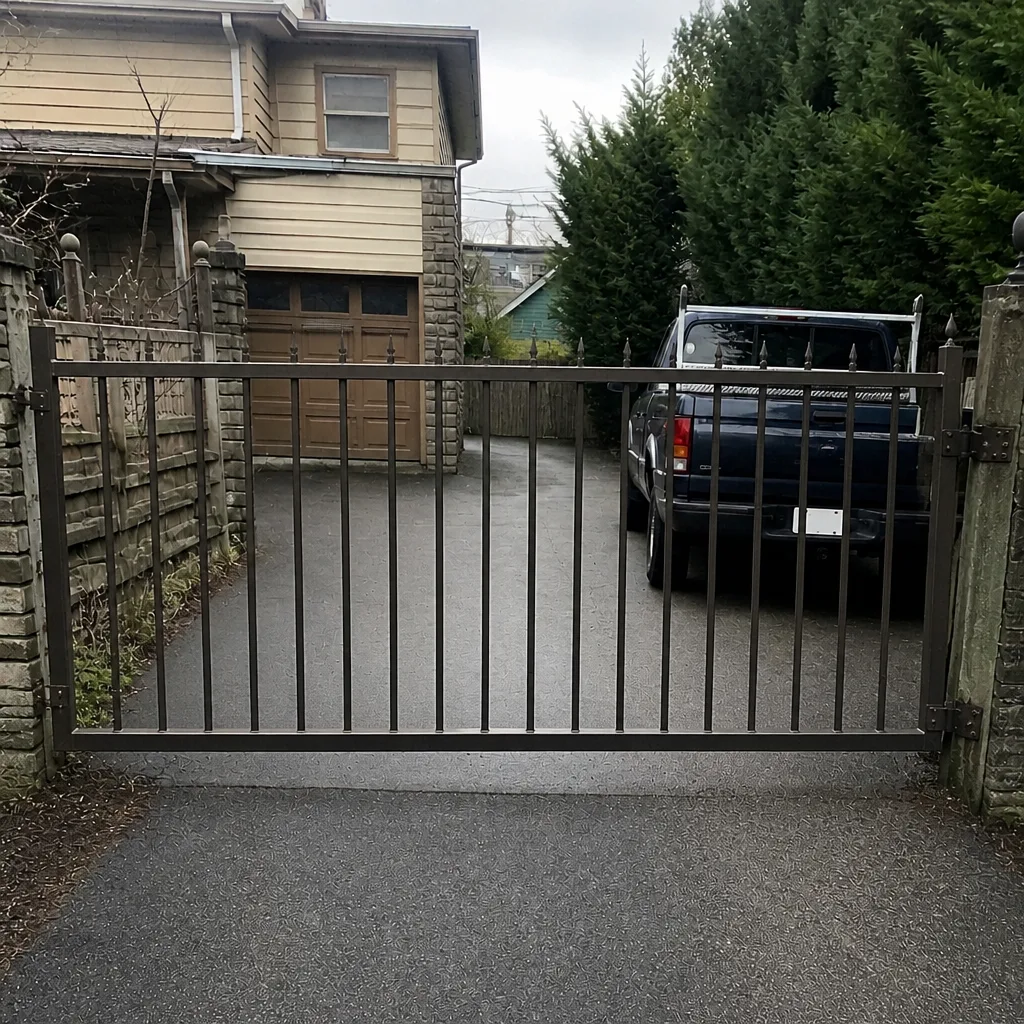
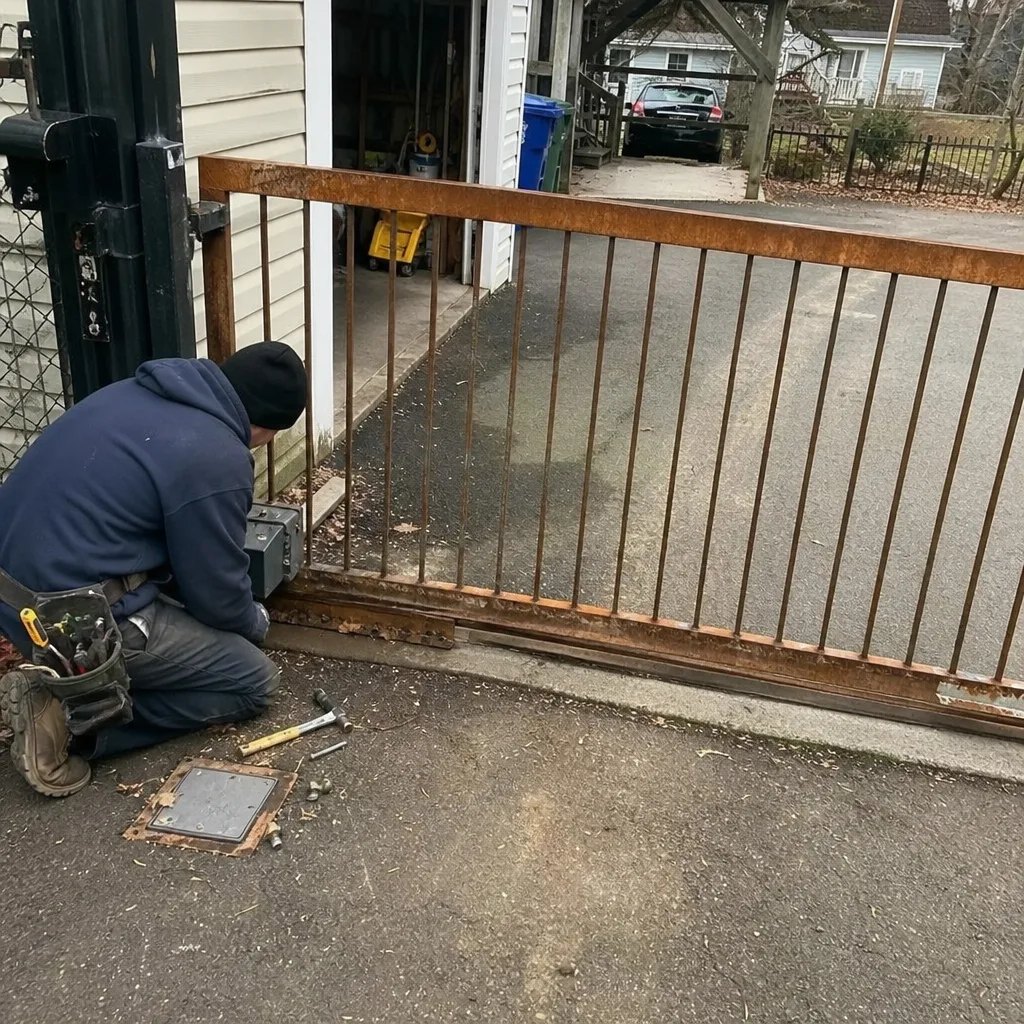
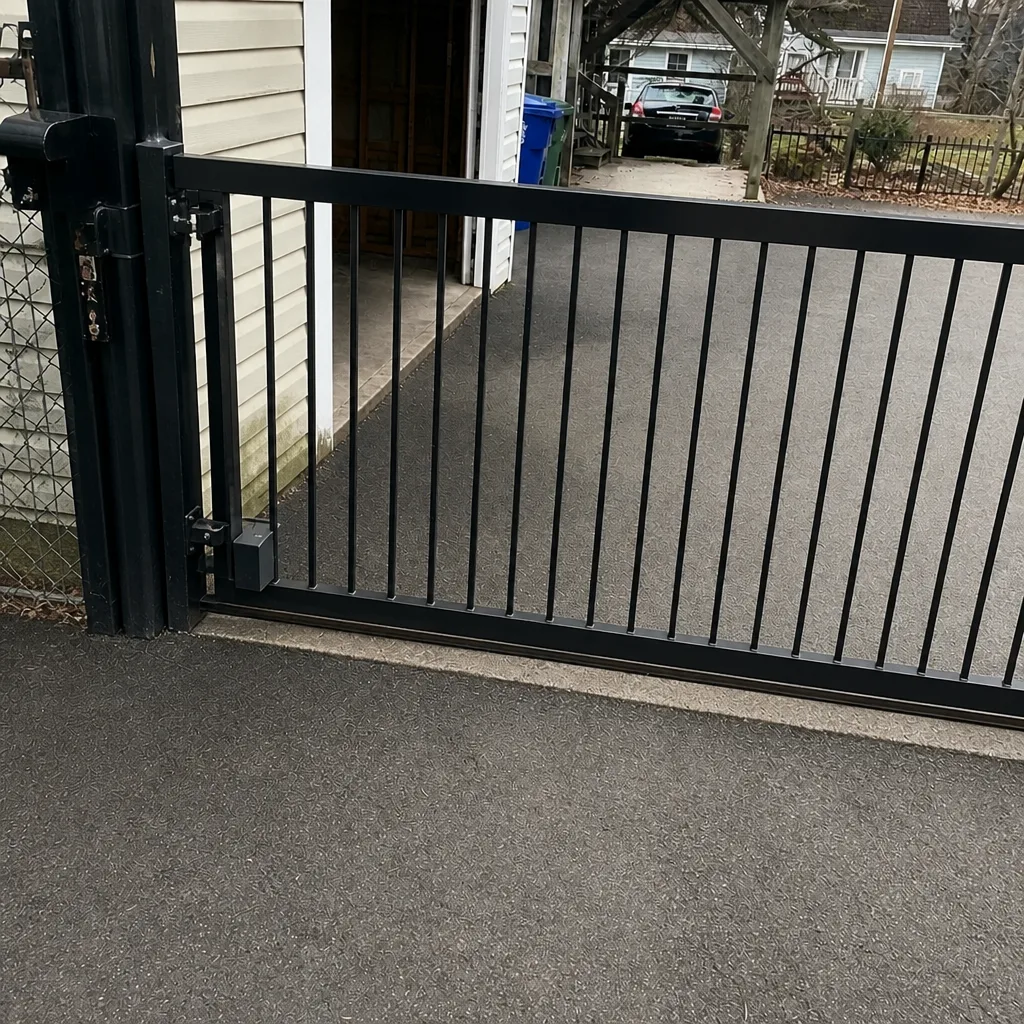
See the difference
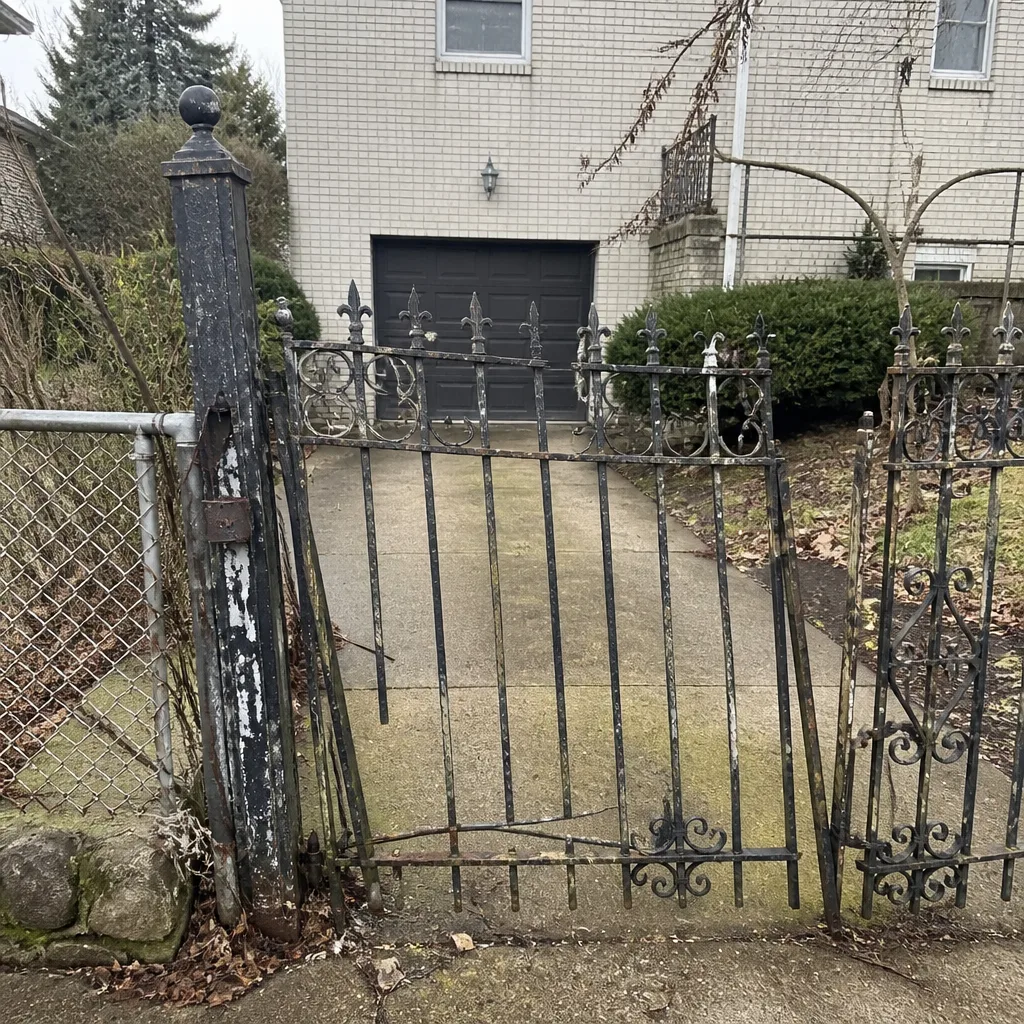 Before
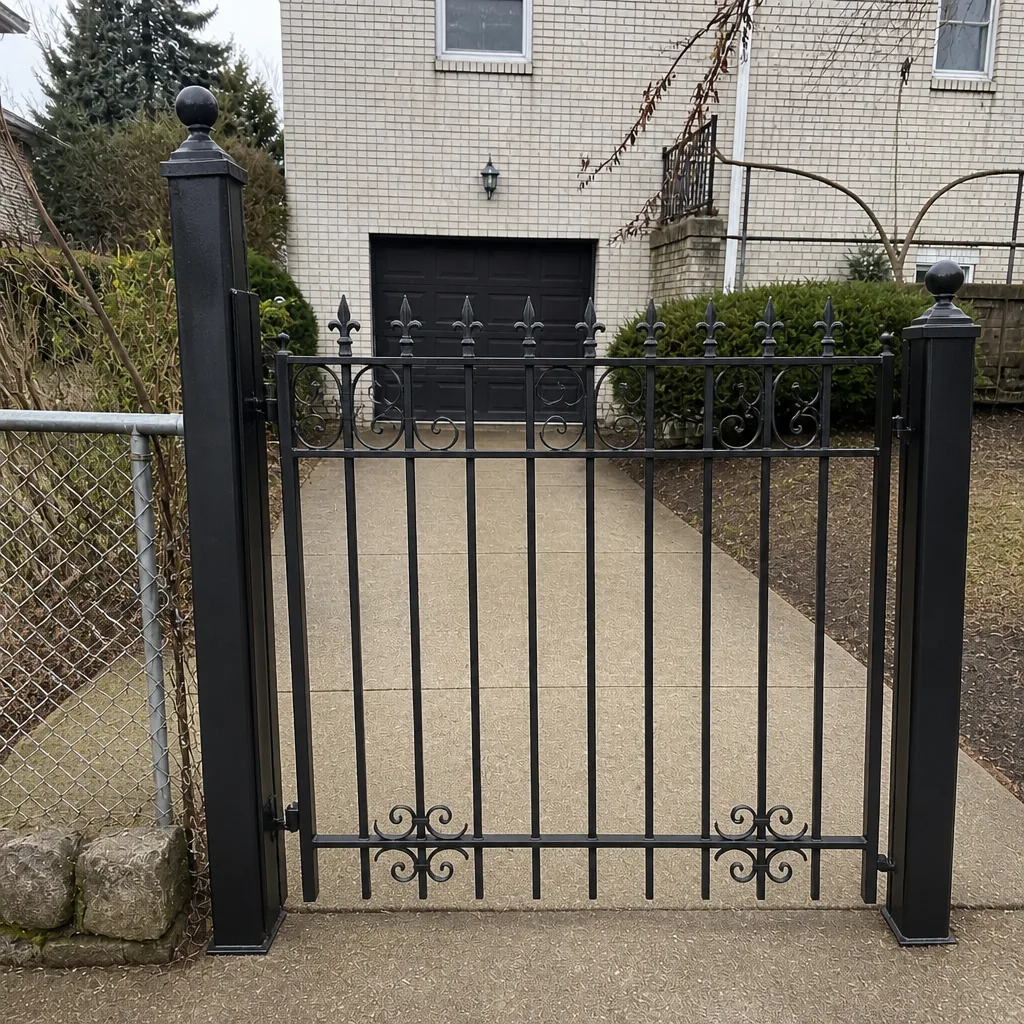 After
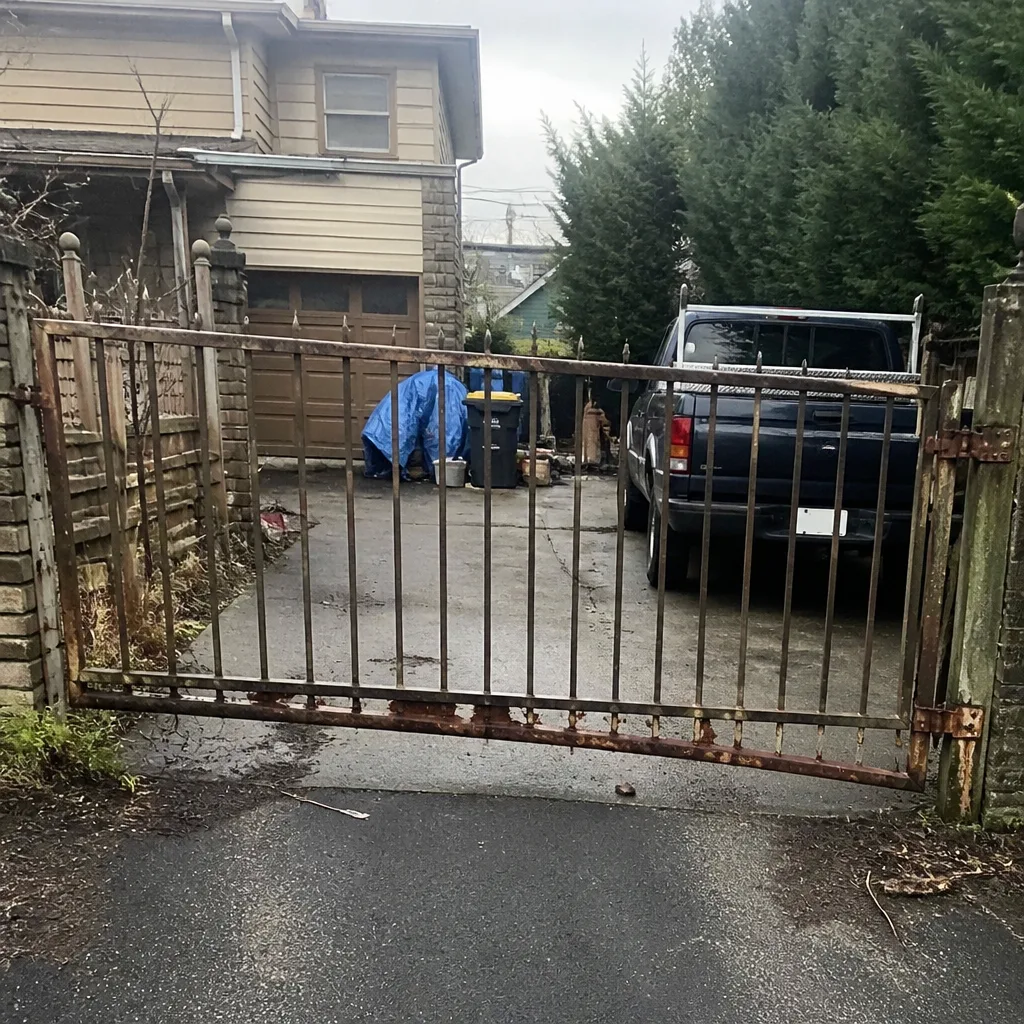 Before
 After
 Before
 After
When to Call a Professional
Some gate problems are safe to observe; others need a trained technician. Call a professional if your gate has come off its track, is hanging on a hinge, or looks unstable. Call if the operator trips a breaker, runs in only one direction, or stops mid-travel. Call if the post has visibly shifted or the gate is dragging, since correcting that safely means getting the footing and alignment right. Call if your safety edges or loop detectors aren’t working, because those protect people and vehicles. And call if you’ve already had a repair that didn’t hold, since a repeat failure usually means the root cause was missed.
Gate Repair Pittsburgh offers free estimates in Pittsburgh. Our technicians have up to 14 years of experience, we work on both manual and electric systems, and we handle repair and installation. Call (866) 361-7838 for a free estimate. We answer 24/7. Fast dispatch from 7am to 7pm, Sunday through Friday.
Frequently Asked Questions
Gate repair in Pittsburgh is priced per job, and the written estimate you receive after the diagnostic sets the final price. The cost depends on which root-cause category the failure falls into: a simple access-system fix costs far less than a structural correction that involves resetting a post before the operator can be repaired. Because we diagnose first and quote before any work starts, you’ll know the number up front. Call (866) 361-7838 for a free estimate.
Same-day service is often possible depending on the schedule and the nature of the failure. Call and we’ll tell you the soonest opening. We answer 24/7, and fast dispatch runs from 7am to 7pm, Sunday through Friday. Call (866) 361-7838 for a free estimate.
A gate that fails again after repair was usually fixed at the symptom rather than the root cause. The most common version is replacing an operator while a shifted post or stiff hinge is still forcing the gate out of alignment. The operator was never the problem; it was protecting itself. A proper diagnostic checks the gate structure and hardware before touching the electronics.
Not necessarily. A gate that won’t open at all can be a power or wiring problem, a control-board fault, a keypad or remote issue, or a safety device that’s holding it closed. The only way to know is to test each layer separately: manual operation, power, board, then access controls and safety devices. That’s what we do on the first visit.
Yes. Pittsburgh’s repeated freeze-thaw cycles move the soil around gate posts, and our clay-heavy soil holds water and swells more than looser soil would. The result is seasonal misalignment: a gate that drags or binds after a hard freeze. Correcting the post and footing is the fix that lasts, and it has to come before any electrical repair.
Both. We handle manual swing and slide gates along with electric and automated systems, working on brands like Ghost Controls, Mighty Mule, Linear, DoorKing, and Elite, among others. Mechanical hardware and access electronics are diagnosed on the same visit, so you don’t need to source a second contractor. Call (866) 361-7838 for a free estimate.
The Bottom Line
Most gate problems in Pittsburgh trace back to the ground the gate sits on, not the electronics bolted to it. Freeze-thaw cycles and clay soil shift posts, misalign operators, and make a gate fight its own motor. A repair that lasts follows the right order: structural, mechanical, electrical, access-system, then a written estimate before any work starts. Know the brand, check the gate by hand, and correct the root cause rather than the symptom. If you want a specialist who already knows your brand’s failure points, Gate Repair Pittsburgh offers free estimates and handles both repair and installation. Call (866) 361-7838. We answer 24/7. Fast dispatch from 7am to 7pm, Sunday through Friday.
Written by the team at Gate Repair Pittsburgh.