
Last updated November 14, 2026
 Wrought iron
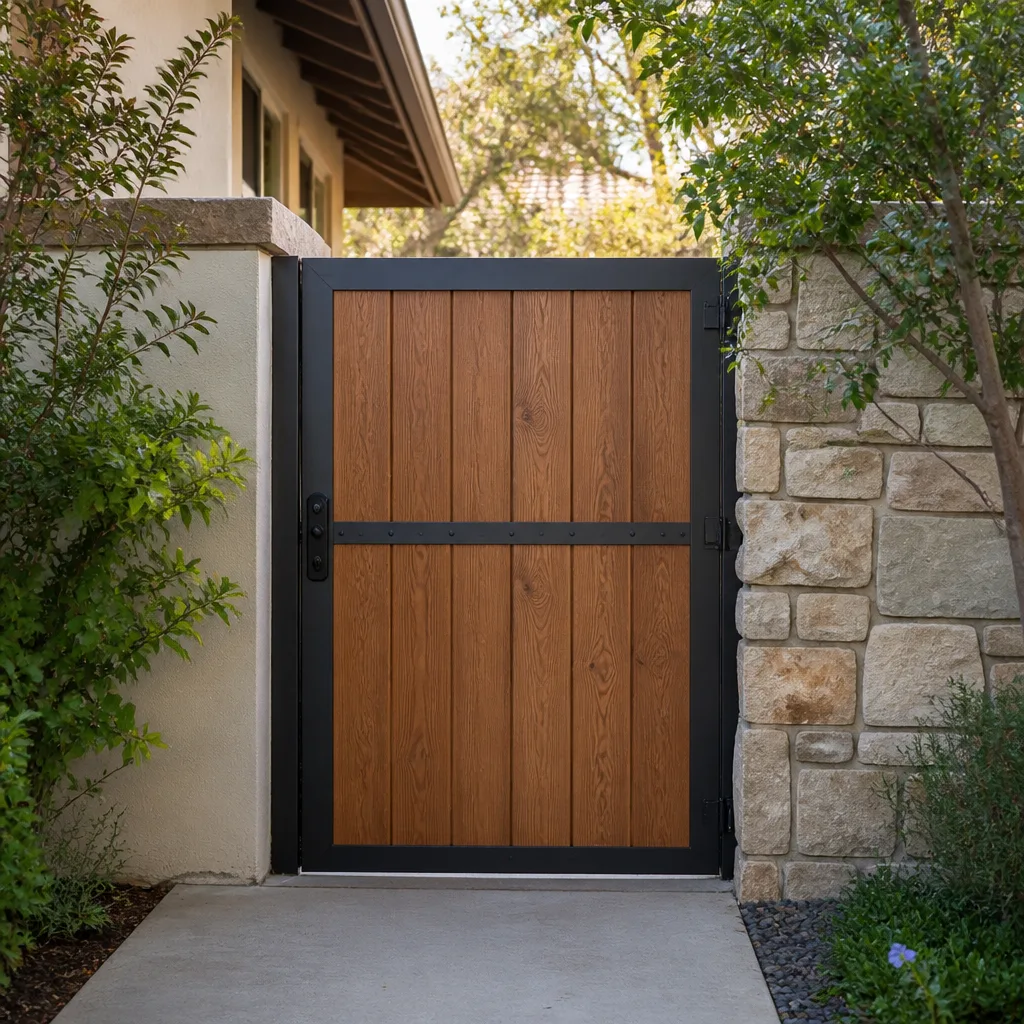 Wood & steel frame
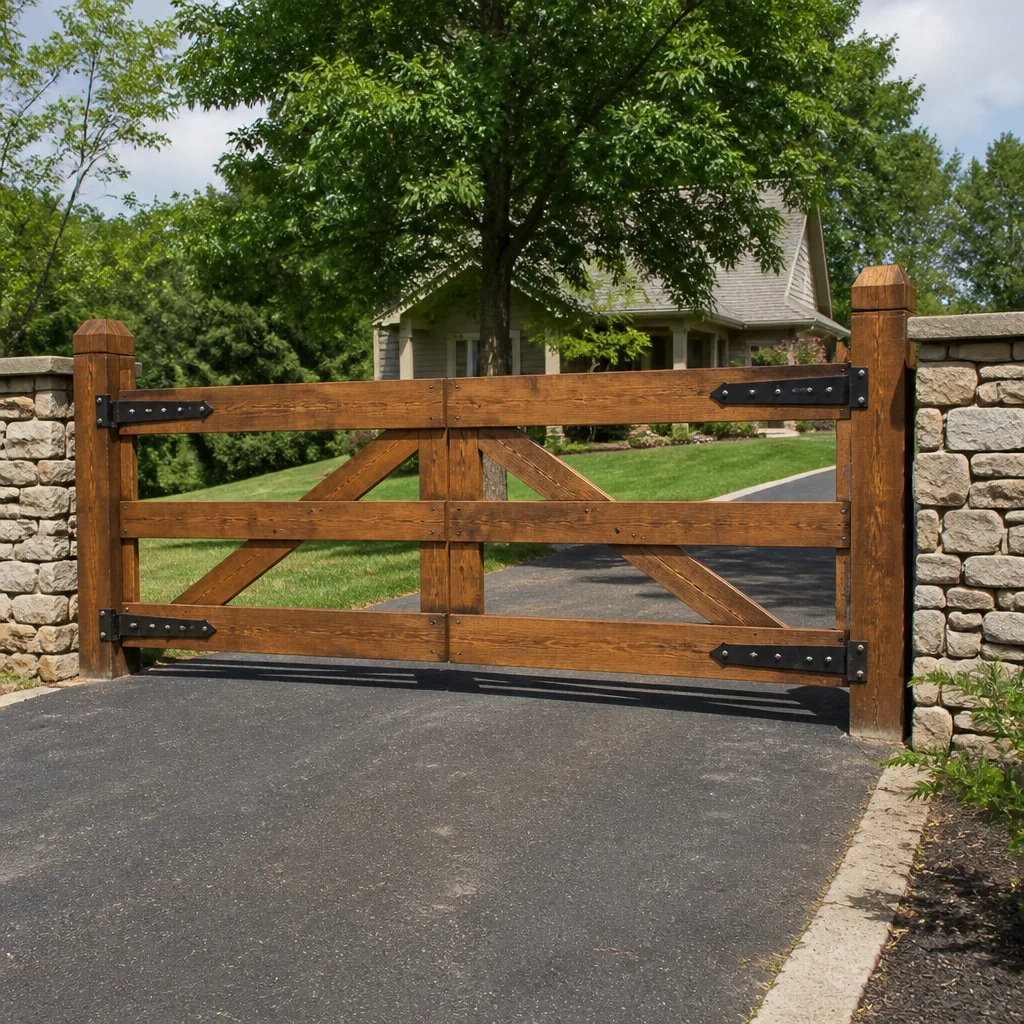 Farm & ranch
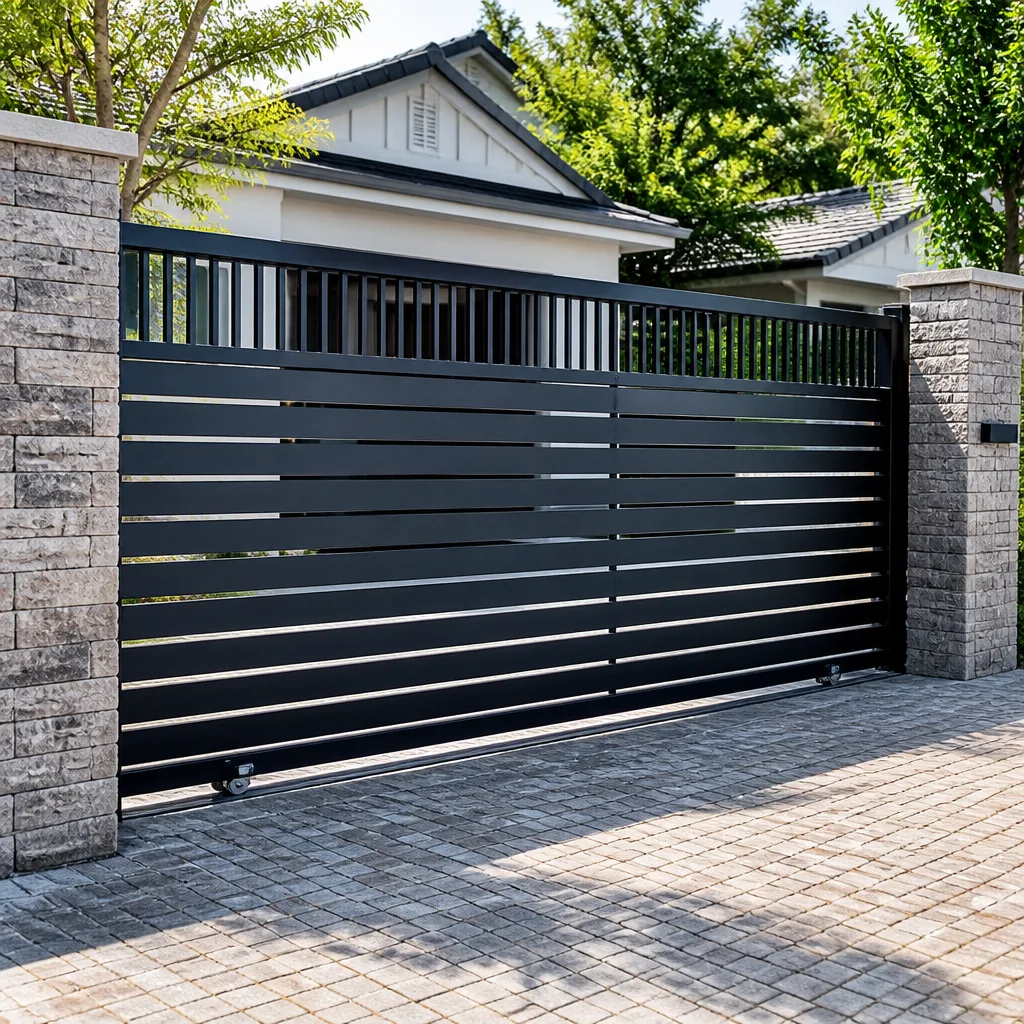 Sliding driveway gates
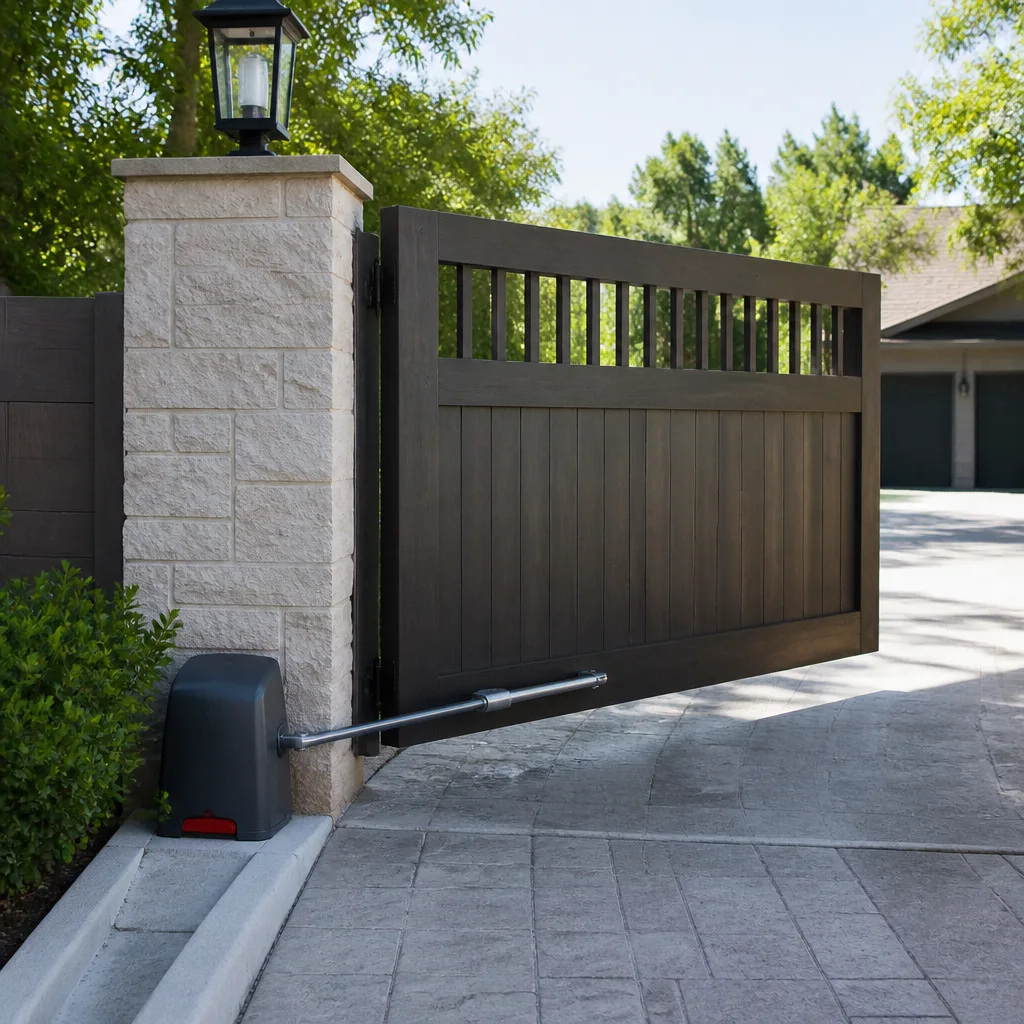 LiftMaster operators
Free on-site gate assessment - hinges, posts, and your LiftMaster or Nice gate operator checked before anything is quoted
The assessment is free and the quote is the invoice.
Get your free estimateGate Repair Emergency Preparedness Guide for Pittsburgh Homes
When your gate fails at 11pm in a Pittsburgh January, the most expensive thing you can do is call a technician before you’ve checked three things that take four minutes and have a 60% chance of being the entire problem. Gate emergencies in Pittsburgh follow patterns. A February cold snap seizes a hinge. A summer storm knocks out power and the operator’s battery has quietly died. A March thaw heaves the ground and the gate jams mid-travel. Homeowners who’ve prepared for those specific scenarios get back to normal fast. Everyone else waits. This guide covers the pre-checks, the manual release, how to secure a failed gate safely, and the emergency kit that saves a service visit.
Quick Answer
Gate emergencies in Pittsburgh usually trace to three root causes: a dead operator battery after storm power loss, a hinge or track seized by winter ice and freeze-thaw movement, or a manual release that was never located or tested. Before calling, check the power source, find and test the manual release, and look for physical obstructions at the gate’s travel path. If those three checks don’t resolve it, call (866) 361-7838 for same-day dispatch.
Styles & brands we work with
- Wrought iron
- Wood & steel frame
- Farm & ranch
- Sliding driveway gates
- LiftMaster operators
Table of Contents
- Why Pittsburgh Gates Fail on a Predictable Schedule
- The Four-Minute Pre-Call Checklist
- How to Use the Manual Release on Common Pittsburgh Operators
- How to Secure a Gate That Won’t Close
- Pittsburgh’s Three Signature Gate Emergencies
- What to Have Ready Before You Call
- Building Your Gate Emergency Kit
- What Happens When You Call
Why Pittsburgh Gates Fail on a Predictable Schedule
Pittsburgh’s gate failures cluster around the seasons, and once you know the clusters, you can prepare for them instead of reacting. The city’s freeze-thaw cycles are the biggest single factor. Water gets into a hinge pin or a track channel, freezes overnight, and expands. The next morning the gate binds. Do that for six weeks and something cracks.
Winter also stresses the operator. Cold thickens the lubricant in a swing-arm gearbox and stiffens the seals. A motor that works fine in July pushes harder in January. If the battery backup is weak, the cold finishes it. Then a February storm knocks out power across a neighborhood in the Pittsburgh hills and the gate opens once, then not at all.
Summer brings its own pattern. Lightning and wind take out power to the whole block, and gates with no battery backup simply stop. Afternoon thunderstorms roll through the South Hills and the North Hills hard enough to trip a breaker. A gate that never got its battery tested in the fall is dead by the first big outage.
And then March arrives. The ground heaves, posts shift slightly, and a slide gate that tracked cleanly all winter suddenly drags. Or a swing gate’s hinge settles and the gate scrapes the ground at the low end of its arc. In our experience, the first warm week of spring produces a burst of gate calls that all trace back to the same thing: winter ground movement. That predictability is exactly why preparation works.
The Four-Minute Pre-Call Checklist
Before you pick up the phone, run three checks. These take about four minutes and, in our experience, resolve a large share of “dead gate” calls on their own. If none of them fixes it, you’ll have far more useful information to give the technician.
- Check the power source. Confirm the breaker that feeds the operator hasn’t tripped. If the gate sits on a dedicated circuit, look at the panel. If the whole neighborhood is dark, that’s the answer and no amount of panel work helps. Note whether the operator’s display or indicator lights are on at all.
- Find and test the manual release. Locate the release mechanism on the operator housing or the arm. It’s usually a keyed lever, a pull cord, or a mechanical key you turn. Test that it disengages the gate from the motor. If you can’t find it, that alone is worth knowing before you call.
- Look at the travel path. Walk the full arc of a swing gate or the full track of a slide gate. Look for ice, debris, a shifted post, a sagging wheel, or anything physically blocking travel. A single frozen obstruction stops an otherwise healthy gate.
If the operator has power, the release works, and the path is clear, the fault is deeper – the control board, a loop detector, a limit switch, or the motor itself. That’s a technician’s job. But the information you gathered in those four minutes shortens the diagnosis considerably.
How to Use the Manual Release on Common Pittsburgh Operators
Every automated gate we work on has a manual release, and every homeowner should know theirs before the night they need it. The release lets you disengage the gate from the motor so you can open or close it by hand when power or the operator fails. Here’s how the release generally works across the operator types we see around Pittsburgh. Exact procedure varies by model, so confirm the details in your owner’s manual.
Swing-arm operators (common with LiftMaster and similar residential units). The release is usually a keyed lever on the arm where it meets the gate. You insert the release key, turn it, and lift or slide the lever to disengage the arm from the gate. Once disengaged, the gate swings freely by hand.
Linear and Ghost Controls residential operators. The release lever is typically on the operator housing or the actuator arm. Turn the key, flip or pull the lever, and the gate free-hands. On some models it’s a mechanical key rather than a cord, so the release key needs to be where you can find it.
FAAC and BFT swing operators. These European-style operators commonly use a keyed release built into the housing or arm. Insert the key, turn to release, then move the gate by hand. The release point is specific to the model, so locate it before you need it.
For any slide gate, the release usually disengages the motor pinion from the rack so you can push the gate by hand along its track.
Safety warnings, every operator:
- Never reach into the operator housing, the arm, or the gate’s travel path while the gate is powered or could move. A gate that re-engages while you’re in its path can crush a hand or worse.
- Never disable a safety edge, photoelectric sensor, or loop detector to force the gate to move. Those devices exist to stop the gate on an obstacle. A gate that ignores them is a serious hazard, especially where children or pets are present.
- If the gate is stuck midway, do not force it by hand against the motor. Disengage the manual release first, then move it.
- Do not attempt to open the operator housing to reach internal parts. The control board and wiring are for a trained technician.
If the release won’t disengage, the mechanism is seized – that’s a repair, and it’s a common one after a Pittsburgh winter.
How to Secure a Gate That Won’t Close
A gate stuck open is both a security exposure and a liability, so what you do in the first hours matters. The goal is to close off the driveway or entrance safely without creating a new hazard. Don’t leave a heavy gate propped in a way that could fall, and don’t rig anything that blocks an emergency vehicle.
Here’s the safe sequence:
- Disengage the motor first. Use the manual release so you’re not fighting the operator and so the gate can’t unexpectedly drive while you work around it.
- Move the gate to a closed or secured position by hand if the mechanism allows, then secure it. For a swing gate, a temporary strap or chain across the gate and post can hold it closed. For a slide gate that came off its track, don’t force it – block the opening behind it instead.
- If you can’t close the gate at all, secure the opening another way. Park a vehicle across the driveway temporarily, or set out temporary barriers, as long as they don’t obstruct a sidewalk, fire lane, or right of way.
- Keep the gate visibly marked if it’s stuck open in a way that could be a hazard after dark. A reflective marker or cone helps approaching drivers and pedestrians.
- Never block a gate that’s a required fire or emergency access point. Commercial and multi-family gates are often life-safety access. If you’re a property manager, call for service rather than barricade the entrance.
One caution: avoid propping a heavy gate with a loose brick or block at the bottom that could kick out or tip. A gate panel that falls on a person or a vehicle is a far worse outcome than a night with the gate open. If you’re unsure, secure the opening rather than the gate. For property managers responsible for an electric system, a fast call is the safer choice.
Pittsburgh’s Three Signature Gate Emergencies
Certain failures recur here more than anywhere generic advice covers. Knowing them by name helps you spot them.
Ice-locked gates
Water in a track, hinge, or between the gate and the ground freezes overnight and locks the whole assembly. In the morning the operator strains against a gate that can’t move, and repeated attempts can burn out a motor or strip a gear. If your gate feels frozen, don’t keep cycling it. Disengage the release and check for ice in the track and at the hinges. Melting it loose with warm water (not a hammer or a pry bar) is a temporary fix – the underlying drain or seal problem needs a look.
Storm power loss with no battery backup
After a summertime outage, a gate with a dead or missing battery simply won’t operate, even after the power returns if the battery never recharged. The fix at the moment is the manual release to move the gate by hand, then a technician to test the battery and replace it if needed. A gate that worked all year on battery backup and fails the first big outage usually had a battery that was already on its way out.
Post-shift jams after the March thaw
The ground heaves as it thaws. A slide gate’s track can shift out of level, or a swing gate’s hinge post can move just enough that the gate binds halfway through its travel. When a gate starts stopping mid-travel in the spring, the post or track has usually moved. This one needs a technician – re-levelling or resetting a post is a job, not a homeowner fix, and forcing the gate will only add damage.
See the difference
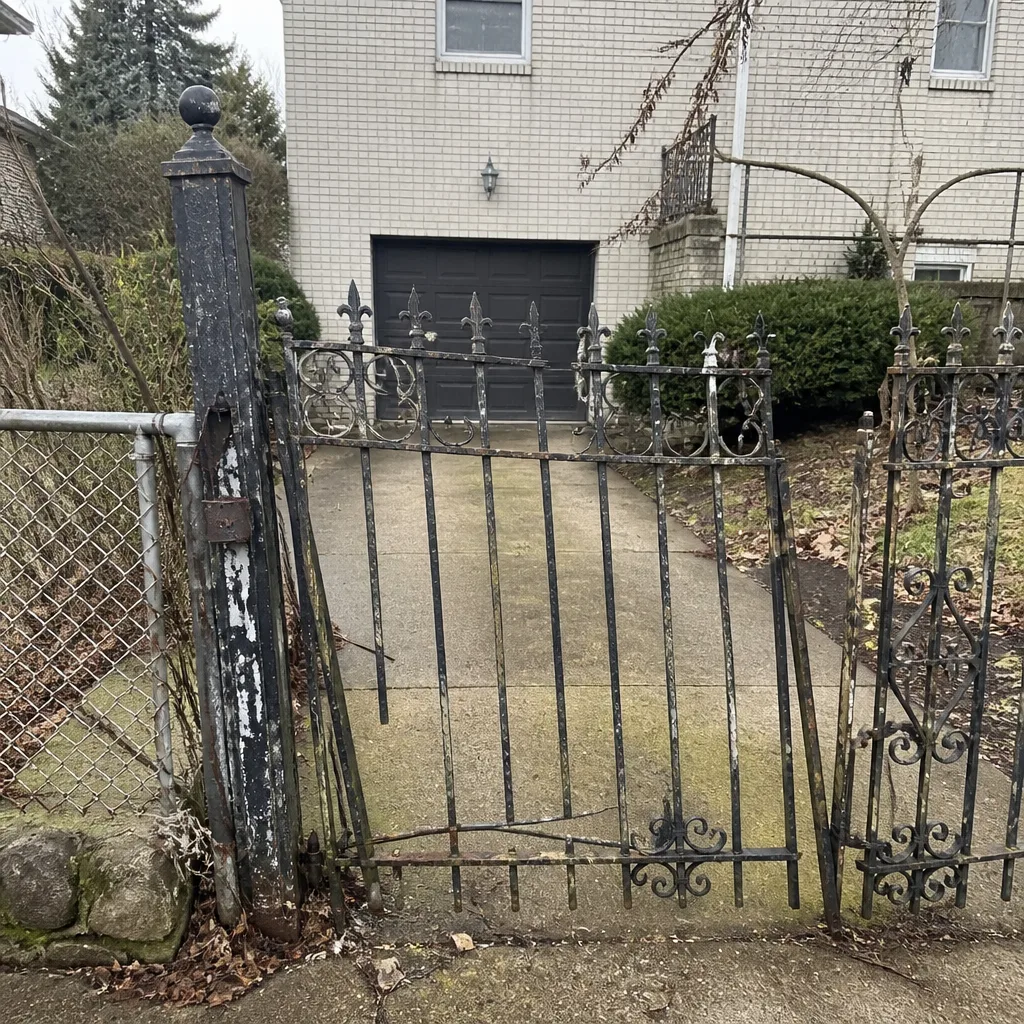 Before
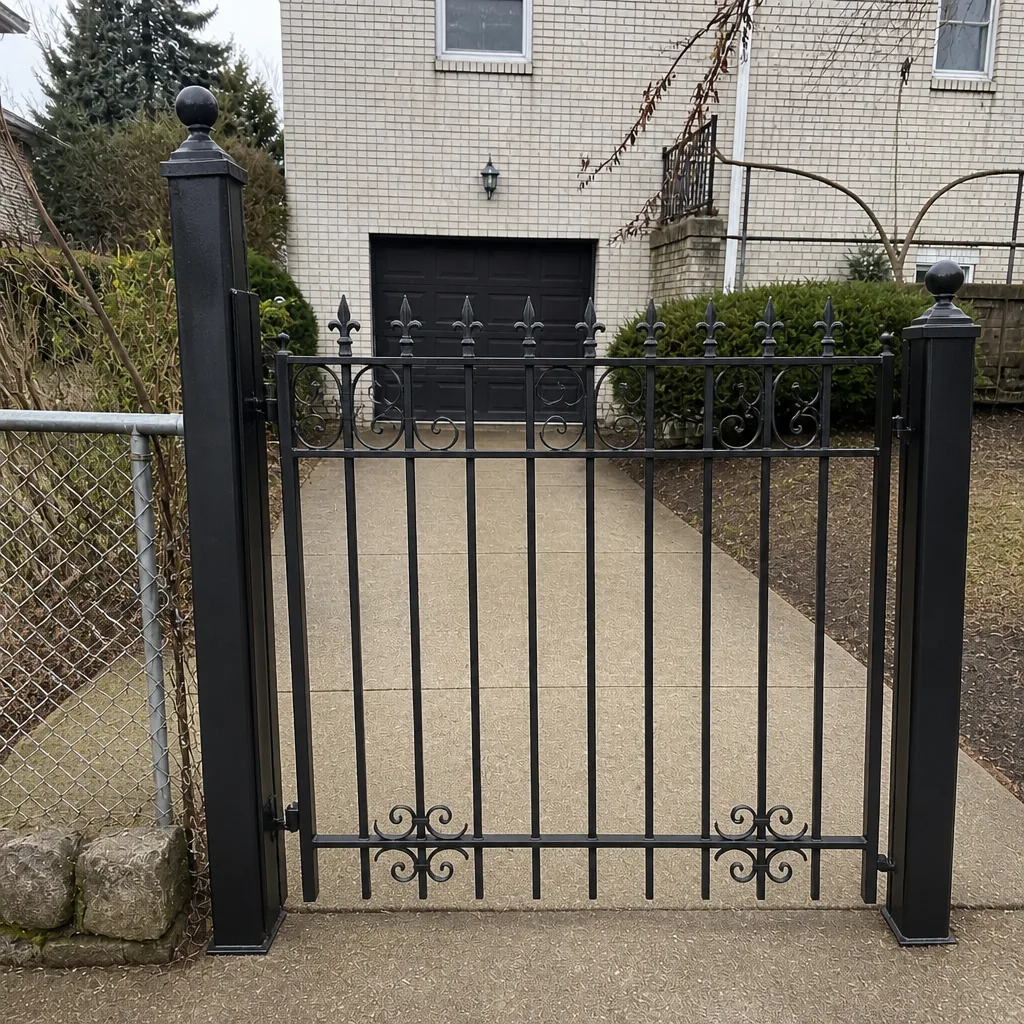 After
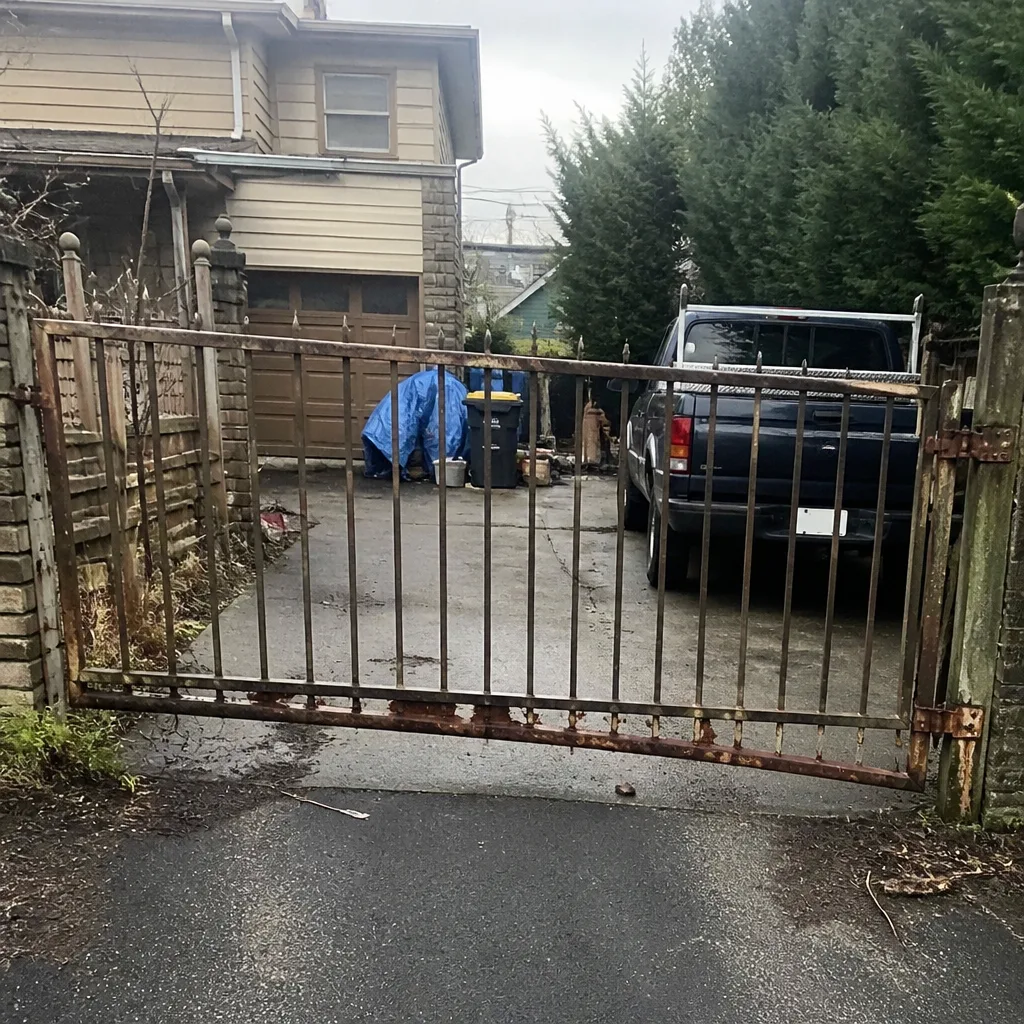 Before
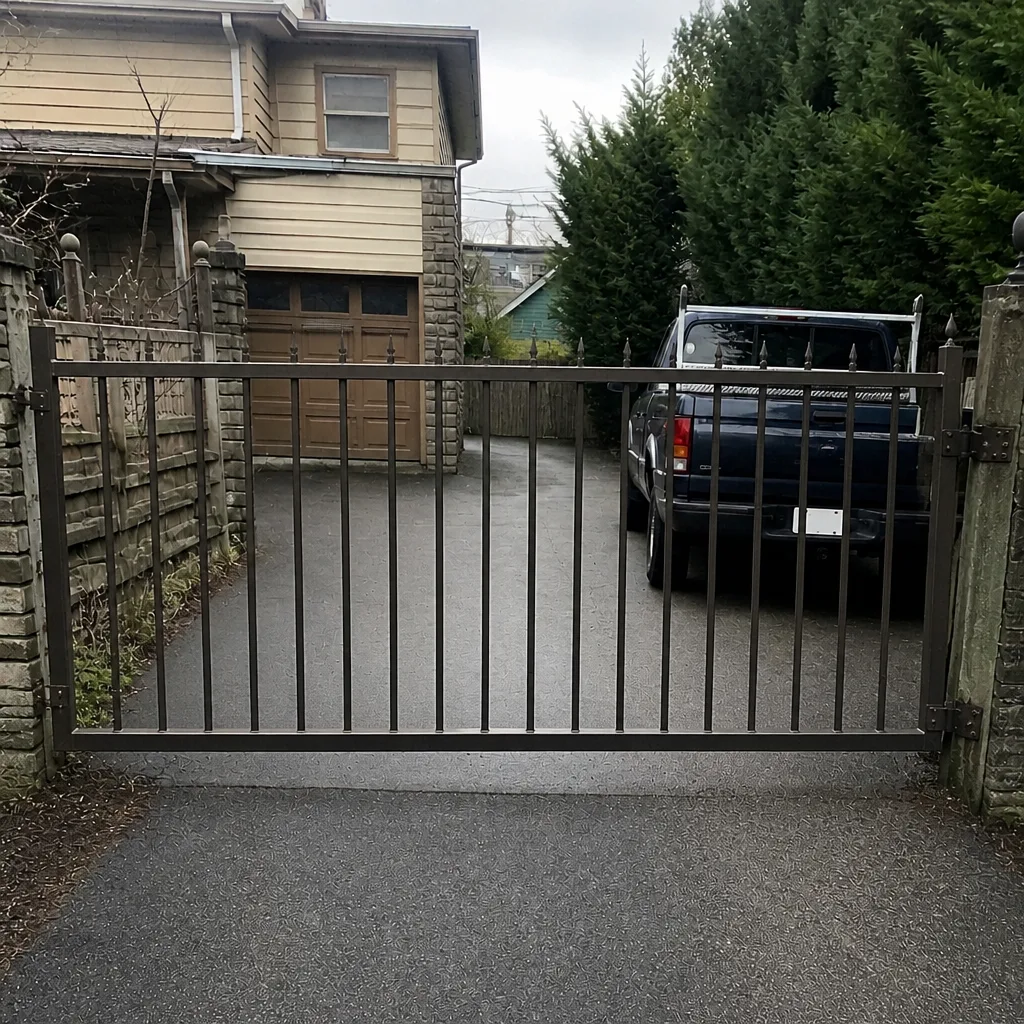 After
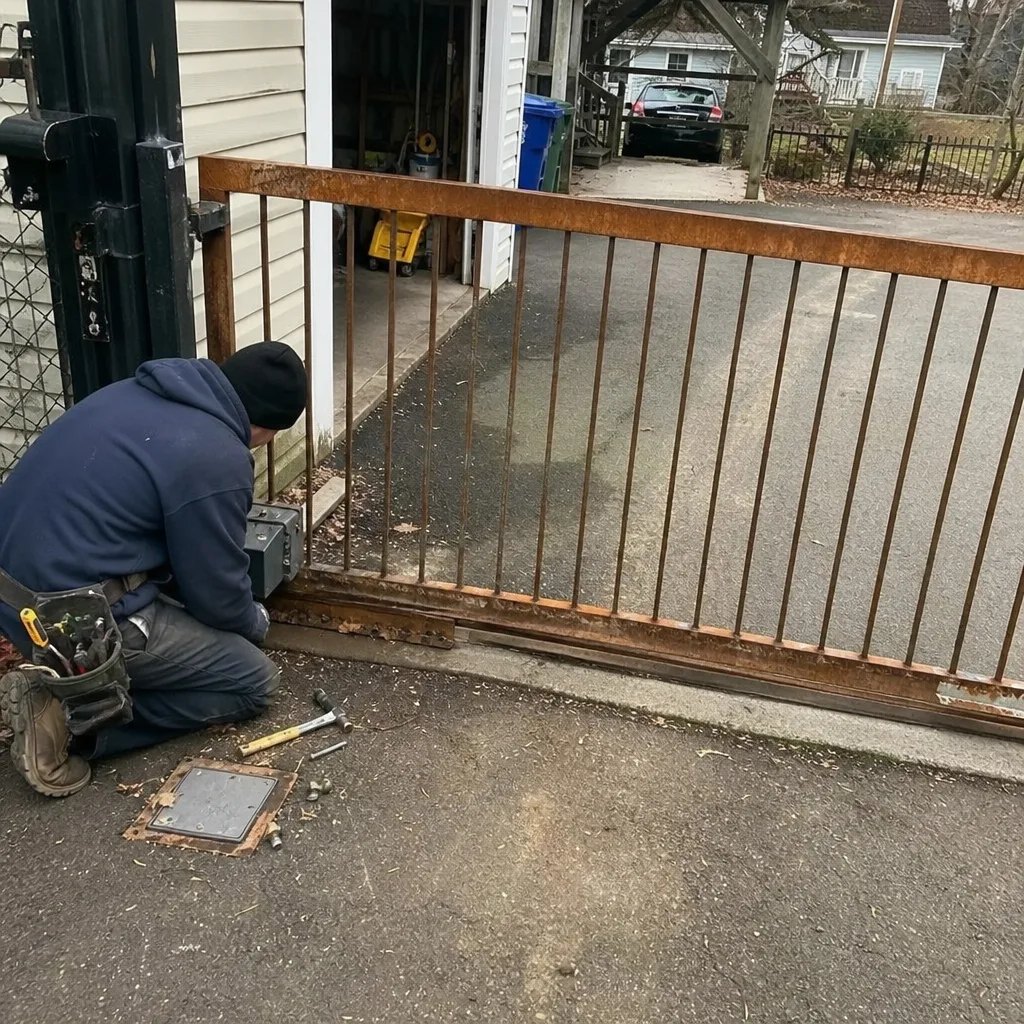 Before
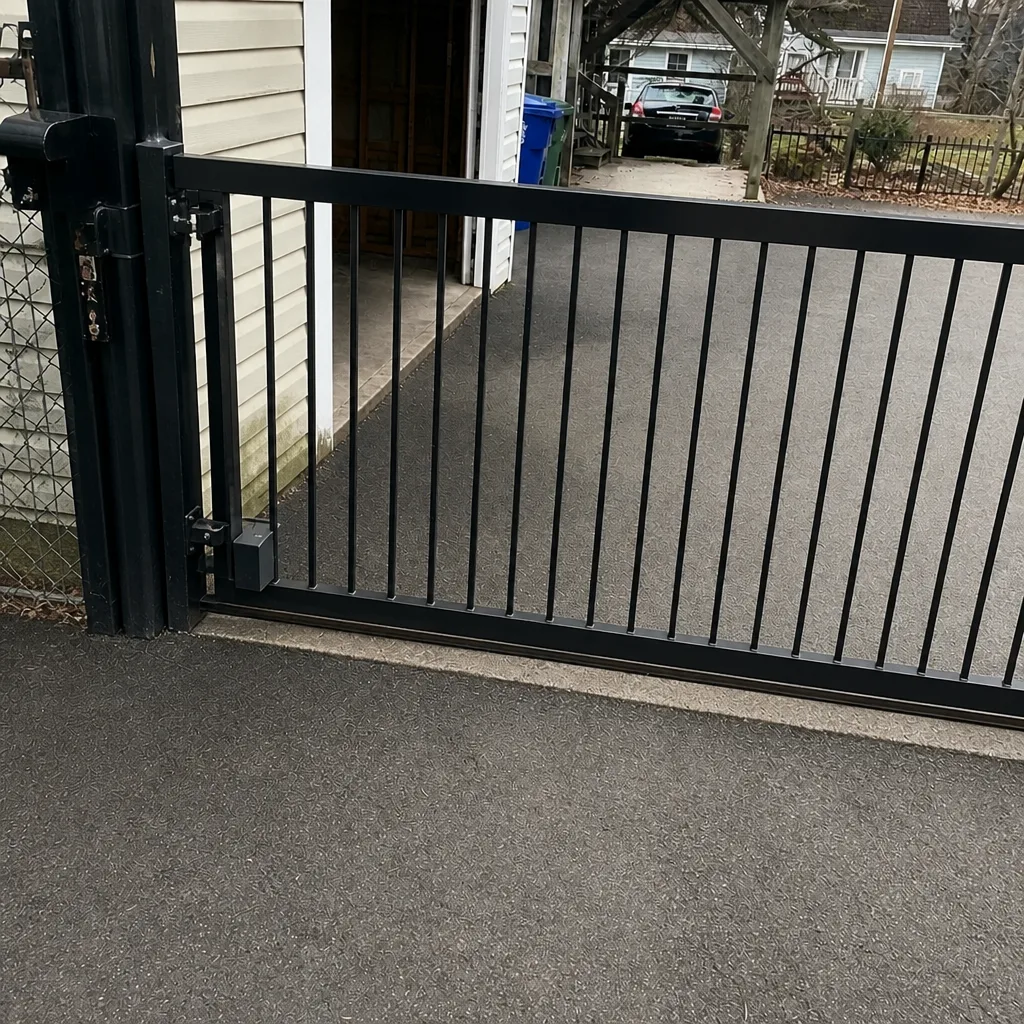 After
What to Have Ready Before You Call
The single biggest time-saver in an emergency is information. A prepared call lets a technician arrive already knowing what to expect, which shortens diagnosis and reduces the chance of a repeat visit. Have these four things ready:
- The operator brand and model. Look at the housing for the label. Telling us it’s a LiftMaster, FAAC, BFT, or Linear, along with the model number, points straight to brand-specific failure patterns we already know. We work on those systems specifically, so the model cuts straight to the likely cause.
- The exact failure behavior. Does it fail to open, fail to close, open halfway and stop, cycle and reverse, or make a sound but not move? “It hums but doesn’t move” tells a very different story than “it moves the wrong direction.” The precise symptom is the fastest diagnostic clue.
- What you’ve already checked. Tell us whether you tested the breaker, found the manual release, and looked at the travel path. It saves us re-checking the basics.
- The last time it was serviced. If the gate or operator was last looked at a long time ago, that shifts the likely culprit toward worn parts or a tired battery.
Also have your address and any gate or access code ready, especially for a commercial or gated-community entrance. If your gate fails and you’re unsure whether it’s a power, mechanical, or control issue, call us – that’s usually the operator, the board, or the loop, and we’ll know within the first visit.
Building Your Gate Emergency Kit
A few items, stored together and easy to reach, turn a late-night scramble into a five-minute fix. Keep the kit where it’s accessible during the failure – not locked inside the gate house that the gate is blocking.
- The manual release key. Every keyed release has a key, and it’s worthless if it’s lost or locked away. Keep a spare somewhere you can reach when the gate won’t move. Label it.
- A spare operator battery. If your operator uses a backup battery, keep a replacement on hand. A battery that’s failed quietly is one of the most common “no response” causes after an outage.
- The owner’s manual. Print the release procedure and the troubleshooting page and keep it with the kit. You won’t remember the steps at 11pm.
- Our contact. Save (866) 361-7838 in your phone and write it on a card in the kit. When the release is stuck and the gate won’t budge, having the number to hand saves the hunt.
- A small flashlight and a pair of work gloves. Simple, but you’ll use them on a dark winter night.
- A temporary marking option. A reflective cone or marker for a gate stuck open after dark.
Test the release and check the battery regularly. A releau that’s never been turned can seize from disuse, and a battery that’s never been tested can be dead exactly when you need it.
Common Mistakes to Avoid
- Repeatedly cycling a frozen or jammed gate. In a Pittsburgh freeze, each attempt strains the motor and gears against a gate that can’t move. Disengage the release first, then diagnose.
- Not knowing where the manual release or its key is. If you can’t find it on the night the gate fails, you’re stuck. Locate and test it while the gate is working.
- Disabling a safety edge or sensor to “make it work.” Those devices stop the gate on an obstacle. Bypassing one to force the gate closed is a real hazard to people and pets.
- Ignoring a battery backup until a storm proves it’s dead. The outage is the test, and by then it’s too late. Test the battery in the fall, before the storm season and the cold.
- Forcing a slide gate that came off its track, or a post-shift jam in the March thaw. Forcing it adds damage and rarely fixes the underlying alignment problem.
- Propping a heavy gate with a loose block that could tip or kick out. Secure the opening safely instead of rigging the gate in a way that could fall.
- Calling with no model or symptom information. You’ll spend the first part of the visit on diagnosis that you could have shortened by reading the label and describing the failure.
When to Call a Professional
Some failures are homeowner checks; some need a technician. Call a professional when the operator has power but the gate won’t move, when the control board or a sensor is involved, when the manual release won’t disengage, when a slide gate has come off its track, or when a post or track has shifted. Also call when the safety devices aren’t working, when repeated attempts don’t fix a jam, and whenever wiring or the operator’s internals are involved – that’s the dangerous part, and it’s not a homeowner job. Gate Repair Pittsburgh offers free estimates in Pittsburgh, and our technicians have up to 14 years of experience across the residential and commercial operators we service. Call (866) 361-7838. We answer 24/7. Fast dispatch from 7am to 7pm, Sunday through Friday. A call outside dispatch hours is booked into the next opening.
Frequently Asked Questions
Check whether the operator has power and whether the backup battery is charged, because a dead battery after an outage is the most common cause. If the battery is dead, use the manual release to move the gate by hand until a technician can test and replace the battery. Call (866) 361-7838 for same-day help – a battery check is quick.
It’s usually a keyed lever, a key, or a pull cord on the operator housing or the arm where it meets the gate. Look at the operator first, then the arm, and confirm the exact spot in your owner’s manual. If it won’t disengage, it’s likely seized and needs a repair.
It’s safer to secure the opening than to leave a driveway or entrance wide open, but never block a fire lane or required emergency access. Park a vehicle across the opening or set out temporary barriers if you can do it without obstructing the sidewalk or right of way. Call us if a property manager needs a commercial entrance secured.
Freeze-thaw ground movement shifts posts and tracks as the ground thaws, which is why so many Pittsburgh gates bind or jam mid-travel in the first warm weeks of spring. The fix is a technician re-levelling or resetting the post or track – forcing the gate only adds damage.
Not entirely, but the brand and model point straight to known failure patterns, which shortens diagnosis on the first visit. That’s why having your LiftMaster, FAAC, BFT, or Linear model number ready helps. Call (866) 361-7838 with it and we’ll get you scheduled.
The price is quoted per job by the written estimate, and the estimate is free, so no fee is ever charged to come out and assess the gate. The written estimate sets the final price before any work starts. Call (866) 361-7838 for an exact quote.
The Bottom Line
Most Pittsburgh gate emergencies don’t start as emergencies – they start as a dead battery nobody tested, a manual release nobody found, or an ice-locked gate that got cycled one time too many. The pattern is seasonal and preventable: winter freezes seize hinges, summer storms expose weak batteries, and the March thaw shifts posts and jams gates mid-travel. Prepare the kit, test the release and battery before you need them, and run the four-minute pre-call check when something fails. When it’s beyond the basics, that’s our job. For Gate Repair Pittsburgh, electric gate repair and gate repair cover the full range. Call (866) 361-7838 for a free estimate. We answer 24/7. Fast dispatch from 7am to 7pm, Sunday through Friday.
Written by the team at Gate Repair Pittsburgh.