
Last updated November 14, 2026
 Wrought iron
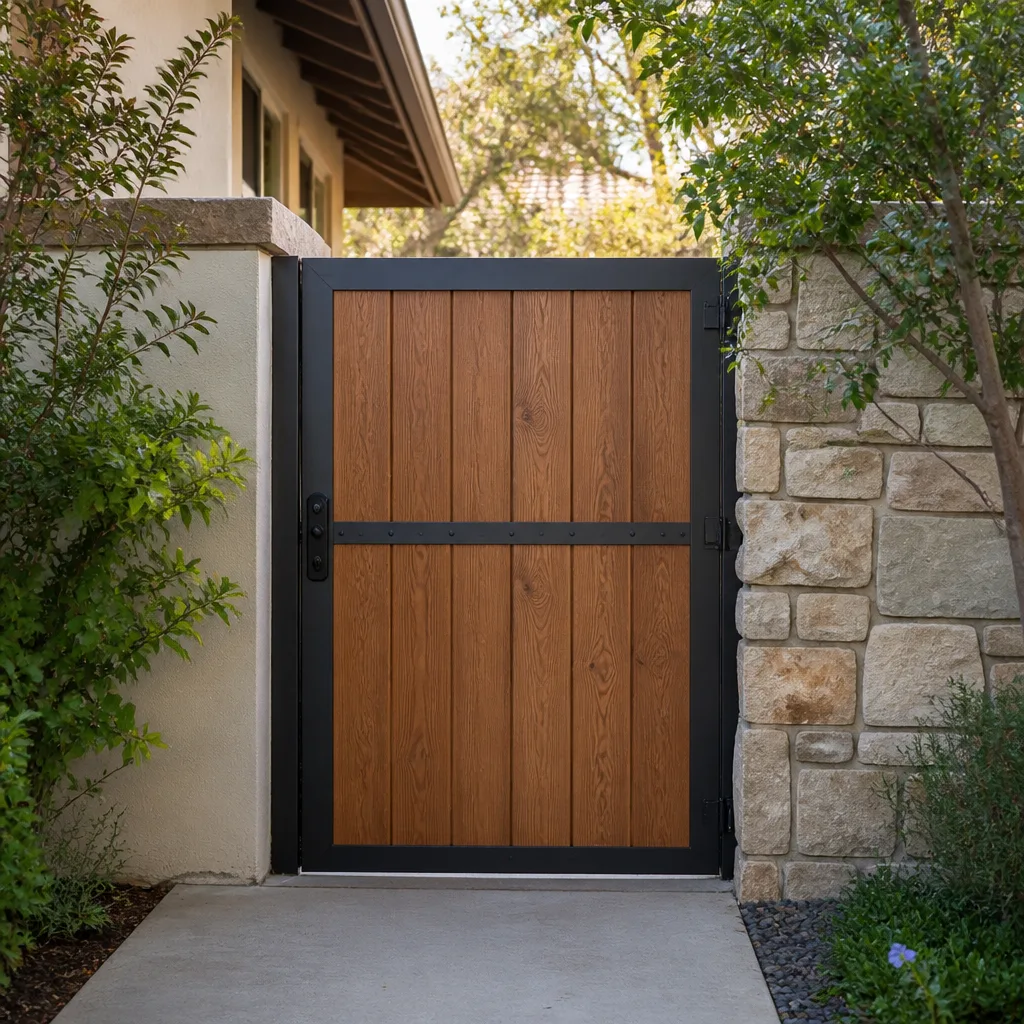 Wood & steel frame
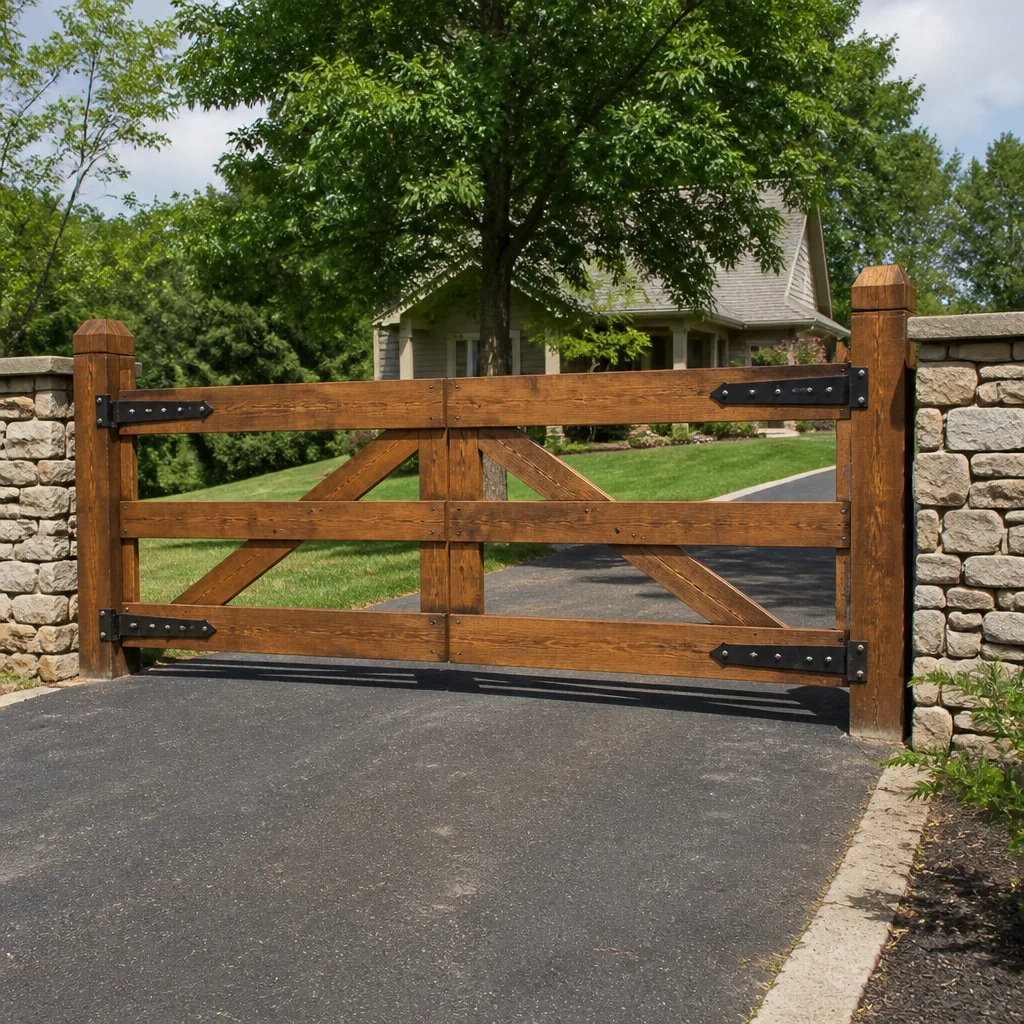 Farm & ranch
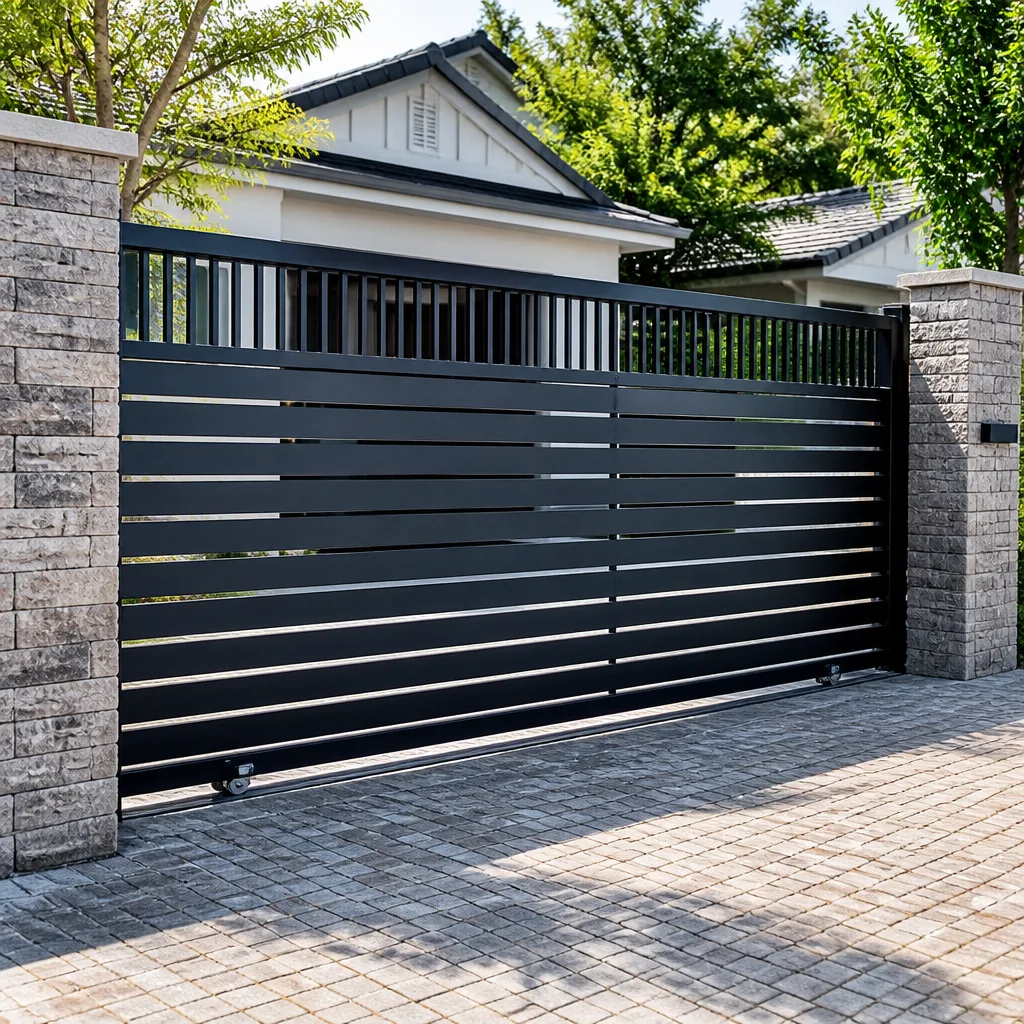 Sliding driveway gates
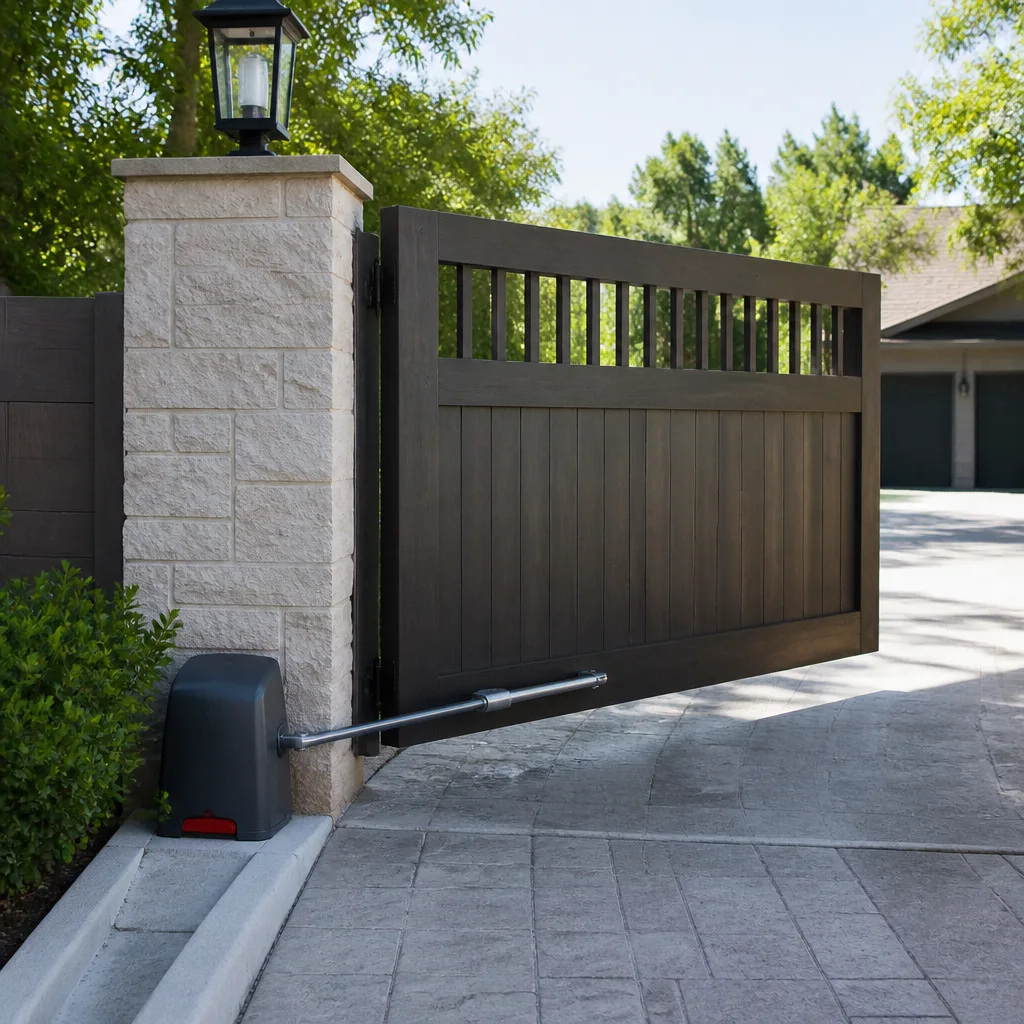 LiftMaster operators
Free on-site gate assessment - hinges, posts, and your LiftMaster or Nice gate operator checked before anything is quoted
The assessment is free and the quote is the invoice.
Get your free estimateGate Repair Maintenance Checklist for Pittsburgh Homeowners
Road salt doesn’t stay on your driveway. It wicks into gate hardware through February runoff and starts oxidizing hinge pins and limit-switch contacts well before spring. That’s the piece most checklists miss: in Pittsburgh, gate maintenance is a water-and-chemistry problem before it’s ever a mechanical one. Freeze-thaw cycles work the posts loose, summer humidity fogs the control board, and the gate that “still works” in November is the one that quits in March. What follows is a maintenance checklist written specifically for Pittsburgh’s climate and housing stock, aimed at stretch of driveway gate that has to survive a real winter. You’ll learn what to inspect, when, and how to log it so a small problem gets caught before it becomes an emergency.
Quick Answer
A Pittsburgh gate maintenance checklist should cover four seasonal priorities: post-winter salt and moisture inspection, hinge torque and post-plumb checks to catch frost-heave damage, lubrication schedules matched to your gate type (swing, slide, or barrier), and battery backup plus surge-protection checks on anything electric. Run the full inspection once after the last hard freeze and once in late fall before the ground moves. Log what you find each time so a technician can spot a trend before it strands you.
If you’d rather have a trained eye on it, Gate Repair Pittsburgh offers free estimates and can tell you in one visit whether your gate needs adjustment or repair.
Styles & brands we work with
- Wrought iron
- Wood & steel frame
- Farm & ranch
- Sliding driveway gates
- LiftMaster operators
Table of Contents
- Why a Pittsburgh Gate Needs a Different Checklist
- The Post-Winter Salt and Moisture Inspection
- Hinge Torque and Post-Plumb Checks
- Lubrication Schedules by Gate Type
- Battery Backup and Surge Protection
- Electric Gate Control Checks Most Checklists Skip
- How to Log What You Find
- The Seasonal Maintenance Calendar
Why a Pittsburgh Gate Needs a Different Checklist
Generic gate maintenance advice tends to assume a dry, stable climate. Pittsburgh is neither. The city sits in a freeze-thaw band where the ground can cycle above and below 32°F repeatedly through a single winter, and every one of those cycles moves the soil around a gate post. Add the road salt that gets tracked and splashed into hardware from nearby streets and driveways, and the high summer humidity that keeps metal damp long after rain, and you have a gate that ages faster than the same gate in a milder place.
Driveways across Pittsburgh neighborhoods deal with this differently. Steep hillside lots in the South Side and Mount Washington shed runoff fast, which concentrates water at the low post. Flatter suburban driveways hold meltwater in place, which keeps the hardware wet longer. A gate at the top of a hill sees less standing water but more freeze-thaw movement. The checklist below accounts for both.
There’s a housing factor too. Many Pittsburgh homes have older masonry walls and piers that gates mount to. Those piers move with the seasons, and a gate bolted to a shifting pier will eventually bind, grind, or strain its operator. Knowing that going in is half the reason a local checklist looks different from a national one.
The good news: nearly all of this is inspection and adjustment, not repair. The point of the checklist is to catch the small stuff while it’s small. When it’s more than that, our gate repair team handles the full range of mechanical and electrical fixes.
The Post-Winter Salt and Moisture Inspection
This is the single most valuable maintenance task a Pittsburgh homeowner can do, and it belongs in late February or early March, once the worst of the ice is behind you. Salt doesn’t just sit on the driveway surface. It dissolves in meltwater, runs toward your gate, and gets pulled into every gap and crevice in the hardware by capillary action. By the time you notice the corrosion, the damage has been growing all winter.
Walk the gate with a flashlight and look at these specific points:
- Hinge pins and bushings. Look for chalky white or rust-colored residue. That’s the salt starting to oxidize the metal. A hinge pin that has begun to pit will eventually seize.
- Limit-switch contacts and wiring terminals. On electric gates, these are the small metal tabs and wire connections inside the operator housing. Salt-laden moisture corrodes them and causes intermittent “won’t open” faults.
- The bottom rail of the gate leaf. This is where splash from the driveway hits first. Check for bubbling paint or flaking finish. That’s corrosion under the surface.
- Post base plates and anchor bolts. These are at ground level, right where runoff pools. Rust here is a warning that the mounting is weakening.
- The control box and operator housing seams. Look for water staining or corrosion streaks running down the inside. That’s a sign of moisture intrusion the gaskets didn’t stop.
Clean any salt residue off with fresh water and a soft brush, dry the hardware, and touch up chipped paint. Don’t hose the electronics; wipe those by hand. If you find corrosion on the limit-switch contacts or the control board, that’s worth a look from a technician, since the fix is often a small part rather than a whole board. For a deeper dive into those electrical symptoms, our electric gate repair page walks through what fails first on operator systems.
Hinge Torque and Post-Plumb Checks
Frost heave is the quiet destroyer of Pittsburgh gates. When the ground freezes, it expands, and when it thaws, it settles. A gate post that was perfectly plumb in October can be leaning a couple of degrees by March. A small lean is fine on a manual gate. On an automated gate, it throws the whole operator alignment off, and the motor starts working against the gate instead of with it.
Check post plumb once in spring and once in late fall. Set a level against the post on two adjacent faces, or hang a plumb line from the top. If the post has moved more than a hair, note it and check it again in a few weeks. A post that keeps moving needs professional attention before it cascades into operator failure.
Hinge torque is the other mechanical check. Open and close the gate by hand (with the operator disengaged) and feel for binding. A well-adjusted gate should swing or slide with even resistance through its whole travel. Binding at one point usually means a hinge has loosened or the post has shifted.
- Disengage the operator so you can move the gate freely by hand.
- Walk the gate through its full swing or slide and feel for tight spots or grinding.
- Check each hinge for wobble. A hinge bolt that turns easily by hand is too loose.
- Look at the gap between the gate and the post at the hinge side. An uneven gap means the post has moved or the hinge has worn.
- Re-torque any loose hinge hardware to the manufacturer’s spec if you have it, or snug it up evenly without overtightening.
If the gate binds even after you’ve snugged the hinges, stop adjusting and get it looked at. Chasing a binding gate by cranking bolts can bend the frame. Pittsburgh’s soil movement makes this a recurring fall and spring task, and it’s one of the most common reasons we get called out on a Pittsburgh gate that “suddenly stopped working.”
Lubrication Schedules by Gate Type
Lubrication isn’t one schedule for every gate. Swing, slide, and barrier gates have different moving parts, different loads, and different exposure. Pittsburgh’s seasonal swing means the right lubrication interval also changes through the year. Here’s how to think about each type.
Swing gates. The hinges and the operator arm are the load-bearing points. Lubricate hinge pins with a light grease that won’t wash out in rain and will keep salt from attacking the metal. Do this at least twice a year: once after the post-winter cleanup and once before the ground freezes in fall. Check the operator arm’s pivot points too, following the operator maker’s guidance. On a Linear or Viking swing operator, the arm linkage is where wear shows up first.
Slide gates. Slide gates ride on a track and rollers, and the track is the fussy part. In Pittsburgh winters, the track collects grit and salt, which grinds the rollers down. Keep the track clean, and lubricate the rollers and the operator’s drive chain or rack with a lubricant that suits that mechanism. Do this more often during the salt season, since grit accumulates faster then.
Barrier and access gates. These have a boom or arm that pivots, and the pivot and the counterbalance mechanism are the maintenance points. Lubricate the pivot bearing and check the balance. A poorly balanced barrier arm strains the operator, and in a commercial or multifamily setting that means more service calls.
Manual gates. Even a manual gate benefits from a light twice-yearly lubrication of hinges and any latch hardware. It costs almost nothing and it keeps the gate swinging freely through the freeze-thaw cycle.
A note on what to use: pick a lubricant rated for outdoor metal hardware that won’t attract grit. Heavy tacky grease on a slide track can actually make the grit problem worse. When in doubt, a technician who works on your specific brand will tell you what that operator maker recommends, since the right choice differs between, say, a Ghost Controls residential unit and a commercial DoorKing system.
Battery Backup and Surge Protection
Most gate maintenance checklists skip the electrical side entirely, and that’s a mistake in Pittsburgh, where summer thunderstorms and winter ice storms both bring power interruptions. An electric gate with a dead backup battery becomes a manual gate at exactly the wrong moment: a storm, a late arrival, a power outage that strands you at the end of the driveway.
Inspect the battery backup system once in spring and once in fall:
- Test the backup under load. Many operators let you simulate a power failure, or you can trip the breaker that feeds the operator. The gate should complete at least a cycle or two on battery. If it stalls immediately, the battery is weak.
- Look for swelling or corrosion on the battery terminals. A swollen battery is failing and should be replaced before it leaks.
- Check the battery age. Backup batteries don’t last forever. Note the install date and replace proactively rather than waiting for it to die mid-storm.
- Inspect surge protection. Look for a surge protector on the line feeding the operator, and check whether it’s still functioning. Many have an indicator light that goes dark when they’ve absorbed a surge and are spent.
- Look at the ground connection. A poor ground lets surges travel through the control board. Check that the ground wire is intact and firmly connected.
Surge protection is cheap insurance for an expensive control board. A lightning strike or a grid surge that reaches the board can take out an operator that would otherwise have run for years. If you’re not sure whether your setup has surge protection, that’s a quick question for a technician during a routine visit. On complex commercial systems, like a DoorKing access operator serving a property with multiple entry points, the surge and battery setup is worth having professionally checked rather than guessed at.
Electric Gate Control Checks Most Checklists Skip
The mechanical checks above keep the gate moving. The control checks keep it responding. An electric gate has a whole layer of electronics that can cause “won’t open” and “opens on its own” faults, and most homeowner checklists ignore them completely. These checks are safe to do because they involve looking and testing, not opening covers or probing live circuits.
- Test every remote and keypad. Try each remote, the keypad, and any interior control. If one works and another doesn’t, the problem is the remote or the receiver, not the operator. A Linear receiver that has stopped accepting a remote is a common, fixable fault.
- Check the safety edges and photo eyes. Wave a hand in front of the photo eye beam while the gate is moving, or press the safety edge. The gate should stop or reverse. If it doesn’t, the safety device has failed, and that’s a safety issue that needs prompt attention.
- Listen for the operator’s start. When you press a control, you should hear the motor engage. Silence with a working control points to the board or power; a hum without movement points to a mechanical binding or capacitor issue.
- Watch for phantom opening. A gate that opens on its own usually has a stuck control input, a failing loop detector, or moisture in the wiring. Log the time and conditions each time it happens.
- Inspect the loop detector and wiring. On gates with an in-ground loop, check that the area over the loop isn’t flooded or covered with debris that could false-trigger it. Exposed wiring near the gate should be intact and dry.
These checks fill a gap: they catch control-board and sensor problems that a purely mechanical inspection would miss entirely. When a symptom persists, knowing which control failed narrows the diagnosis, and for a brand like DoorKing or FAAC, brand-specific failure patterns point a technician straight at the likely part. If your gate is showing any of these symptoms, our team can take a look and give you a straight answer on whether it’s a repair or a replacement.
How to Log What You Find
The most underrated maintenance habit is writing things down. A single observation tells you little. A record of the same symptom showing up three springs in a row tells a technician exactly where the trend is heading. This is how an emergency gets prevented: you spot the trend before the gate fails outright.
Keep a simple log, paper or digital, and record the same fields each time:
- Date and season. Spring post-thaw, late fall pre-freeze, or a mid-season check.
- What you checked. Post plumb, hinge torque, lubrication, battery, surge, controls.
- What you found. Be specific: “post leans 2 degrees,” “battery stalled after one cycle,” “keypad works, remotes don’t.”
- What you did. “Lubricated hinges,” “cleaned salt from limit switch,” “nothing, monitoring.”
- Weather and recent events. A heavy storm, an ice event, a power outage. Context matters when the same issue recurs.
When something changes for the worse, a log turns a vague “it’s been acting up” into a concrete pattern a technician can use. That reduces repeat visits, since the tech walks in already knowing where to look. It also tells you when a marginal part is drifting toward failure, so you can schedule a repair instead of calling in a panic. Our technicians have up to 14 years of experience, and a clear log makes that experience go further, because the diagnosis starts from real data rather than a guess.
The Seasonal Maintenance Calendar
Pittsburgh’s year has two high-stakes moments for gates: the thaw and the freeze. Here’s how to schedule the checks around them. The calendar is a guide, not a rule; adjust it to your gate type and how much salt and traffic it sees.
Late winter / early spring (post-thaw). This is your most important inspection. Do the salt and moisture check, then the post-plumb and hinge-torque checks, since this is when frost-heave damage shows up. Test the battery after any winter outages. Clean and lubricate after the salt exposure is over.
Late spring / early summer. Test the controls and safety devices, check surge protection before storm season, and confirm the battery is healthy. Clear debris from slide tracks and inspect the loop detector area. This is a good time to catch anything the spring inspection flagged as “monitor.”
Late summer. A light mid-season check: listen for new noises, feel for binding, and touch up corrosion spots before the wet weather returns. High summer humidity keeps metal damp, so this is when early corrosion shows up.
Late fall (pre-freeze). The second big inspection. Lubricate hinges, tracks, and pivot points before the cold locks them up. Confirm the battery is charged, check the surge protector, and clear the track of grit before the salt arrives. Make sure the operator is aligned so it doesn’t have to fight a post that’s about to move.
Two deep inspections and two lighter ones a year is a realistic schedule for a Pittsburgh homeowner. On a heavily used commercial gate, more frequent control and battery checks make sense, since downtime costs more than the visit. Either way, the schedule is built around the local climate, not a generic national template, and that’s the whole point.
Common Mistakes to Avoid
- Skipping the post-winter inspection. About half the gate failures we see trace back to salt and frost damage that went uncaught over the winter. Inspect after the thaw, not after the gate fails.
- Ignoring a slightly leaning post. A small lean is easy to ignore until the operator starts binding. Check post plumb twice a year and treat movement as a warning, not a nuisance.
- Using the wrong lubricant on a slide track. Heavy tacky grease collects grit and accelerates roller wear. Match the lubricant to the mechanism; a technician can tell you what your operator maker recommends.
- Forgetting the battery backup. The gate works all summer on grid power, so nobody tests the battery. Come the first ice storm outage, the gate won’t move. Test the backup under load each spring.
- Leaving surge protection as an afterthought. A failed surge protector is invisible until a surge takes the control board with it. Check the indicator and replace when it’s spent.
- Never logging anything. Without a record, a recurring symptom looks like bad luck. A log turns it into a diagnosable trend and saves you a repeat visit.
- Adjusting a binding gate by cranking bolts. Chasing a bind with more torque can bend the gate frame or damage a hinge. If it still binds after a gentle check, get it looked at professionally.
See the difference
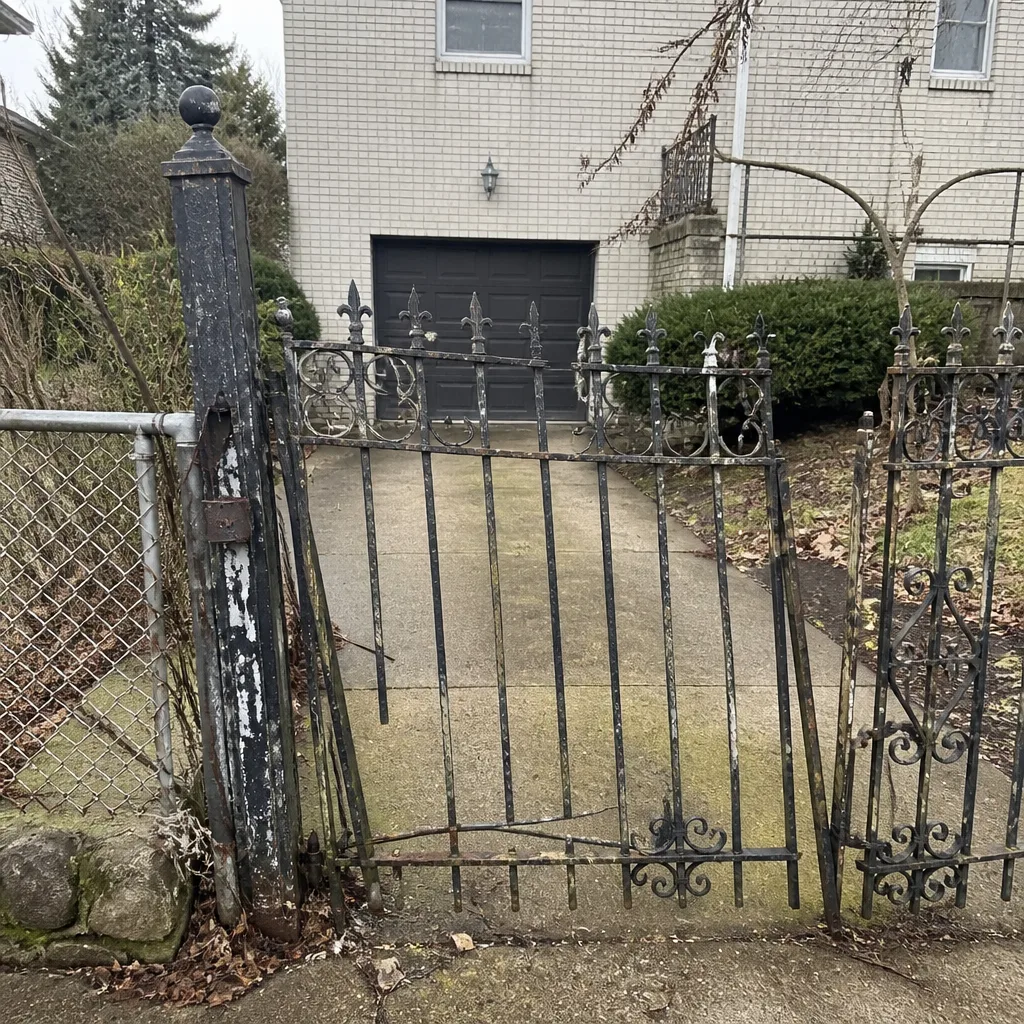 Before
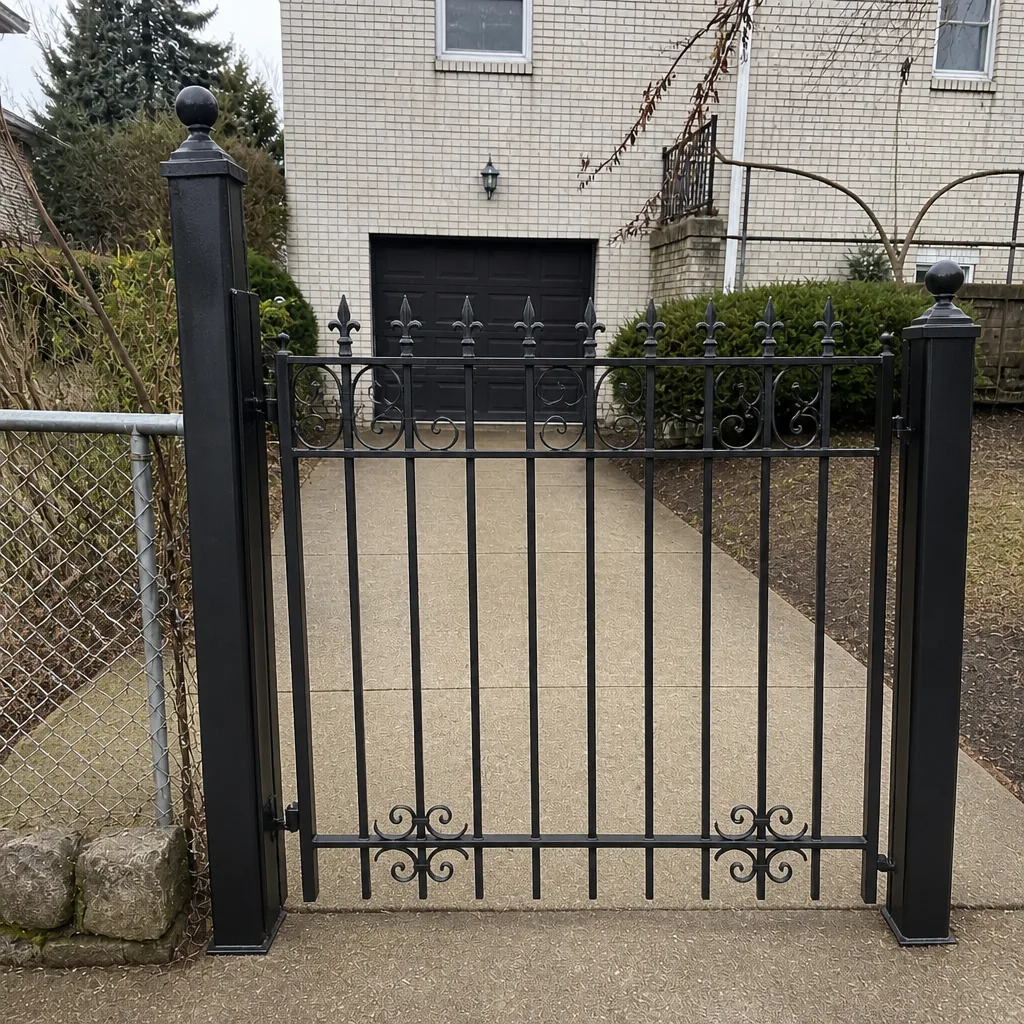 After
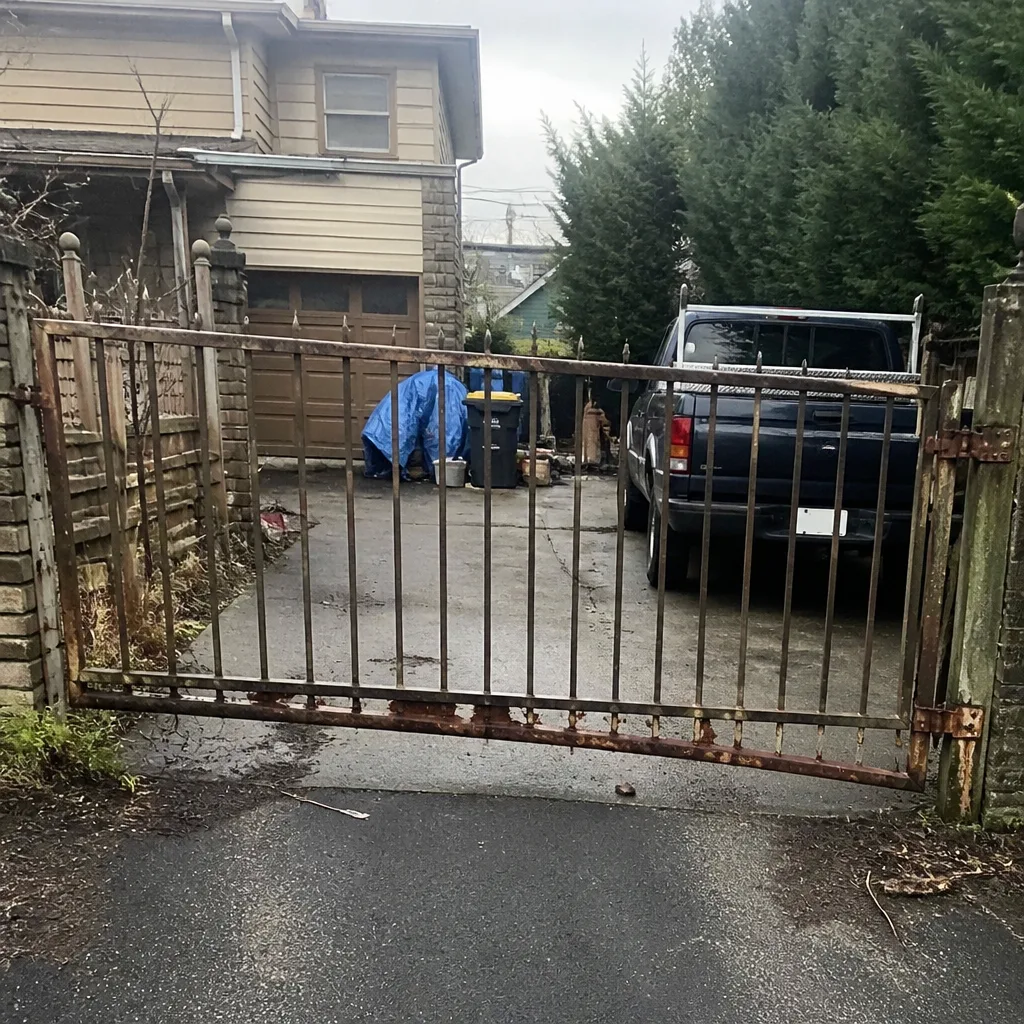 Before
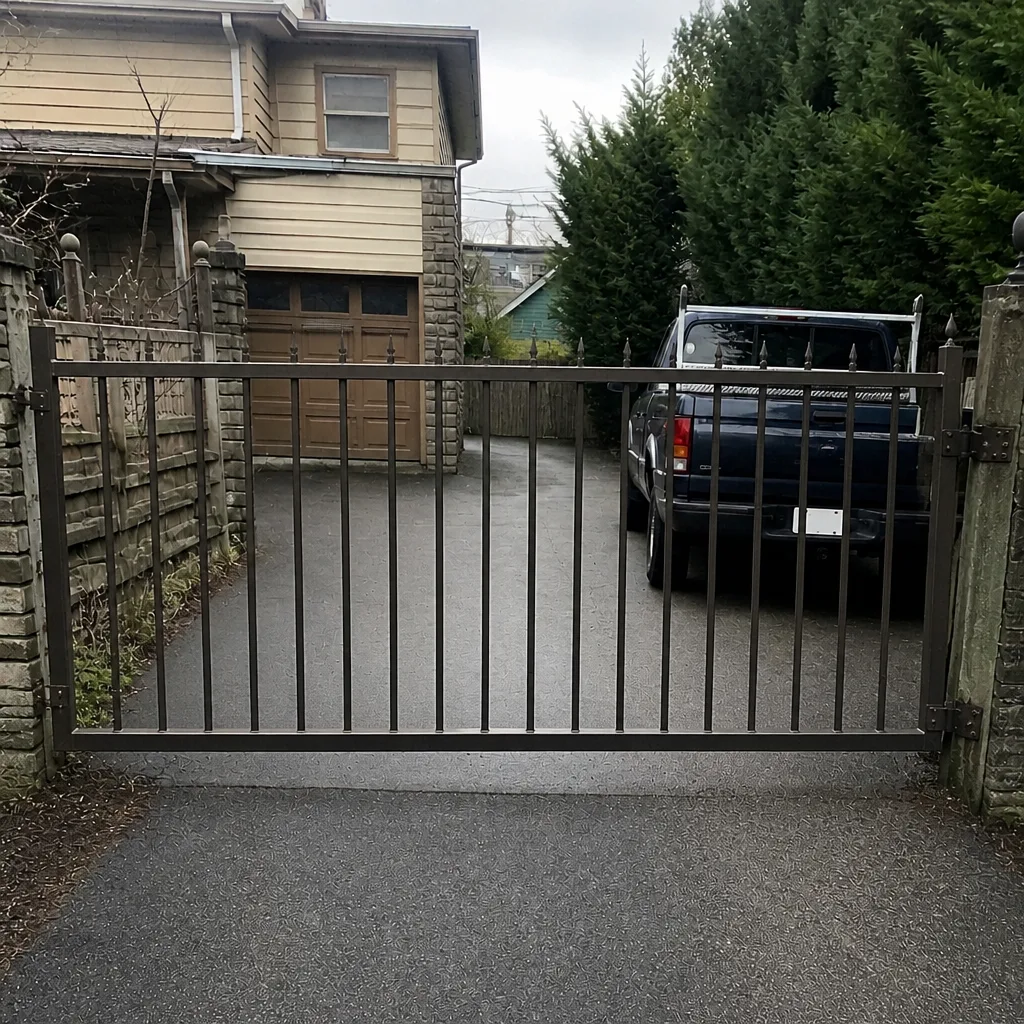 After
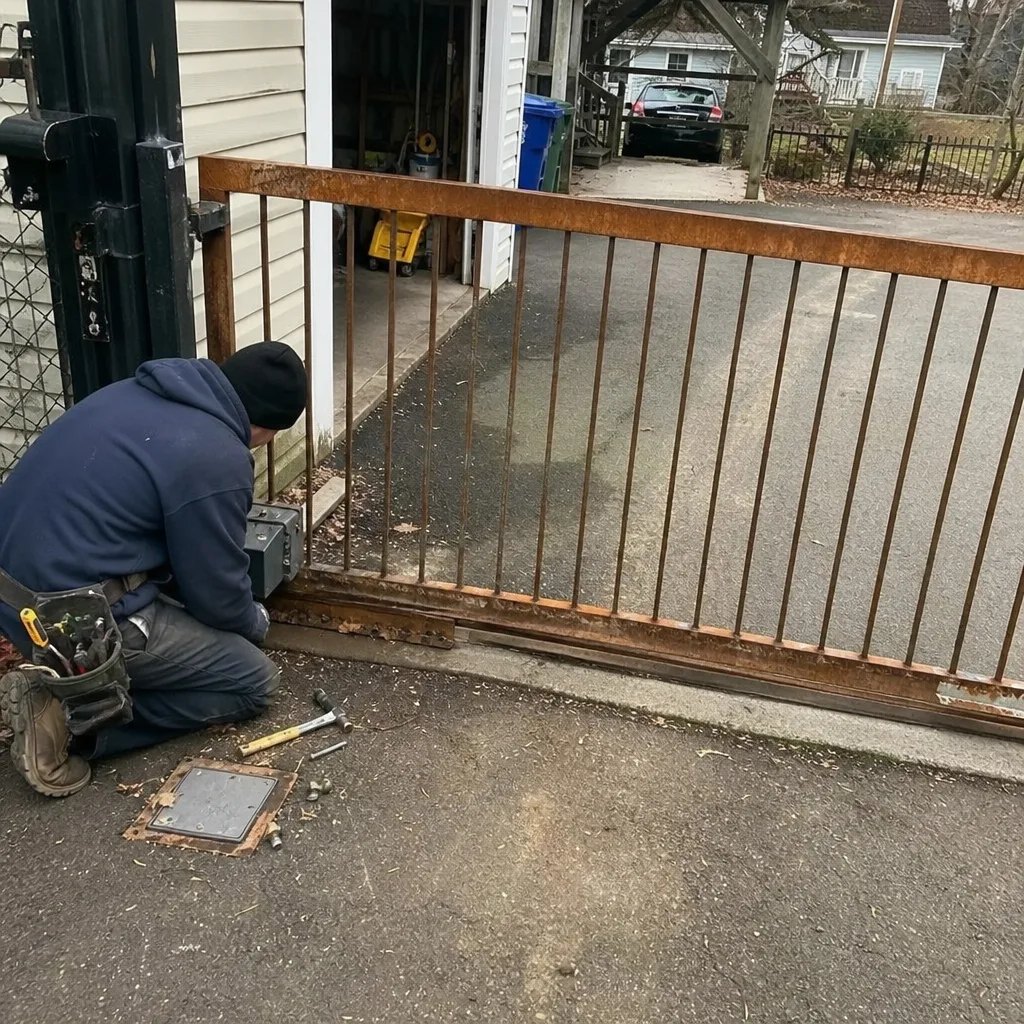 Before
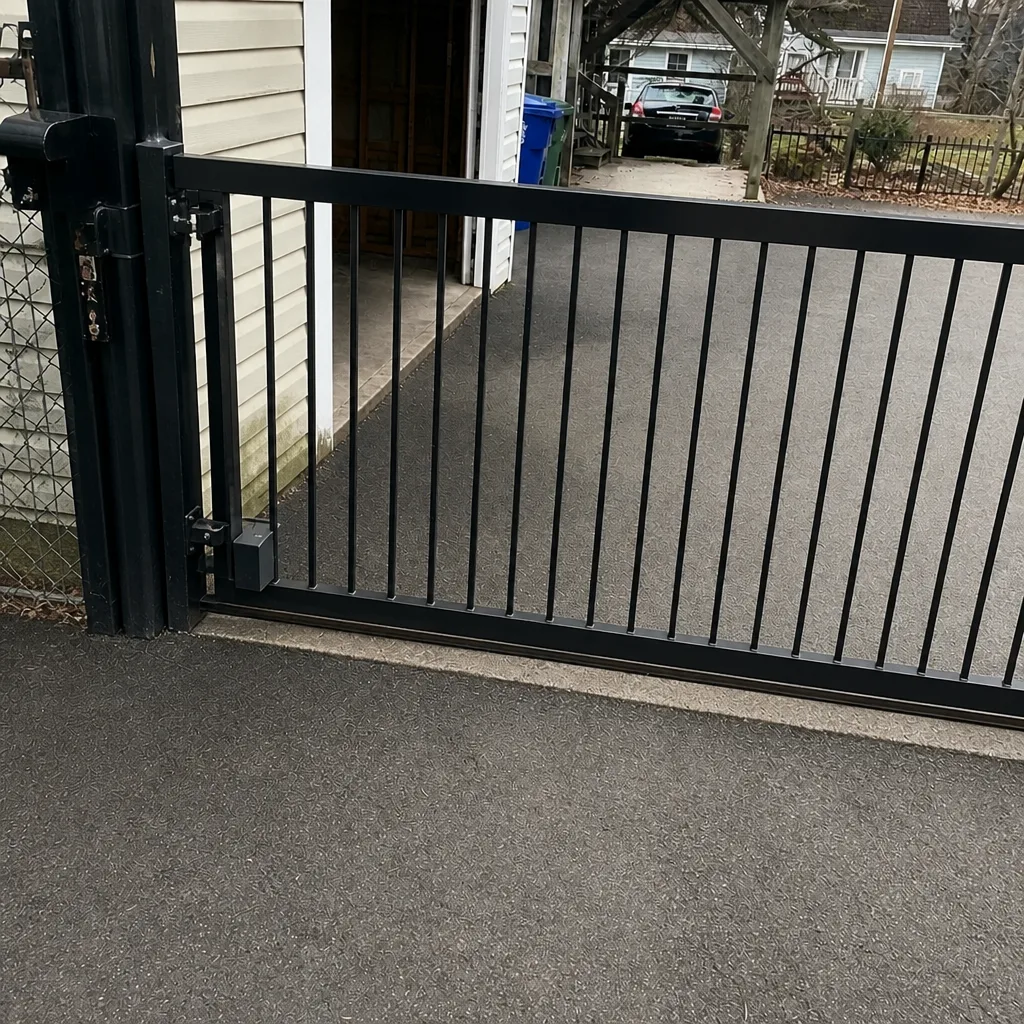 After
When to Call a Professional
Most of this checklist is safe for a homeowner to run. But some situations call for a trained technician: a post that keeps moving after two inspections, a gate that binds even after the hinges are snugged, corrosion on limit-switch contacts or inside a control board, a safety edge or photo eye that no longer stops the gate, a battery backup that fails its load test, or any control-board fault on an electric operator. Electrical and hydraulic components carry real hazards, and a heavy gate can crush if it moves suddenly. If you’ve hit any of these, or your gate has graduated from an adjustment to a repair, don’t push it. Call the team that works on your brand specifically.
Gate Repair Pittsburgh offers free estimates in Pittsburgh and will tell you plainly whether your gate needs adjustment, repair, or replacement. Call (866) 361-7838. We answer 24/7. Fast dispatch from 7am to 7pm, Sunday through Friday.
Frequently Asked Questions
Twice a year at minimum: once after the last hard freeze in late winter or early spring, and once in late fall before the ground freezes. The spring check catches salt and frost-heave damage from the winter, and the fall check gets the gate ready for the freeze. If your gate sees heavy salt or traffic, add a light mid-season check.
Frost heave moves it. When the ground freezes it expands, and when it thaws it settles, which shifts the soil around the post. A gate mounted to a post that keeps moving will eventually bind and strain its operator. If a post moves after two inspections, it’s worth having a technician look at the footing depth and the mounting.
Not ideal. Ordinary heavy grease can trap grit on a slide track and make the wear worse, and some lubricants wash out quickly in wet weather. Use a lubricant made for outdoor gate hardware, and on an electric operator, follow the manufacturer’s guidance – the right choice differs between brands like Linear, Viking, and Ghost Controls.
Check the remote and keypad first, then the battery backup and surge protection. If a remote works and the operator still doesn’t respond, or if other controls fail at once, the surge likely reached the board or the power feed. That’s a technician call, since it involves the operator’s electrical components. Call (866) 361-7838 for a free estimate and we’ll diagnose it.
The combination of freeze-thaw ground movement, road salt runoff, and high summer humidity does more damage than a single stressor. Freeze-thaw loosens posts, salt corrodes hinges and contacts, and humidity keeps metal damp long enough to rust. Addressing all three with a local checklist keeps a gate running longer than a generic schedule would.
If the problem is a hinge, a post that can be re-set, a sensor, a battery, or a control board on an otherwise-sound gate, repair makes sense. If the frame is bent beyond correction or the gate has reached the end of its service life, replacement is the better call. A free estimate will tell you which one actually fits your setup. Call (866) 361-7838 to book it.
The Bottom Line
A Pittsburgh gate maintenance checklist succeeds or fails on whether it accounts for the local climate. Salt wicking into hardware, freeze-thaw moving posts, and summer humidity corroding contacts cause most of the failures we see, and all three are catchable with two inspections a year. The highest-value tasks are the post-winter salt check, the post-plumb and hinge-torque check, a lubrication schedule matched to your gate type, and a battery and surge check most checklists skip. Log what you find and the trend tells you when a repair is coming. Call (866) 361-7838 for a free estimate. We answer 24/7. Fast dispatch from 7am to 7pm, Sunday through Friday.
Written by the team at Gate Repair Pittsburgh.