
Last updated November 14, 2026
 Wrought iron
 Wood & steel frame
 Farm & ranch
 Sliding driveway gates
 LiftMaster operators
Free on-site gate assessment - hinges, posts, and your LiftMaster or Nice gate operator checked before anything is quoted
The assessment is free and the quote is the invoice.
Get your free estimateGate Repair Maintenance Schedule: What to Do and When
If your gate maintenance reminder is set for “every six months,” you’re probably lubricating hinges in July when you should be doing it in October, and skipping the one inspection that prevents most winter failures. Calendar-month maintenance assumes the weather holds steady. In Pittsburgh it doesn’t. Your gate goes through four sharp transitions a year, and each one stresses a different set of parts. This guide replaces the generic checklist with an event-triggered schedule: what to check, when to check it, and which products and methods actually hold up in western Pennsylvania. You’ll finish knowing how to time lubrication, track limit switch drift, test a control board capacitor, and decide whether your property needs quarterly checks instead of annual ones.
Quick Answer
In Pittsburgh, gate maintenance should follow four weather transitions rather than calendar months. Do a pre-winter prep in late fall (lubrication, fastener torque, battery load test), a post-thaw inspection once the ground stops freezing and thawing, a summer heat-stress check on the operator and control board, and a pre-storm-season battery and safety-device verification. High-cycle commercial gates on apartment and multi-family properties need quarterly checks; low-cycle residential driveway gates can usually run on the four-phase schedule.
Styles & brands we work with
- Wrought iron
- Wood & steel frame
- Farm & ranch
- Sliding driveway gates
- LiftMaster operators
Table of Contents
- Why a Month-Based Schedule Fails in Pittsburgh
- The Four-Phase Pittsburgh Maintenance Calendar
- Lubrication by Component: What Goes Where and What Doesn’t
- The Control Board Capacitor Check Nobody Tells You About
- Tracking Limit Switch Drift with the Tape-Mark Method
- Commercial vs. Residential: Why Cycle Count Changes Everything
- Batteries and Safety Devices: Pre-Storm-Season Verification
- What Fails in Each Pittsburgh Season
Why a Month-Based Schedule Fails in Pittsburgh
A gate is a mechanical system that lives outdoors, and in Pittsburgh the outdoor conditions change faster and harder than the calendar suggests. You can have a 60°F afternoon in late November and a single-digit morning two weeks later. A hinge greased on a fixed six-month clock in spring meets its first real test in that November cold, whether or not it was ready.
The four transitions that matter here are: the freeze itself, the thaw-and-refreeze cycle that heaves posts and loosens fasteners, summer heat that pushes motors and control boards, and the storm season that tests batteries and safety devices. Each stresses a different set of components. Timing your work to those events means you’re inspecting the parts that are about to be tested, not the parts that happen to be on this month’s list.
There’s a practical reason too. Pittsburgh’s freeze-thaw cycling is hard on anything anchored in the ground. Gate posts, hinge plates, and operator mounts all move by small amounts over a winter, and those small movements show up as binding, sagging, and drift by spring. If you catch the movement at the thaw instead of waiting for the gate to stop working, you’re adjusting hardware instead of replacing it.
This is also where brand matters. Familiar failure patterns vary by brand, and we’ve learned to look at each system through that lens. A Mighty Mule residential arm operator tends to show its winter wear in the arm and limit settings. An Elite slide operator on a commercial property shows it in the track and the board. Same weather, different symptoms. For a look at how we approach the repair side of that work, see gate repair.
The Four-Phase Pittsburgh Maintenance Calendar
This is the spine of the schedule. Four phases, each triggered by a weather event rather than a date. Run them in order and you’ll be inspecting each component before the season that stresses it.
Phase 1: Pre-Winter Prep (Late Fall, Before the First Hard Freeze)
- Lubricate hinges and pivot points with white lithium grease (details in the lubrication section below).
- Torque or check every fastener on hinge plates, operator brackets, and post mounts.
- Load-test the operator battery and check charging voltage at the board.
- Clear the track and rollers on slide gates, and check the arm on swing gates for play.
- Verify the safety edges and photoelectric eyes trip and reverse correctly.
Phase 2: Post-Thaw Inspection (Once the Ground Stops Freezing and Thawing)
- Re-check post plumb and hinge plate alignment; winter movement shows up here first.
- Look for rust bloom at welds, hinge barrels, and the track splice points.
- Re-torque fasteners that loosened over the freeze cycle.
- Test the full open-and-close cycle and listen for new binding or grinding.
- Record the gate’s resting position against your tape marks (see the limit switch section).
Phase 3: Summer Heat-Stress Check (Mid-Summer)
- Inspect the control board for heat discoloration or bulging capacitors.
- Check operator case temperature and airflow around the housing.
- Confirm the motor’s thermal cutoff is resetting normally after long cycles.
- Clean debris from vents, tracks, and the operator enclosure.
Phase 4: Pre-Storm-Season Verification (Before the Stormy Stretch)
- Load-test batteries again and check terminal corrosion.
- Test every safety device: loop detectors, photoelectric eyes, safety edges.
- Test the manual release so you know it works if the power drops.
- Check the keypad and remote receivers for weak signal or failing codes.
That’s the full cycle. Residential driveway gates can usually hold this schedule. Commercial and multi-family properties need more, which we cover below. Call (866) 361-7838 for a free estimate if you want a baseline inspection to start from.
Lubrication by Component: What Goes Where and What Doesn’t
This is where most DIY maintenance goes wrong, and it’s worth getting right. Lubricant choice is component-specific, and the wrong product causes more damage than no product at all.
Hinges and pivot points: white lithium grease is the correct choice. It’s a light, tacky grease that stays put on a vertical surface, doesn’t run in summer heat, and holds its film at low temperatures. A thin coat on the hinge pin and the pivot bushing is enough. Work the gate through a couple of cycles so the grease spreads, then wipe off the excess so it doesn’t collect grit.
Chain drives: white lithium is the wrong choice here. Chain needs a chain-specific lubricant that penetrates the link and stays inside the roller. Grease on a chain sits on the outside, collects dust and grit, and turns into an abrasive paste. Over time that paste wears the chain and sprocket instead of protecting them.
What happens at 10°F: this is the real Pittsburgh test. A heavy chassis grease applied to a hinge in warm weather gets stiff in cold. It stops flowing into the pin, the hinge binds, and the operator has to push harder than it should. On a swing arm, that added resistance is exactly what triggers limit faults and motor overload trips in January. White lithium holds up far better because it stays pliable at low temperatures. Chain lube, applied properly, stays inside the link where temperature doesn’t matter as much.
Slide gate tracks are a different story. Most tracks and rollers don’t want grease at all; they want to be clean and dry, or lightly treated with a dry-film product. Grease on a track collects dirt and creates drag. Check the manufacturer’s guidance for your specific operator, and when in doubt, clean first and lubricate sparingly.
The short rule: white lithium for hinges and pivots, chain lube for chain, dry product or nothing for tracks. Get that right and a lot of winter problems simply don’t happen.
The Control Board Capacitor Check Nobody Tells You About
A surprising share of the “dead gate” calls that arrive after power fluctuations come down to a handful of electrolytic capacitors on the control board. A handyman maintenance list won’t include this, because it’s not a mechanical check. It’s an electronics check, and it’s the one that prevents a lot of spring no-response situations. Power flips and surges, which are common in older Pittsburgh neighborhoods and on commercial properties with big motor loads, stress those capacitors. When one fails, the gate may not power up at all, or it may power up but not move.
Here’s what a proper check involves:
- Visual inspection: look for a bulging top, a split vent, or crusty leakage around the base of each capacitor. Any of those means it’s failing or failed.
- Board discoloration: heat marks near the capacitor or the power supply section suggest the board has been running hot.
- Voltage check: with a multimeter, verify the board’s supply rails are within spec. A sagging rail is a sign the capacitor can’t hold its charge.
- Power-cycle test: after any outage, run a full open-and-close cycle and note whether the gate is sluggish or refuses to start.
This is a board-level check, and it involves live electrical components. Don’t probe a control board unless you’re trained to do it. If you’re not, call a professional. This is also the kind of failure where brand-specific familiarity saves time. We know which boards on which systems are prone to this pattern, so diagnosis is quick. For electric gate systems specifically, see electric gate repair.
Tracking Limit Switch Drift with the Tape-Mark Method
Limit switches tell the operator when the gate has reached its open and closed positions. They drift over time, especially when a gate has moved slightly over a winter or a hinge plate has loosened. When drift gets bad enough, the operator keeps pushing against the physical stop, and that’s what burns out a motor. Catching drift early is one of the highest-value things you can do.
The tape-mark method is simple and costs almost nothing:
- With the gate fully open, place a piece of tape on the gate frame and another directly on the fixed post, aligned so the two marks line up. Do the same with the gate fully closed.
- Every time you run a maintenance phase, cycle the gate and check whether the tape marks still align.
- When the marks shift by a visible amount (a quarter inch is enough to be worth a look), the limit switch or the gate’s physical position has moved.
- Investigate the cause before adjusting the limit: loose hinges and sagging posts are more common than switch failure, and adjusting the switch to compensate hides the real problem.
Over time you build a record. A gate whose marks stay aligned for a year is a gate whose hardware is stable. A gate whose marks shift every few weeks has a mechanical problem you need to find. This is where a brand-specific eye helps. On a LiftMaster swing arm, drift often traces to the arm mount; on a slide operator it often traces to track wear. Adjusting the limit is not the fix; finding the cause is. This is what separates a proper diagnosis from a quick visit that repeats.
Commercial vs. Residential: Why Cycle Count Changes Everything
The biggest difference between a residential driveway gate and a commercial property gate isn’t size. It’s how many times the gate runs in a day. A homeowner’s driveway gate might cycle four to eight times a day. A slide gate at a Pittsburgh apartment property or multi-family entrance can cycle hundreds of times a day, and that difference in cycles compresses years of wear into months.
That’s why high-cycle commercial and multi-family gates need quarterly checks instead of the annual or four-phase schedule that’s enough for a residential gate. The same components wear out faster, and the same drift shows up sooner.
- Residential driveway gates (Ghost Controls, Mighty Mule, and typical swing or slide operators): run the four-phase schedule. Add a check after any unusual weather event or power outage.
- Commercial and multi-family properties (FAAC, BFT, DoorKing, Elite, Viking): quarterly checks at minimum. Loop detectors, safety edges, and access control get tested every quarter, not once a year.
- High-traffic entrances: consider a cycle counter or a log so you know your actual cycles per day. It tells you when to schedule the next check instead of guessing.
There’s also a difference in what’s being tested. A residential gate mostly needs its operator, hinges, and battery checked. A commercial gate needs the full access system verified: loop detectors, keypads, remote receivers, safety edges, and the board itself. A single failed loop detector on a commercial entrance can mean gates that don’t open when a vehicle arrives, which is a very different problem than a homeowner’s gate that won’t open. That complete-system view is why we treat commercial work as its own discipline. If you manage a property in Pittsburgh, get on a quarterly rhythm before a problem forces one.
Batteries and Safety Devices: Pre-Storm-Season Verification
When the power drops during a storm or a summer outage, the battery is what keeps your gate working. Sturdy storm seasons aside, western Pennsylvania gets its share of outages that last long enough to test a battery. If the battery is weak, the gate may work in normal conditions and fail exactly when you need it.
How to verify a battery properly:
- Load test, not just voltage: a battery can read a good voltage at rest and still fail under load. A load test is the only reliable check.
- Look for corrosion: white or green crust on the terminals means a poor connection, which reduces battery performance and can damage the charger.
- Check the charging voltage at the board: if the charger isn’t supplying the right voltage, the battery never fully charges and every load test will fail.
- Replace on age, not just on test: batteries that have been through a few summers are near the end of their service life even if they still pass.
The safety devices matter just as much. Photoelectric eyes, safety edges, and loop detectors are what stop the gate from closing on a person, a pet, or a vehicle. Test each one at the start of storm season by simulating a trigger and confirming the gate reverses. This check takes minutes and it’s the one that keeps a gate from becoming a hazard. On systems with control boards and safety chains of devices, a single weak link compromises the whole system, which is why we test them all together rather than one at a time.
What Fails in Each Pittsburgh Season
Knowing what tends to fail in each season helps you aim your inspection and know what your gate is telling you.
- Winter: stiff hinges from heavy grease, binding from ice in tracks, battery weakness in cold, limit faults from cold-seized hardware. This is the season that punishes skipped fall maintenance.
- Spring thaw: post movement, loose fasteners, rust bloom at welds and hinges, and the “dead gate” calls that come from board capacitors stressed by winter power fluctuations.
- Summer: heat stress on operators and boards, thermal shutoffs on long cycles, and track drag from debris and grease that has collected grit.
- Storm season: battery failures, safety-device faults from power surges, and weak remotes or keypads.
If your gate has a brand you know, this list gets shorter and more specific. That’s the payoff of brand-specific diagnostics: we skip the part where we guess and go straight to the components that commonly fail on your system. This is where the Gate Repair Pittsburgh approach differs from a generalist: we know the failure patterns, so we find them faster.
Common Mistakes to Avoid
- Lubricating a chain with grease. Grease doesn’t penetrate the link, and it collects grit that wears the chain faster. Use a chain-specific lubricant instead.
- Sticking to a fixed six-month calendar. In Pittsburgh, the freeze and the thaw do more damage in two weeks than a quiet month does all season. Time your work to the weather, not the month.
- Adjusting the limit switch instead of finding the cause. Drift is usually a symptom of loose hardware or a moving post. Adjusting the switch to compensate hides the problem and it comes back.
- Skipping the board check because it’s not mechanical. A bulging capacitor is invisible from the outside until the gate dies. A quick board inspection catches it first.
- Running a commercial gate on a residential schedule. Hundreds of cycles a day wears parts in months. A high-cycle gate needs quarterly checks, not annual ones.
- Testing batteries by voltage alone. A resting voltage test misses a battery that’s about to fail under load. Use a load test.
- Forgetting that safety devices need testing too. Photoelectric eyes, safety edges, and loop detectors are part of the system. Test them at least once a season.
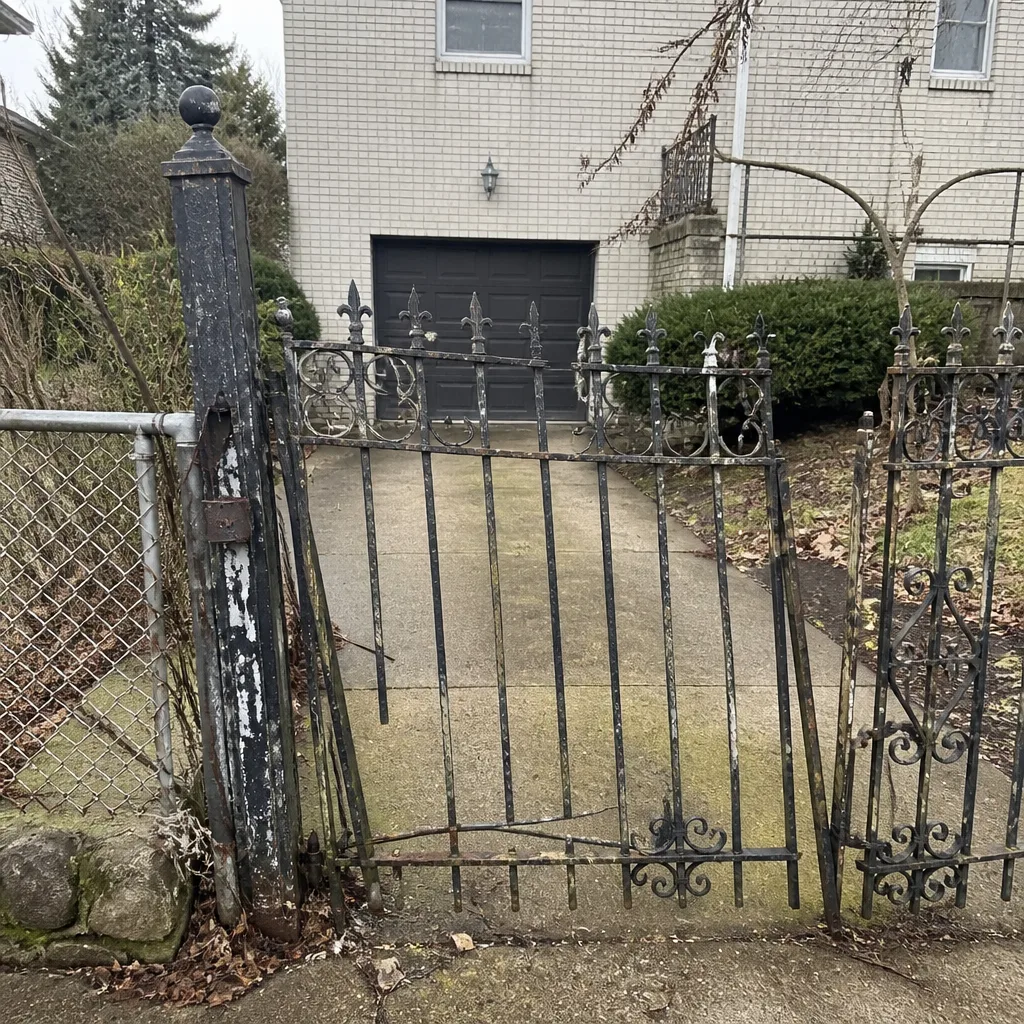
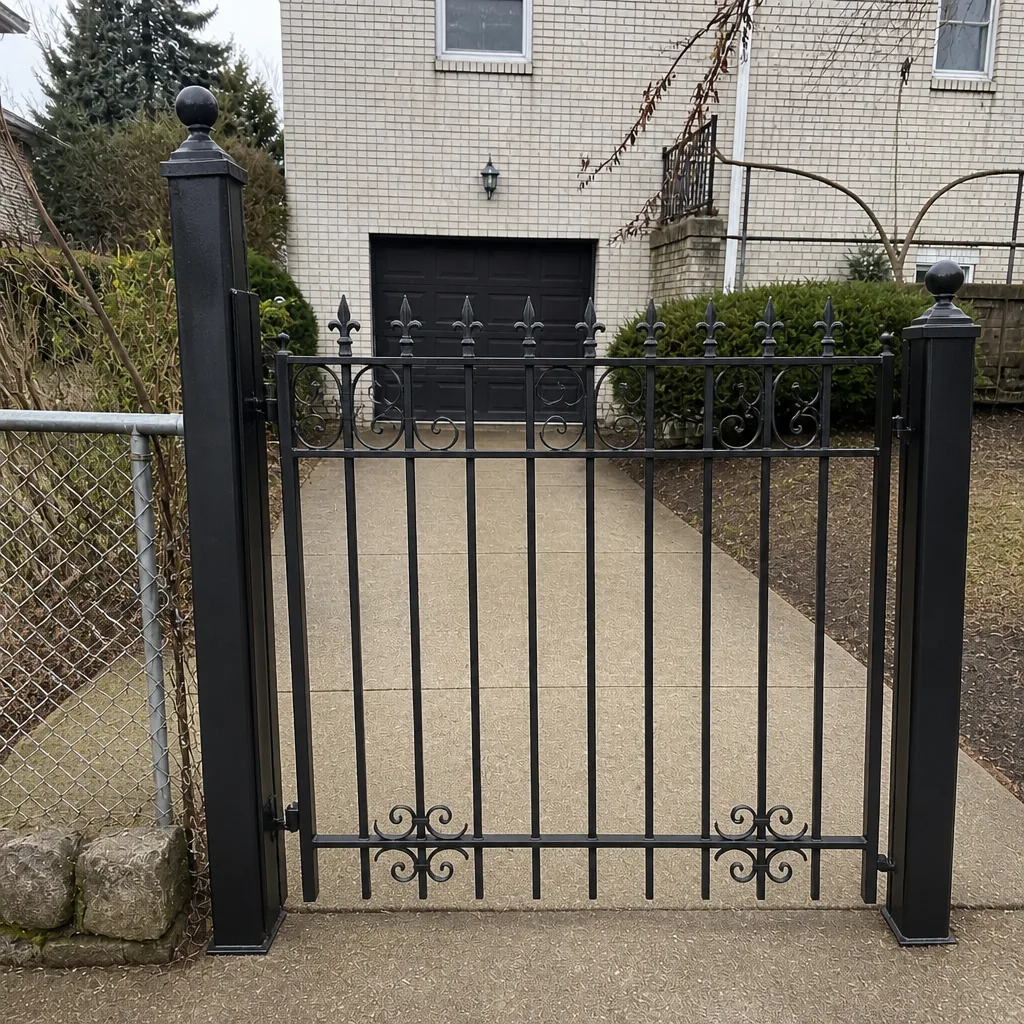
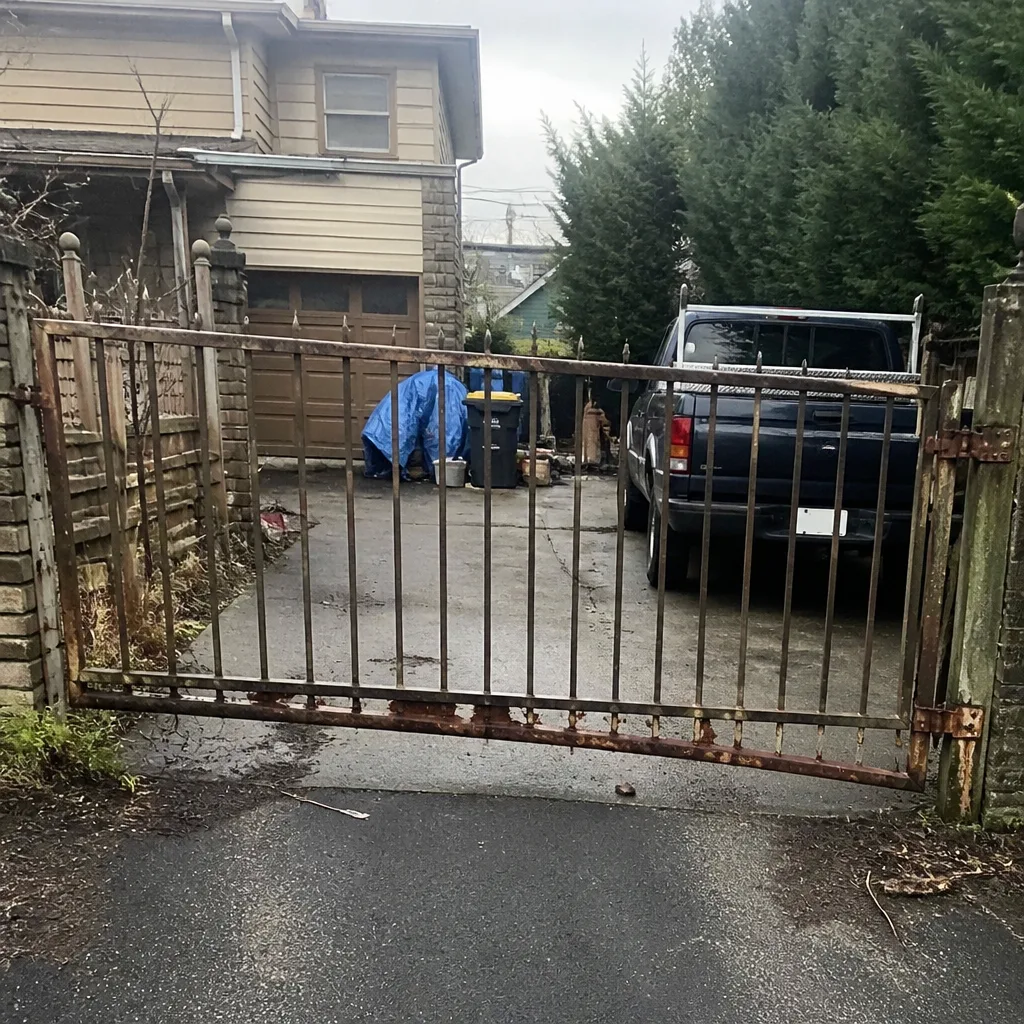
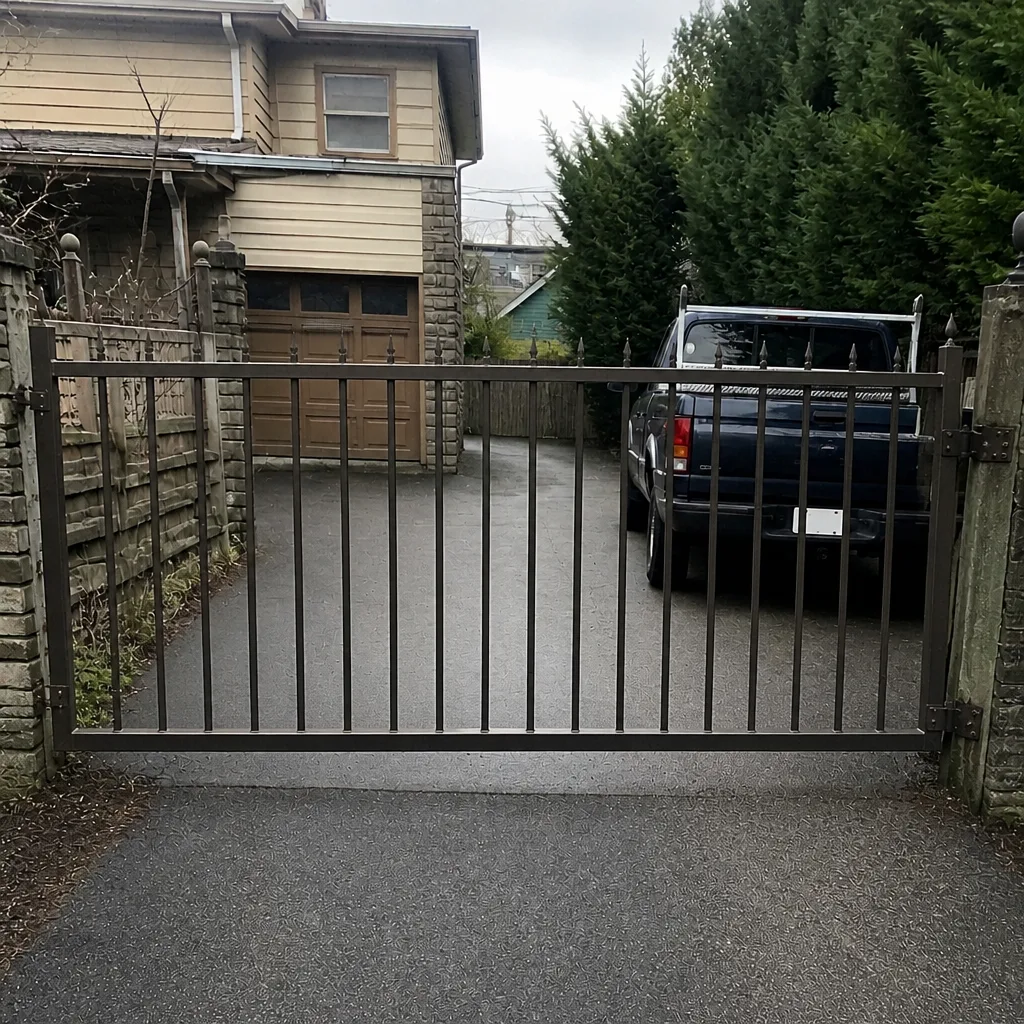
See the difference
 Before
 After
 Before
 After
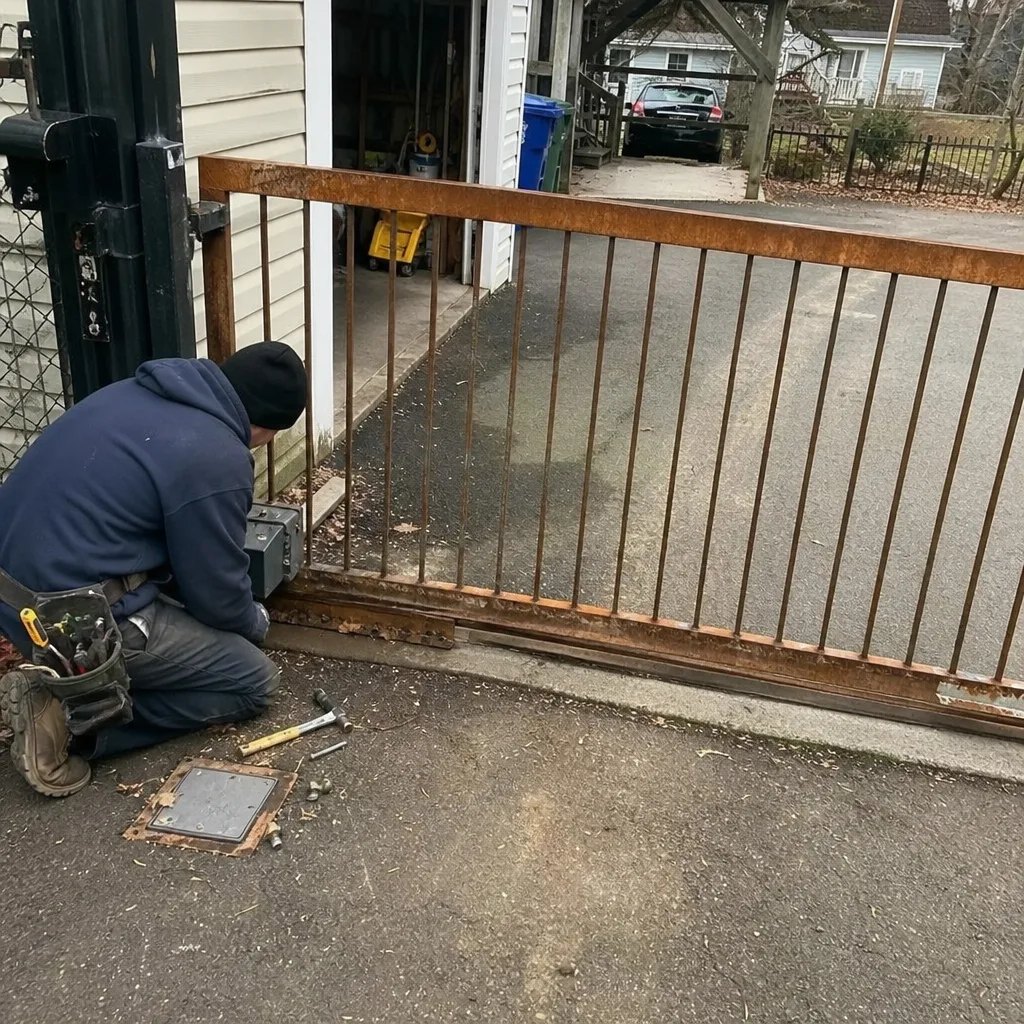 Before
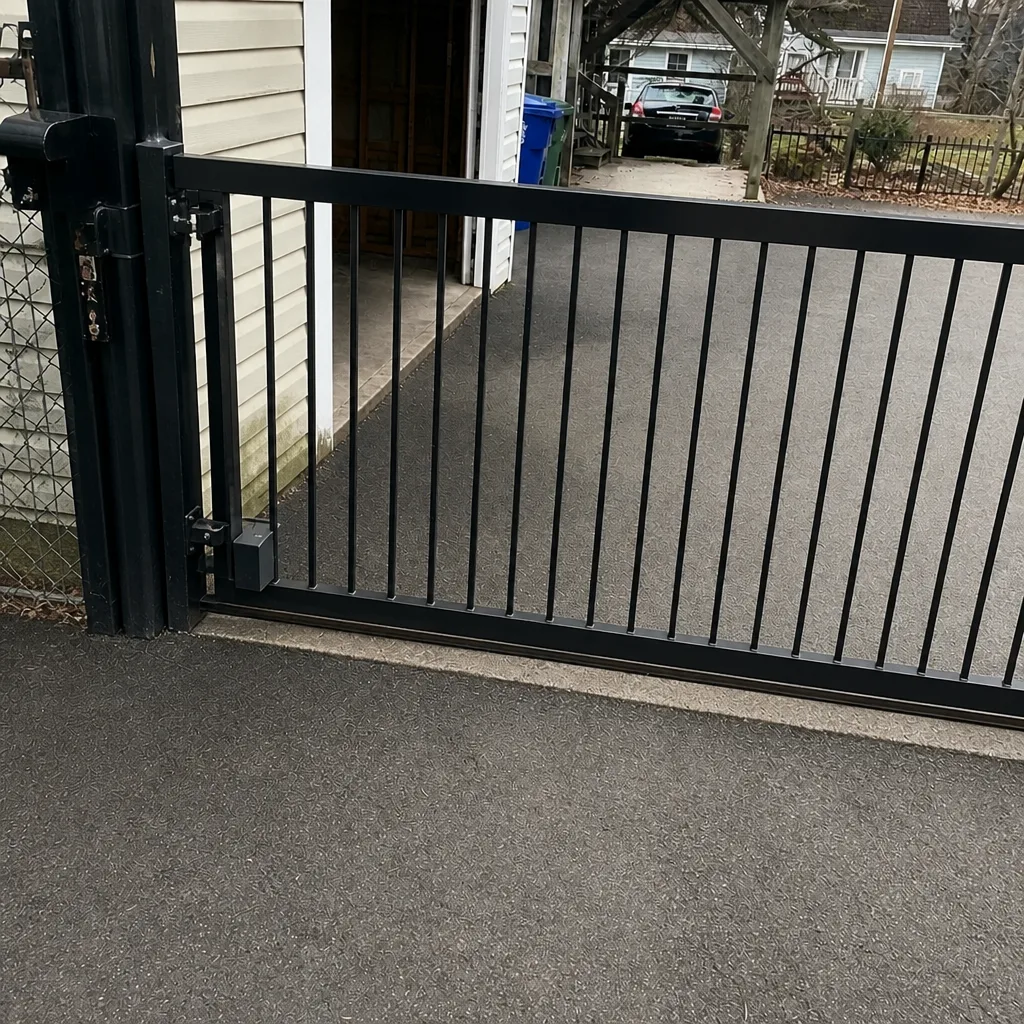 After
When to Call a Professional
Some things are maintenance. Some things mean it’s time for a professional. Call us when the gate won’t respond at all, when it opens but won’t close or closes but won’t open, when it moves partway and stops, when the control board shows heat damage or a bulging capacitor, when the gate has moved physically out of position, or when a safety device won’t trip or reverse. Call when a commercial entrance develops an intermittent fault that repeats after a visit; intermittent problems are usually a sign the first diagnosis missed something. And call when you want a baseline inspection to build the four-phase schedule on. Gate Repair Pittsburgh offers free estimates in Pittsburgh. Call (866) 361-7838. Our technicians have up to 14 years of experience, and with brand-specific knowledge across LiftMaster, FAAC, Elite, and Mighty Mule systems, we diagnose by pattern rather than trial and error.
Frequently Asked Questions
A residential driveway gate should be serviced on the four-phase schedule: pre-winter prep, post-thaw inspection, mid-summer heat check, and pre-storm-season verification. A commercial or multi-family gate on a high-traffic entrance should be checked quarterly because its cycle count compresses wear into a much shorter time. Call (866) 361-7838 for a free estimate to set a schedule that matches your gate and its cycle count.
White lithium grease is the right choice for hinges and pivot points in Pittsburgh’s climate. It stays put on a vertical surface, holds its film at low temperatures, and doesn’t stiffen into a binding paste in the cold the way a heavy chassis grease does. Chain drives need a chain-specific lubricant, not grease. Call (866) 361-7838 if you’re not sure what your operator calls for.
A dead gate after a power outage most often points to a failed electrolytic capacitor on the control board or a battery that can’t hold a charge. Power surges and flips stress capacitors, and a battery that passed a voltage test may still fail under load. A capacitor check and a load test will tell you which one it is. Call (866) 361-7838 for a free estimate.
The tape-mark method is a simple way to track whether your gate’s open and closed positions are drifting over time. You place tape marks on the gate and the fixed post, then check whether they still line up each time you run maintenance. When the marks shift, you investigate the cause before it turns into a burned-out motor. Call (866) 361-7838 to have your limits checked.
Yes, if the entrance is a high-cycle one like a multi-family or apartment property gate. The components wear based on how often the gate runs, and a gate that cycles hundreds of times a day wears through parts in months what a driveway gate takes years to wear through. Quarterly checks catch drift, board issues, and safety-device faults before they become outages. Call (866) 361-7838 for a free estimate.
When a gate opens but won’t close, the most common causes are a safety device that’s tripped or misaligned, a limit switch that’s drifted, or a board fault. Safety devices are checked first because a photoelectric eye or safety edge that’s blocked or dirty will stop a close every time. Call (866) 361-7838 for a free estimate. We answer 24/7.
The Bottom Line
Forget the six-month calendar. In Pittsburgh, the right gate maintenance schedule is built around four weather transitions: pre-winter prep, post-thaw inspection, summer heat-stress checks, and pre-storm-season verification of batteries and safety devices. White lithium goes on hinges, chain lube goes on chains, and tracks stay clean and dry. Check the control board for stressed capacitors, track limit drift with tape marks, and treat high-cycle commercial gates on quarterly checks. A residential driveway gate can run on the four-phase schedule. A multi-family entrance can’t. Time your work to the weather, catch drift early, and you’ll spend far less time locked out and far more time trusting your gate.
Written by the team at Gate Repair Pittsburgh.