
Last updated November 14, 2026
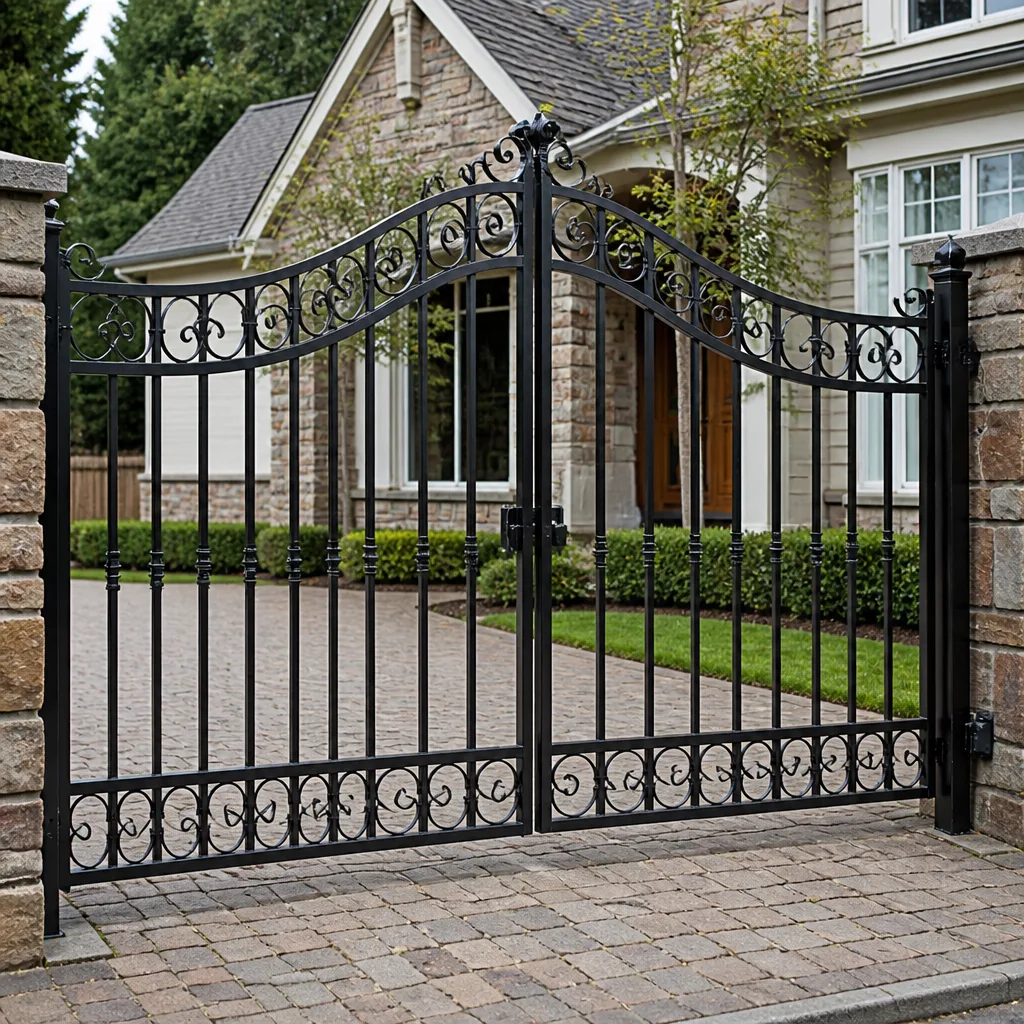 Wrought iron
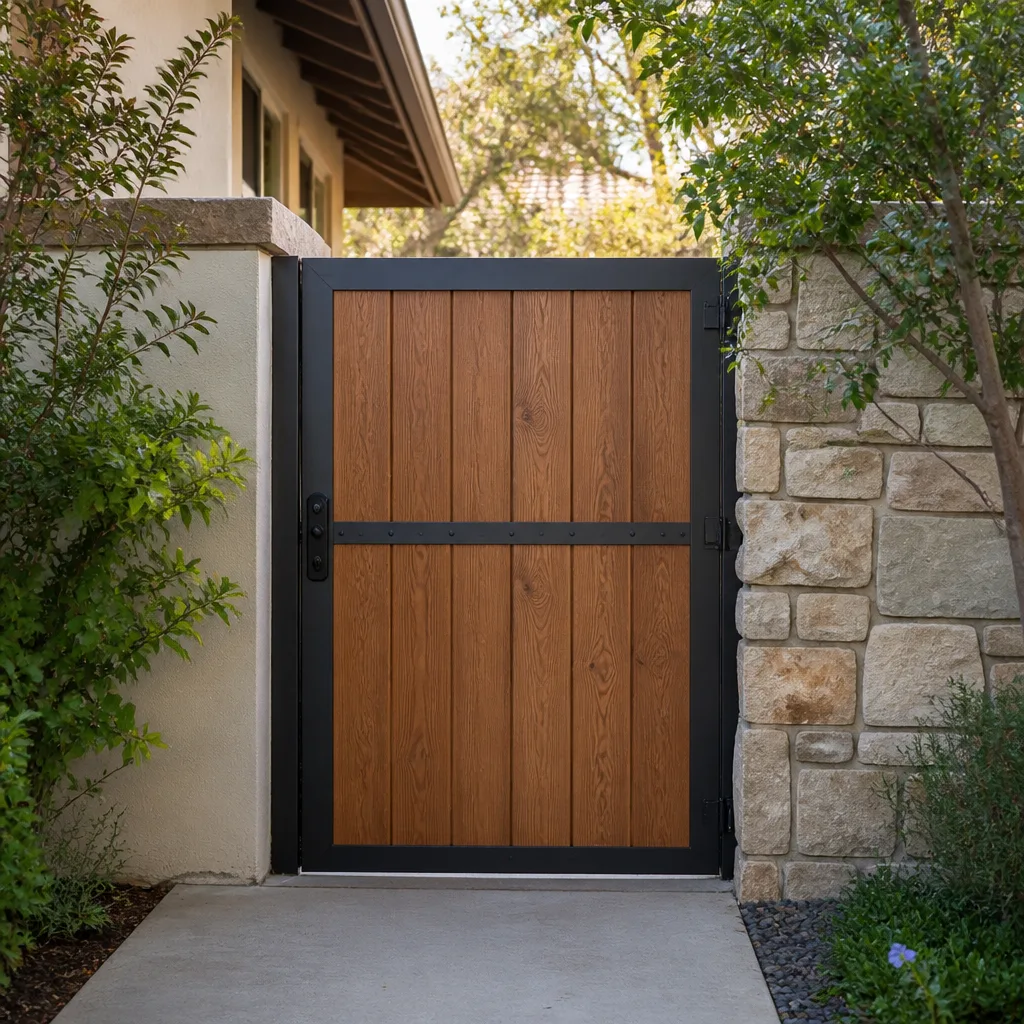 Wood & steel frame
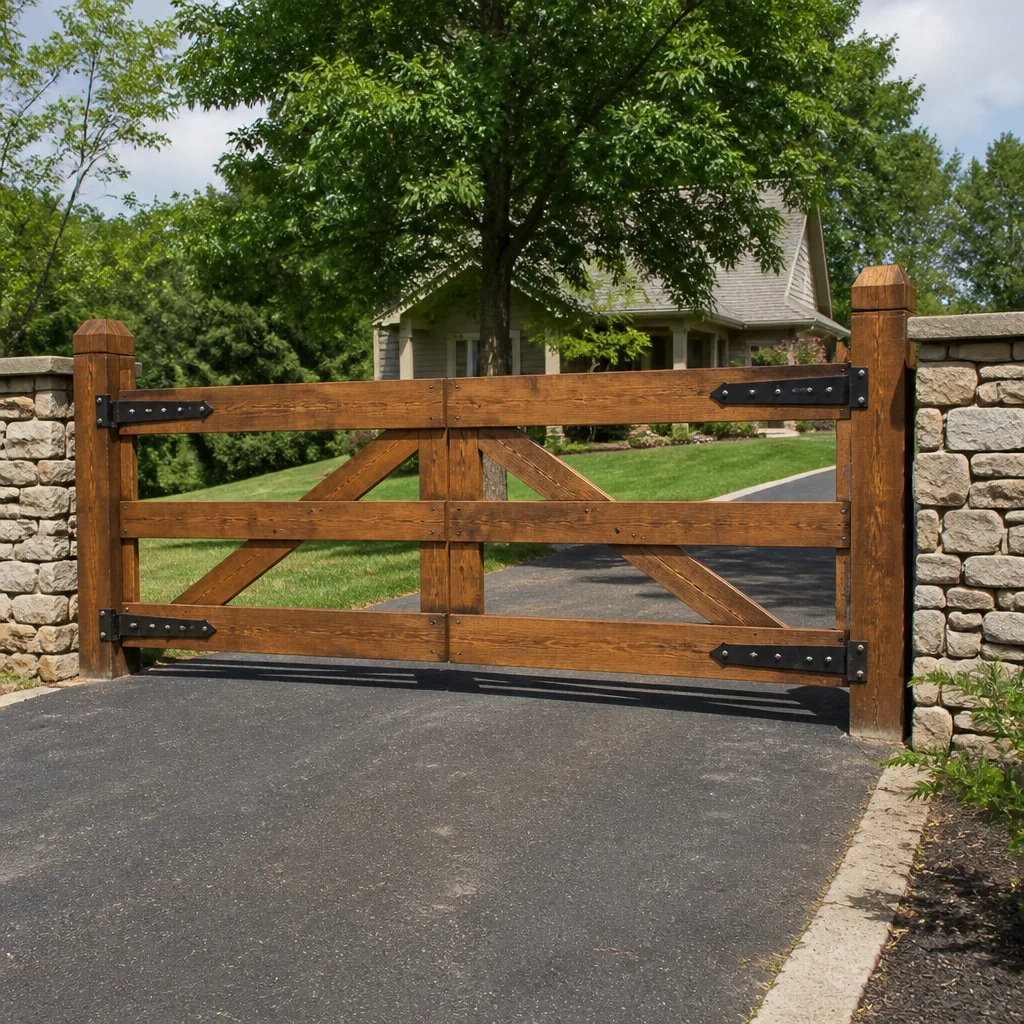 Farm & ranch
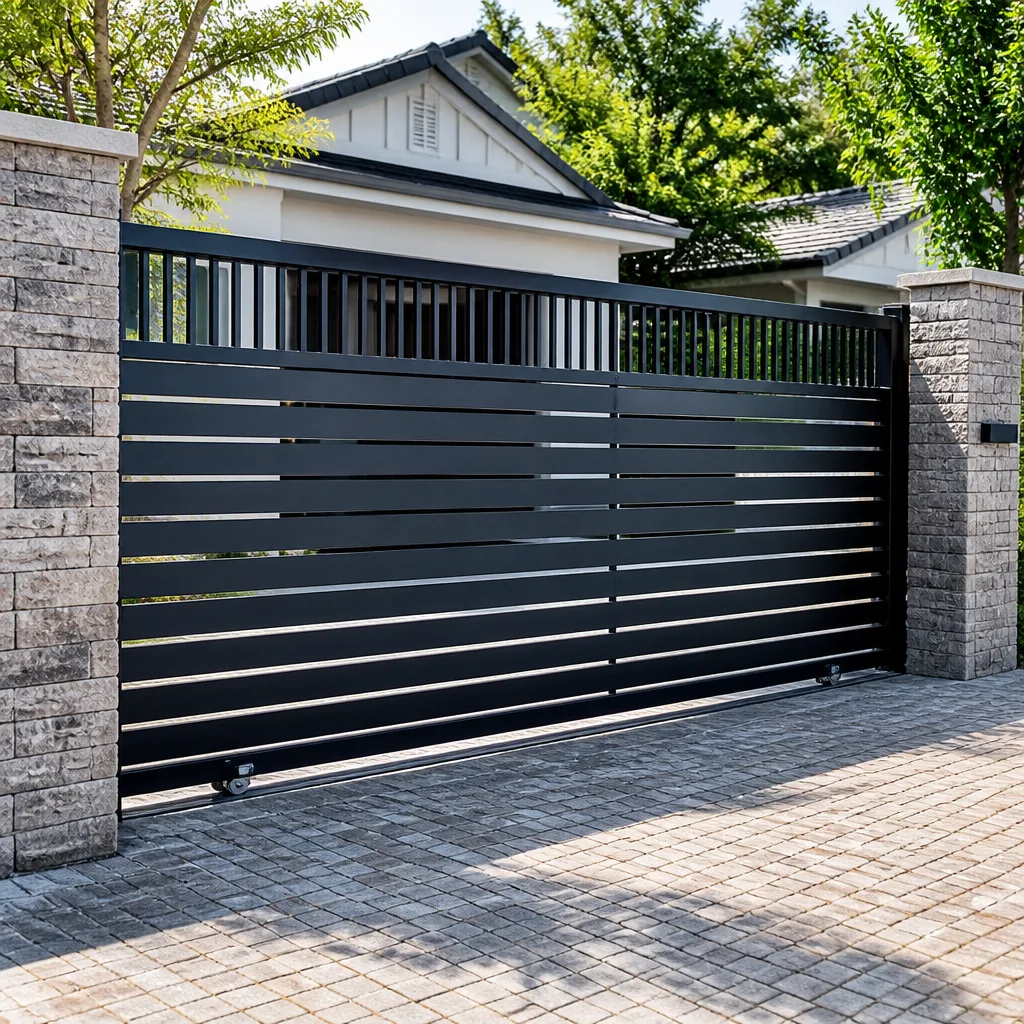 Sliding driveway gates
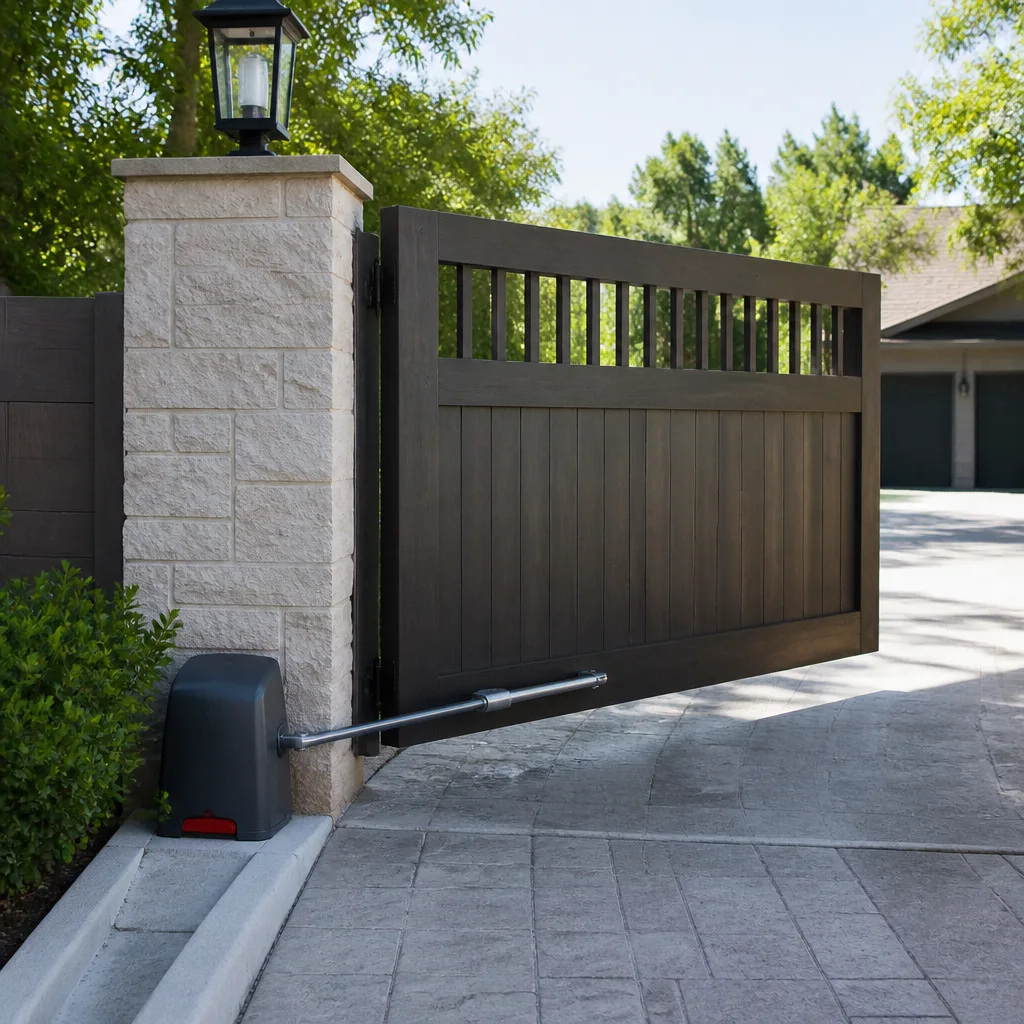 LiftMaster operators
Free on-site gate assessment - hinges, posts, and your LiftMaster or Nice gate operator checked before anything is quoted
The assessment is free and the quote is the invoice.
Get your free estimateGate Repair Warning Signs: A Pittsburgh Homeowner’s Reference Guide
A gate that reverses unexpectedly isn’t malfunctioning. It’s doing exactly what its safety system is designed to do when it detects resistance, which means the real warning sign isn’t the reversal itself but whatever is creating that resistance upstream. That distinction matters, because most gate failures in Pittsburgh give you 60 to 90 days of warning before they strand you. Those signals get misread or ignored because homeowners don’t know which symptoms point to a structural problem, which are mechanical, and which are early electrical failures. Each one calls for a completely different intervention. This guide maps those signs to what they usually mean.
Quick Answer
Gate repair warning signs fall into three categories: structural (sagging, dragging, misaligned panels), mechanical (grinding, clicking, straining motors, slow cycles), and electrical (keypad lag, loop detector errors, intercom static, remotes that work intermittently). A gate that reverses, drags, or sounds different than it did last season is telling you a component is failing weeks before it stops working entirely. Catching the sign early usually means a repair; ignoring it usually means a replacement.
Styles & brands we work with
- Wrought iron
- Wood & steel frame
- Farm & ranch
- Sliding driveway gates
- LiftMaster operators
Table of Contents
- Operator Warning Signs vs. Structural Warning Signs
- What the Sound Means: Grinding, Clicking, and Straining Motor Hums
- The Pittsburgh Frost Window: Why February and March Matter
- Commercial Access System Signs vs. Residential Gate Signs
- A Homeowner Triage Test Before You Call
- Brand-Specific Failure Patterns We Watch For
- What Happens When You Ignore the Signs
Operator Warning Signs vs. Structural Warning Signs
This is the single most important distinction in gate diagnostics, and it’s where most homeowners lose money. Operator problems live in the motor, control board, wiring, or sensors. Structural problems live in the gate itself, which means the posts, hinges, rollers, and framing that the operator has to move every single day. Treat one as the other and you either replace a motor that was fine or keep resetting sensors on a gate that’s physically sagging.
Structural warning signs include:
- The gate sags visibly at the latch end or drags at the bottom as it swings
- Visible gaps or movement where the gate meets the post
- Rust bulging beneath the paint at weld points or the bottom edge
- Hinges that make noise or show play when you push the gate by hand
- Ground shifts beneath the post, especially after freeze-thaw cycles
Operator warning signs look different:
- The gate cycles normally by hand but hesitates or stalls when the operator drives it
- Remotes lose range progressively or need a second button press
- The operator runs its cycle but the gate doesn’t move, or moves briefly and stops
- Limit positions drift so the gate stops short of fully closing
- The control board clicks without the gate showing any sign of life
Why the distinction matters: if you call a company about a straining motor and it turns out the gate itself is dragging against the ground, replacing the motor doesn’t fix anything. The new operator fails the same way. The right diagnosis starts with checking whether the gate moves freely by hand when the operator is disengaged. If it doesn’t, the problem is structural. If it does, the operator or its wiring is the culprit. Getting this read correctly is half of what a competent electric gate repair visit consists of.
What the Sound Means: Grinding, Clicking, and Straining Motor Hums
Sound is diagnostic, not background noise. We’ve learned to read it like a mechanic reads an engine, and homeowners can train their ears to do the same. Here’s what the three main gate sounds usually point to:
- Grinding: Metal-on-metal contact, almost always in the hinge pins, track rollers, or the operator’s drive chain or screw. Grinding says a bearing surface is dry, worn, or misaligned. It won’t fix itself and the wear compounds every cycle, which is why a grinding gate that gets ignored often moves to a full hinge or operator-drive replacement.
- Clicking: Short, sharp, repeating clicks usually point to the control board (a relay engaging), a limit-switch actuator, or a loose sprocket. Clicking from the operator housing that never resolves into motion means the board is trying to fire but something downstream isn’t responding. Clicking from the gate itself is more likely a hinge or a roller with a flat spot.
- Straining motor hum: This is the most misread sound. A motor that hums but doesn’t move is drawing locked-rotor current. That means it’s trying to push through resistance it can’t overcome. The resistance might be a physical obstruction, a hinge frozen in winter, a sagging gate, or a starting capacitor that’s failing. The hum is the symptom; the cause is upstream. If your gate hums and stops, stop cycling it immediately. Locked-rotor current overheats the motor quickly and turns a cheap repair into a motor replacement.
If you hear any of these sounds and they repeat on every cycle, you’re inside the warning window. If they only appear in cold weather, that’s the next section. Either way, “loud gate” is not something that goes away on its own.
The Pittsburgh Frost Window: Why February and March Matter
Most of the structural warning signs we see in Pittsburgh follow a predictable annual pattern. Ground freezing, soil heave, and the first thaw create a February-March window when gates that moved cleanly in November suddenly don’t. This is a regional clock that many homeowners never learn to read.
Here’s what’s happening. Through January, the ground around a gate post is frozen hard. Frost heave lifts posts unevenly, and because a swing gate’s clearance to the ground is measured in fractions of an inch, even a small post lift or shift is enough to make the bottom edge drag. On slide gates, a track that was level in fall can throw the carriage off-kilter. Through February and March, thaw and refreeze cycles loosen soil around the post footings, and post movement that was frozen in place suddenly has room to drift. That’s why a gate that worked fine all winter starts grinding, dragging, or reversing in late February.
The signs to watch for in this window:
- Bottom-of-gate scuff marks on the driveway or a gap you can see daylight through
- Operator short-cycles on cold mornings but works fine by afternoon
- Visible post lean that wasn’t there in fall
- Reversal on the safety edge that didn’t trigger in summer (resistance is up because the gate is dragging)
- A gate that suddenly needs a second button press or walks itself off its end limits
If you catch the drag in February, the fix is often a footing correction and a small hardware adjustment. Wait until April and the dragging has usually worn a roller, chewed a hinge, or forced the operator into overload enough times that the motor or control board is also compromised. In Pittsburgh, catching it early is the difference between one problem and three.
Commercial Access System Signs vs. Residential Gate Signs
The warning signs most homeowners look for on a driveway gate don’t match what a property manager needs to watch on a commercial access system. Different brands, different duty cycles, different failure modes. If you run an apartment complex, storage facility, or parking access point in Pittsburgh, the signs worth watching are the ones that show up in the first three seconds of a user interaction.
Commercial access system warning signs include:
- Keypad lag: A keypad that takes a half-second longer than it used to for each button press is usually a worn keypad membrane or a power supply starting to sag. Both are early-warning signs that the rest of the board is next.
- Loop detector errors: Vehicles are detected intermittently, a gate stays open longer than it should, or cars are ghost-triggered through. Loop wire degrades silently through asphalt and thaws, and a loop that’s failing tends to fail a little more each month.
- Intercom static or dropped calls: Garbled audio from a DoorKing or Elite entry system usually points to wiring or the intercom module, not the gate itself, but it’s a reliable sign the system’s power or communication path needs a look.
- Inconsistent hold-open: Gates that stay open an extra second after the vehicle clears, or close on a vehicle too slowly, are usually showing early signs of the safety edges degrading.
On the residential side, the signs cluster around operator responsiveness, remote range, and the physical gate itself. Ghost Controls and Mighty Mule units, common on Pittsburgh driveway gates, tend to show warning signs in the battery and solar-charge circuit first, which shows up as a remote that works at noon and not at 7am. Viking residential swing operators often first signal bearing wear through a distinctive start-up noise under load. Both the commercial and residential categories deserve brand-specific reading, because the same symptom on a DoorKing system and a Ghost Controls system can point in completely different directions.
A Homeowner Triage Test Before You Call
Before you pick up the phone, a short triage test can categorize the warning sign and shorten the diagnostic visit. It takes about ten minutes and a helper. Do this with the operator’s manual and safety instructions in front of you, and stop if anything feels dangerous.
- Isolate the operator from the gate. Most operators have a manual release. Disengaging it lets you test the gate as a mechanical object, independent of motor and board. If your model doesn’t have an obvious release, skip to step 4.
- Move the gate by hand through a full cycle. Does it swing or slide smoothly? Does it hit resistance? Does it scrape the ground? Any drag or binding here means the problem is structural, not electrical.
- Check the post and hinges. Look for post lean, gaps at the hinges, rust bulges, or hardware that’s come loose. Push the gate gently with your hand and watch the post-top for any wobble.
- Cycle the gate under operator power and watch what happens. Note the exact behavior: does it reverse at the same point each time? Does it stall at start-up? Does it click without moving? Write it down.
- Look at the safety edges and sensors. Are any edges visibly cracked, kinked, or exposed? Is the photo-eye lens dirty or blocked? A gate that reverses on the same spot every cycle is usually finding a safety input triggered, not a mechanical fault.
- Read the one-line display or status LED on the control board. Most modern boards flash a fault code. Write the code down. A DoorKing system and a LiftMaster board use different codes, and knowing which you have shortens diagnosis considerably.
That’s it. You don’t need to open the control housing, test voltage, or adjust anything. The triage is about categorization: structural, mechanical, or electrical. That one word, plus the brand on the label, is what lets a technician arrive with the right part in mind. If you’re not confident at any step, stop and call. We answer 24/7.
Brand-Specific Failure Patterns We Watch For
Every brand fails in its own way. That pattern is why brand-specific diagnostics matter more than generic gate knowledge, and why a general contractor often takes two visits to fix what we can usually read on the first. A few examples from the brands we work on:
- Ghost Controls: These solar and battery residential operators show warning signs in the power path first. A remote that needs to be closer over time, a gate that cycles normally at midday but stalls in early morning cold, or a slow cycle after a cloudy stretch all point to the panel, wiring, or charge-controller. If the battery is failing, the operator can show a “dead motor” symptom that’s actually a supply problem.
- DoorKing: Commercial access systems from DoorKing tend to show signs in the access control layer before the gate itself. Keypad lag, loop detector ghosting, and phone-entry instability are the leading indicators. Left alone, these can escalate to the control board, which is a much larger repair.
- Viking: Viking swing operators on residential gates often signal bearing or gear wear through a start-up sound that changes month over month. Homeowners rarely notice because it’s gradual, but a start-up noise that used to be quiet and now isn’t is a warning worth acting on.
- Elite: Elite slide gate operators often first show signs in the safety input path. A gate that reverses on the same spot every cycle, or holds open longer than it used to, is frequently an edge sensor, a photo-eye, or wiring fault, not the motor.
The same logic applies across the brands we handle. A LiftMaster board that’s losing its programming, a FAAC operator with drifting limits, a BFT system with communication faults, a Linear unit that cycles inconsistently, a Mighty Mule that stalls under load. Each brand has a signature. Reading the signature first is what reduces repeat visits. You can read more about our trip-and-turnaround expectations on our gate repair page.
If you’re not sure which brand is on your gate, look for the label on the operator housing or the control box. Note the model number. That single number tells a technician which failure patterns to check first.
What Happens When You Ignore the Signs
Ignoring a gate warning sign doesn’t usually produce a sudden dramatic failure. It produces a cascade of smaller failures, each of which adds to the eventual repair. That’s not a scare tactic, it’s the mechanical reality of a system that cycles every day.
A dragging gate wears its rollers or hinges progressively. A worn hinge shifts the gate’s alignment, which makes the operator work harder, which heats the motor, which shortens its life. A reversing safety edge that gets overridden so the gate “works” for another month means the gate keeps grinding against the same obstruction, and the mechanical wear accelerates. A keypad starting to lag on a commercial system usually means the power supply is next, and if you ignore that, the control board fails and you’re replacing a component that was recoverable at the first sign.
The rule of thumb we’d give any Pittsburgh homeowner or property manager: a warning sign you can hear or see in the first 60 days of it appearing usually maps to a single repair. A warning sign you’ve lived with for a season usually maps to two or three. A warning sign you’ve been overriding for a year is usually a gate replacement decision.
If you’re not sure which stage you’re in, the diagnosis is the cheapest part. Free estimates on gates in Pittsburgh let you find out before anything gets ordered.
Common Mistakes to Avoid
- Treating a structural sign as an operator problem. A dragging or sagging gate that “just needs a new motor” ends up failing the same way with the new motor. Check whether the gate moves freely by hand first.
- Overriding the safety edge to make the gate close. The reversal is doing exactly its job. Overriding it pushes whatever resistance triggered it harder into the gate hardware, and can eventually bend a panel or damage the operator.
- Assuming a no-start is an electrical failure. A locked-rotor hum is frequently a mechanical problem (frozen hinge, sagging panel, obstructing debris) showing up as an electrical symptom. Replacing boards or motors without checking physical resistance is how repeat visits happen.
- Waiting through the first spring thaw to “see if it clears up.” In Pittsburgh, the February-March thaw window is the moment to schedule a look. It rarely clears up, and the wear it causes does.
- Clearing an ice buildup with a shovel or a de-icer that isn’t safe for the hardware. Physical force on a gate panel or the operator arm can bend a hinge pin or crack a sensor housing. Melting the ice with the wrong product corrodes the finish and the hinges.
- Cycling the gate repeatedly when it stalls. If the motor is drawing locked-rotor current, every cycle risks overheating the motor. Stop cycling and diagnose.
- Assuming any gate symptom means the whole gate needs replacing. Most warning signs we see in Pittsburgh are single repairs that were ignored long enough to look like replacements. The gate is usually fine; one component isn’t.
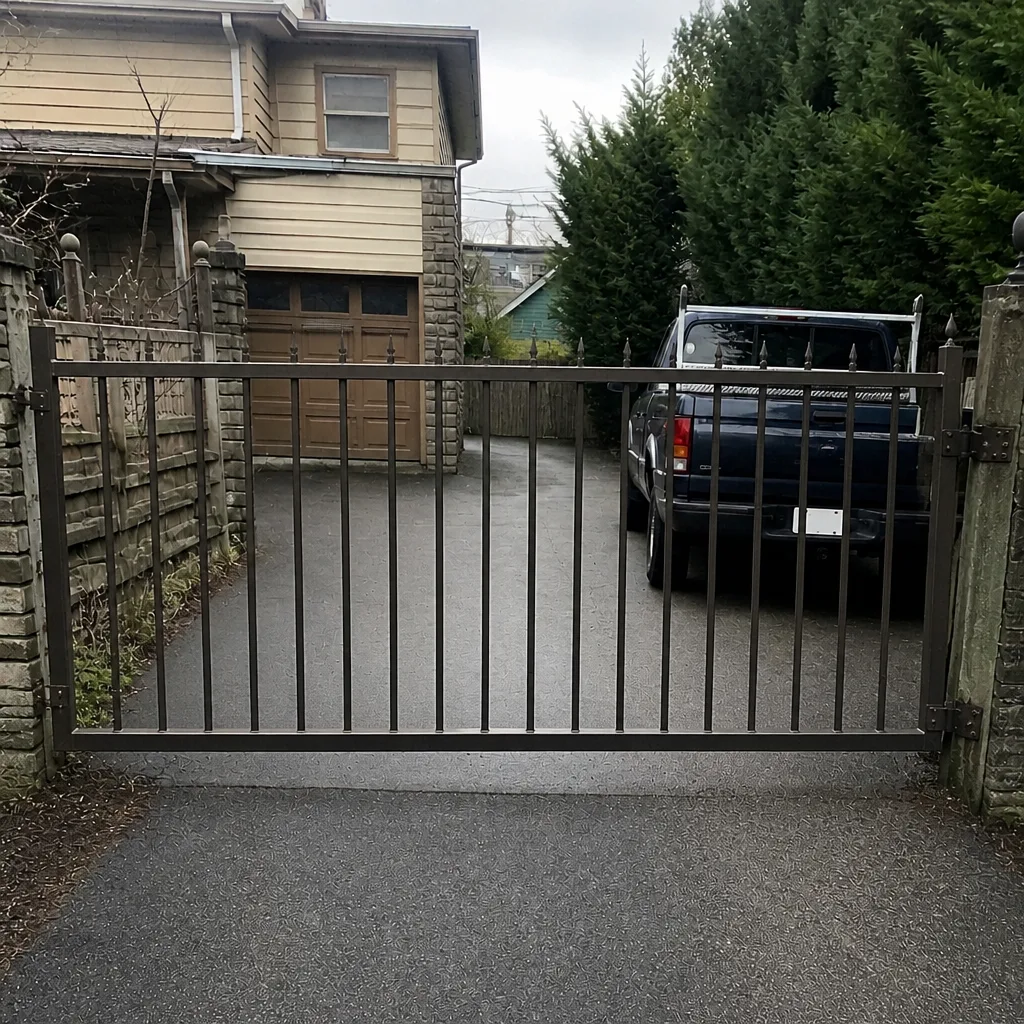
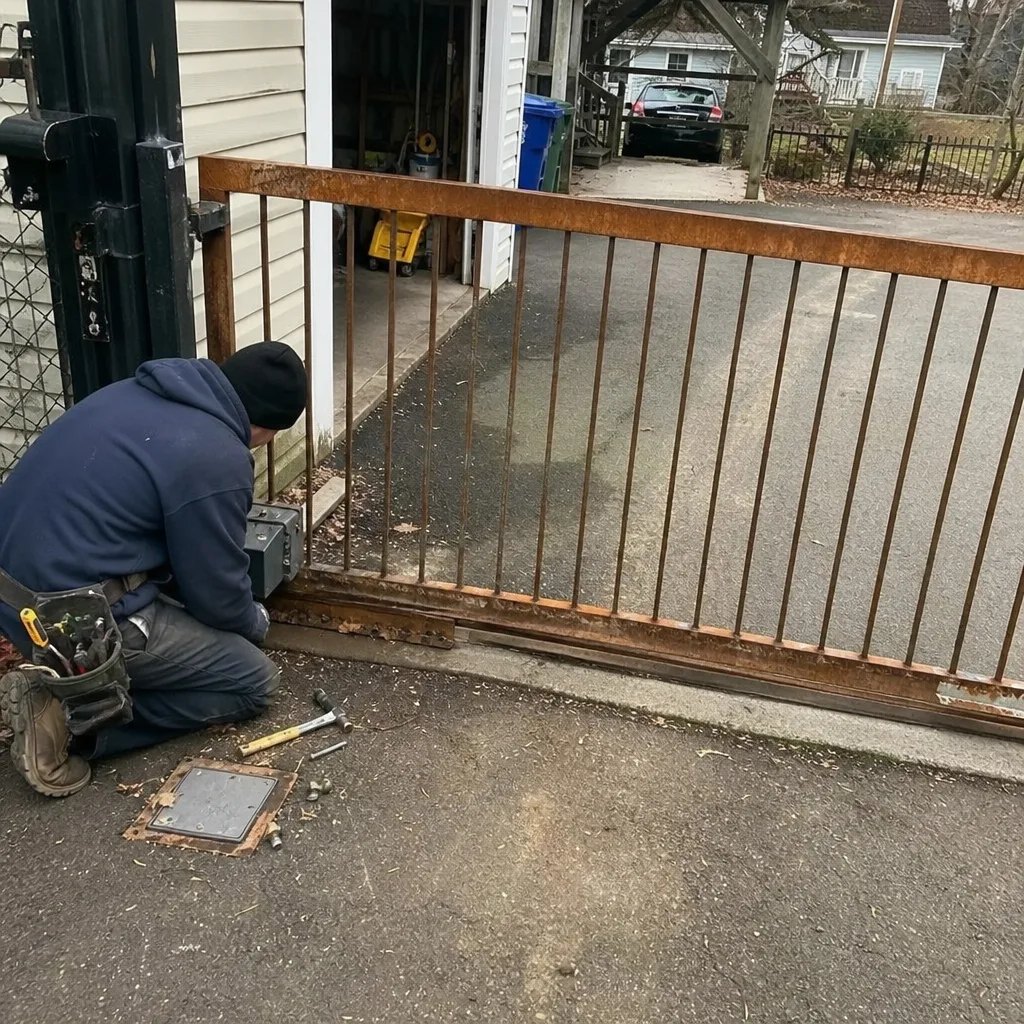
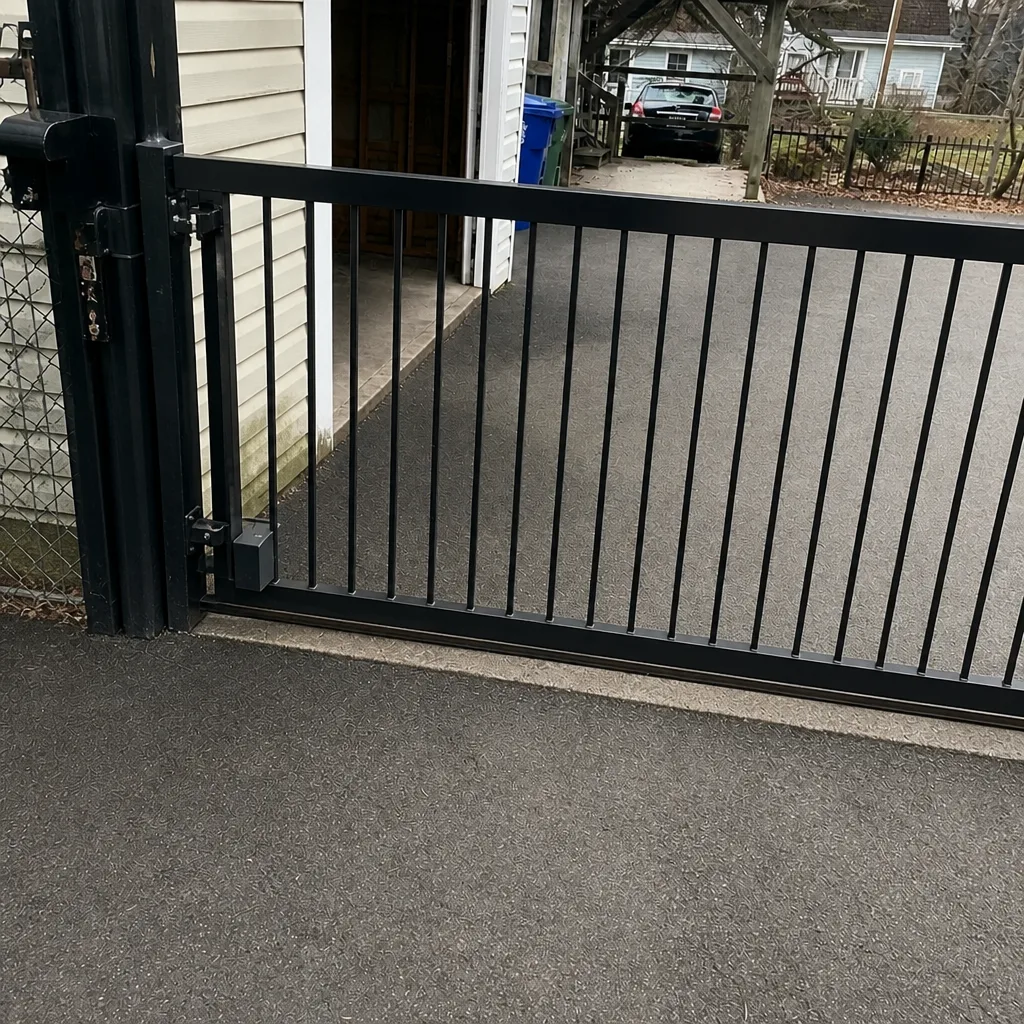
See the difference
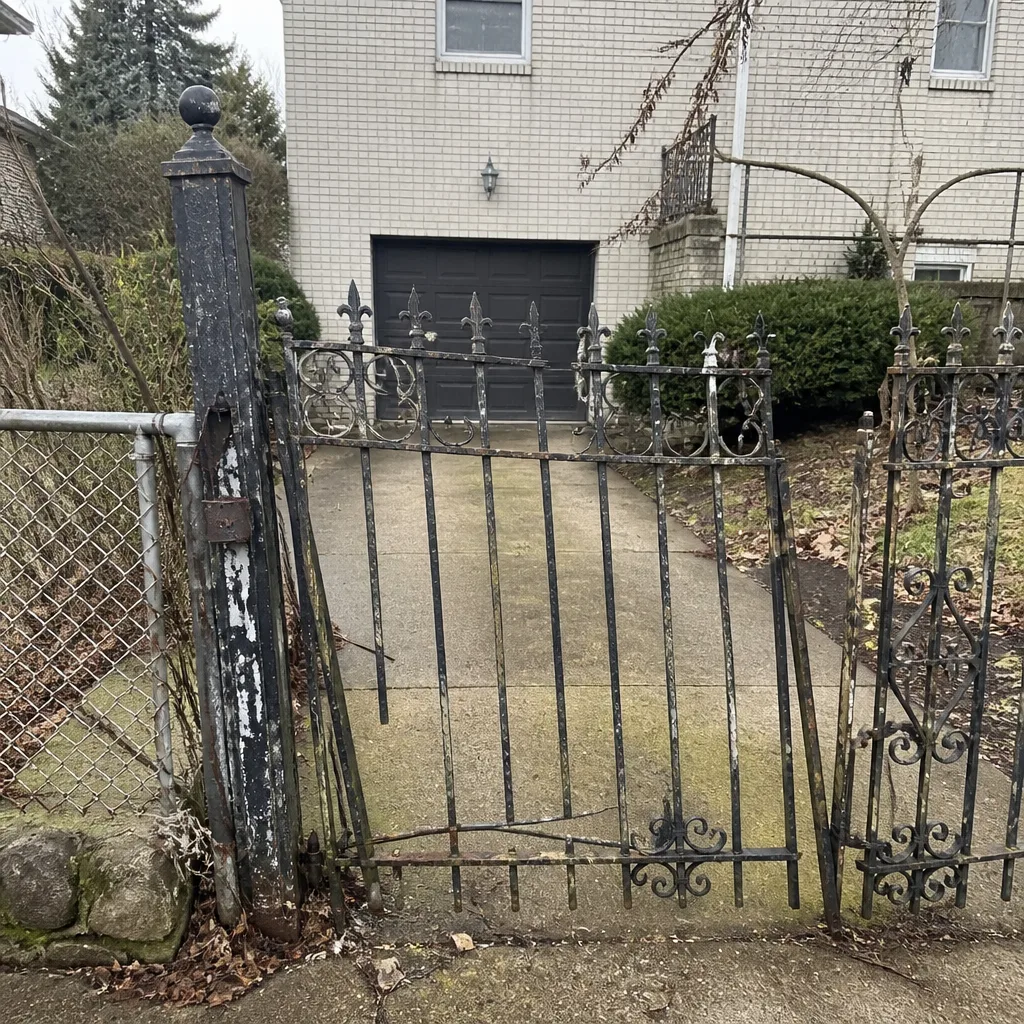 Before
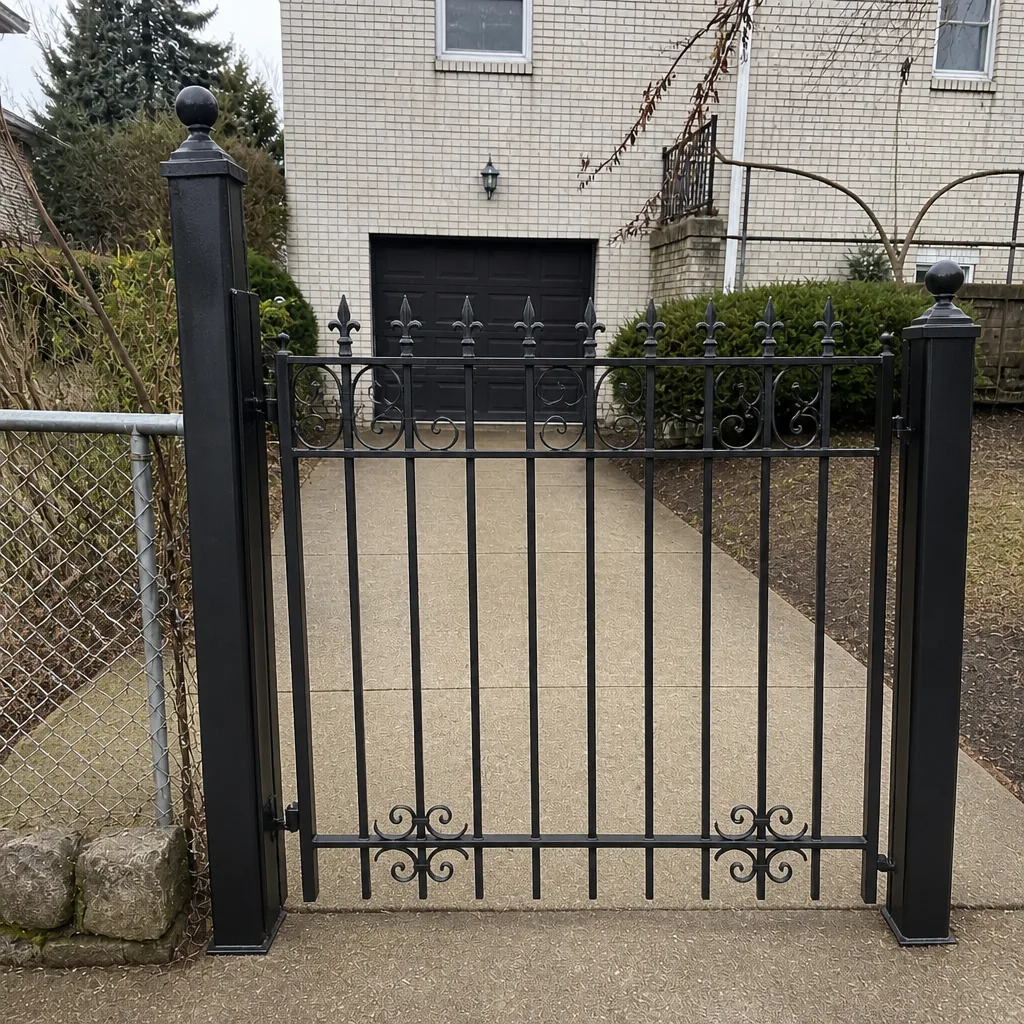 After
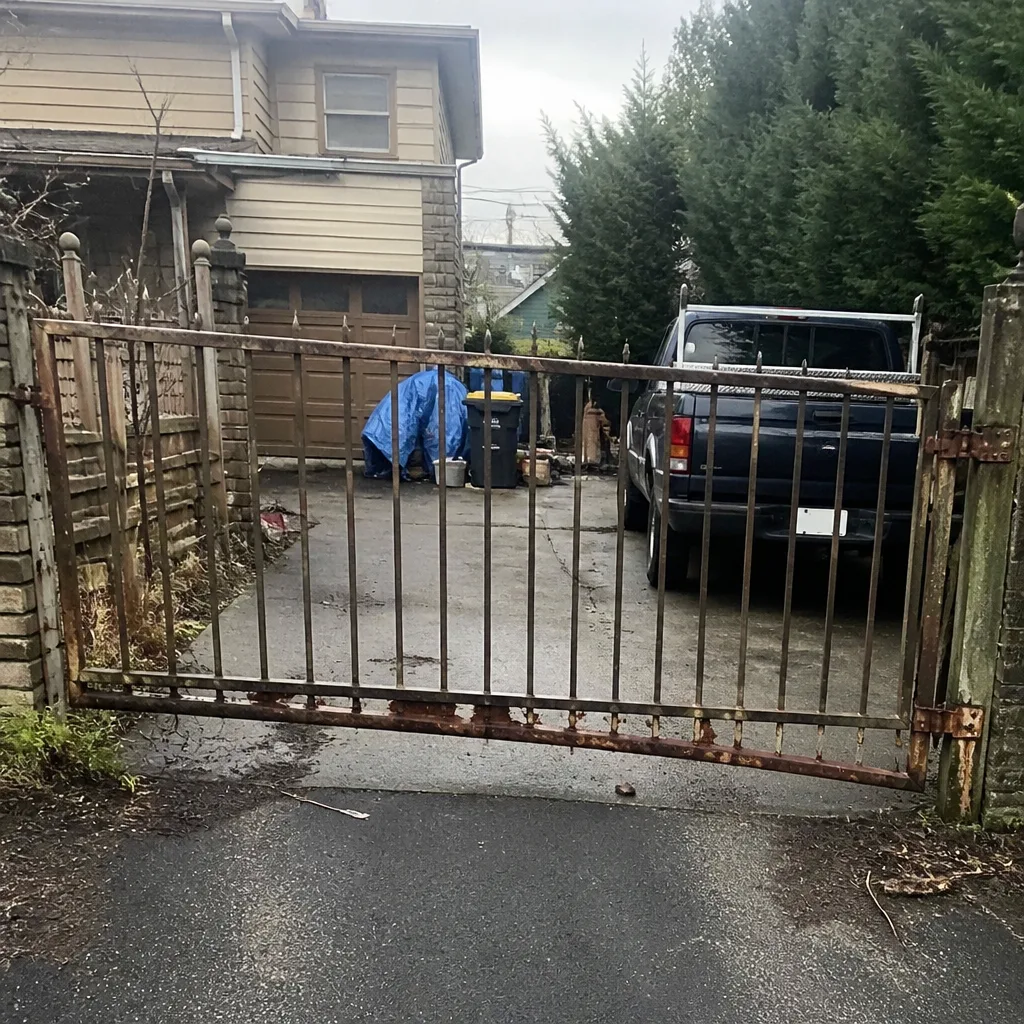 Before
 After
 Before
 After
When to Call a Professional
Call a technician when any of the following is true: the gate hums but doesn’t move; the safety edge reverses the gate on the same spot every cycle; the bottom of the gate drags on the ground or the driveway; you can see post lean or hinge movement you can’t fix with a wrench; the control board flashes a fault code you can’t identify; the gate stops mid-cycle or starts inconsistently; or a commercial system shows keypad lag, loop detector errors, or intercom static. Also call if the gate is one you didn’t install and you don’t have the operator manual. Electrical work on an operator, safety edges, and photo-eyes is not a homeowner repair – it carries real risk of shock or a gate that closes on a vehicle, and it should go to a trained professional.
Our technicians have up to 14 years of experience and every visit starts with a diagnosis. Gate Repair Pittsburgh offers free estimates in Pittsburgh – call (866) 361-7838. We answer 24/7. Fast dispatch from 7am to 7pm, Sunday through Friday. Closed Saturday.
Frequently Asked Questions
The earliest warning signs are usually a change in the gate’s sound (grinding, clicking, or a new start-up noise), a gate that reverses unexpectedly, a remote that needs a second press, or visible sag or drag at the bottom edge. These typically appear 60 to 90 days before full failure, which is why the sound and reversal changes matter more than most homeowners realize. Call (866) 361-7838 for an exact quote – estimates are free.
A gate that reverses without an obvious obstruction is doing what its safety system is designed to do when it detects resistance, which means the real issue is whatever is creating that resistance. Common causes are a gate dragging on the ground, a worn hinge creating binding, a misaligned photo-eye, or a failing safety edge. Don’t override the reversal; diagnose the resistance instead. Call (866) 361-7838 for an exact quote – estimates are free.
A motor that hums without moving is drawing locked-rotor current, which means it’s trying to overcome resistance it can’t push through. The resistance is usually mechanical (a frozen hinge, a dragging panel, an obstruction) or, less often, a failing starting capacitor. Stop cycling it immediately, because locked-rotor current overheats the motor quickly. Call (866) 361-7838 for an exact quote – estimates are free.
Pittsburgh’s frost heave and thaw cycles in late winter shift gate posts and loosen soil around footings, which changes a gate’s clearance to the ground and puts resistance into the operator’s cycle. Gates that moved cleanly through November often start dragging, reversing, or stalling in February. Catching it in that window typically means a footing correction and hardware adjustment rather than a motor replacement. Call (866) 361-7838 for an exact quote – estimates are free.
Residential gate signs usually show up as operator responsiveness problems (remotes losing range, remote/battery supply issues on Ghost Controls and similar systems), physical gate movement, or sound changes. Commercial access signs usually show up in the access layer first: keypad lag, loop detector errors, and intercom static on systems like DoorKing and Elite. Same principle – early signs are usually smaller repairs. Call (866) 361-7838 for an exact quote – estimates are free.
Yes, and a short triage test is worth doing. Disengage the operator, move the gate by hand through a full cycle, note whether it drags or binds, watch the post and hinges for movement, and note the exact behavior under power plus any fault code on the control board. Do not open the control housing or touch wiring. The triage categorizes the problem; the technician still needs to diagnose it. Call (866) 361-7838 for an exact quote – estimates are free.
The Bottom Line
Gate failures almost never arrive without warning. They give you 60 to 90 days of it, and the warning tells you which of three categories you’re in: structural, mechanical, or electrical. Treat the category, not just the symptom. In Pittsburgh, the February-March frost window is when most structural warnings appear, so a walkaround in late winter is worth more than any other time of year. Don’t override safety reversals, don’t cycle a humming motor, and don’t let a dragging gate ride for a season. The signs are readable if you know what to look for. If you’d rather read them with a technician on site, we handle gate repair and installation across Pittsburgh and every brand we’ve named here. Call (866) 361-7838 for a free estimate. We answer 24/7, with fast dispatch from 7am to 7pm, Sunday through Friday. See our Gate Repair Pittsburgh page if you’d like the full picture of what we do before you call.
Written by the team at Gate Repair Pittsburgh.